492 results
TRISCEND II: Two-year outcomes of transcatheter tricuspid valve replacement for severe tricuspid regurgitation
31 Mar 2026
Jonathan Curio provides his take on TRISCEND II trial results presented by Vinod H. Thourani at ACC.26 in New Orleans.

Author
Two-year outcomes after transcatheter tricuspid repair without cross-over in the randomized Tri-fr trial
28 Mar 2026
Alex Sticchi interviews Erwan Donal on the 2-year outcomes of the TRI-FR randomised trial evaluating transcatheter tricuspid edge-to-edge repair (T-TEER) versus medical therapy alone, as presented at ACC.26 in New Orleans.

Author

Author
Atrial mitral and tricuspid regurgitation
23 Feb 2026
Register for free to this webinar on Thursday 9 April at 5:00pm with M. Adamo, M. Sitges and P. Lurz, D. Muraru and T. De Potter and learn about epidemiology and clinical presentation of combined MR and TR in patients with AF,...
How should I treat a torrential tricuspid valve regurgitation in a young patient who remains symptomatic despite optimal medical therapy?
19 Feb 2026
A frail patient presents with worsening NYHA class III dyspnoea and peripheral oedema despite optimal medical therapy. Previously managed conservatively, severe tricuspid regurgitation has progressed to a torrential grade, with right-sided chamber dilatation and complex valve anatomy.
How would you treat this patient?

Author

Author

PCRonline @ ACC.26 Scientific Sessions
12 Mar 2026
Live updates on a selection of major Late Breaking Clinical Trials of interest in interventional cardiology presented at the American College of Cardiology 2026 Scientific Sessions #ACC26

Guidelines update
15 Feb 2026 – From PCR Tokyo Valves 2026
This session reviews the latest updates in the ESC/EACTS guidelines for structural heart disease, emphasizing their clinical implications and future trends. Participants will gain understanding of changes in aortic, mitral, and tricuspid valve recommendations, including new age cutoffs, asymptomatic disease management, and the evolving role of...
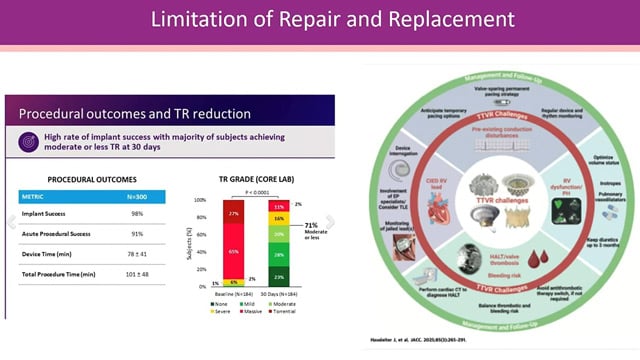
Future devices and techniques for structural heart disease
15 Feb 2026 – From PCR Tokyo Valves 2026
This session surveys the future landscape of structural heart disease treatment, addressing current limitations in transcatheter valve technologies and presenting emerging devices and techniques for aortic, mitral, and tricuspid valves. Attendees will gain insights into innovations poised to transform therapeutic options for structural heart disease.
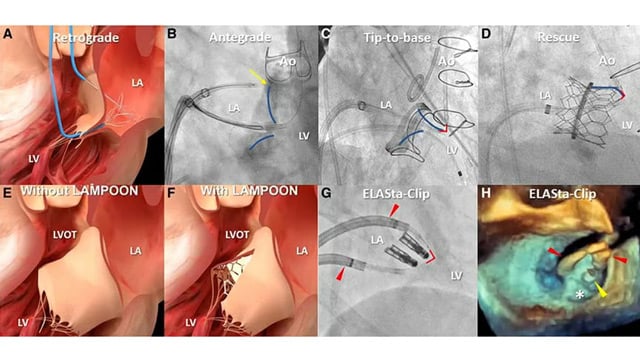
Miscellaneous complications: my worst nightmare
15 Feb 2026 – From PCR Tokyo Valves 2026
Explore the prevention and management of complications arising from transcatheter interventions in structural heart disease through challenging case analyses. This session presents real-world scenarios addressing complications encountered during TAVI, mitral, and tricuspid procedures, highlighting strategies to anticipate and manage these critical events effectively.