3174 results for «806»
3174 results
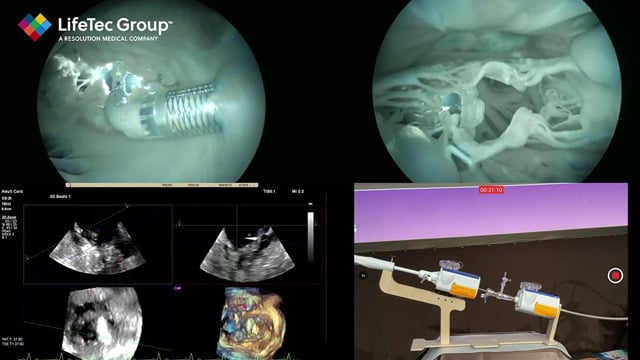
Mastering techniques from basic to complex - Tips and tricks for advanced mitral TEER: anatomy and imaging
13 Feb 2026 – From PCR Tokyo Valves 2026
Advance your expertise in mitral TEER by gaining anatomical insights, understanding device interaction with native valve structures, and learning to prevent and manage procedural complications through case-based imaging and live assessments.
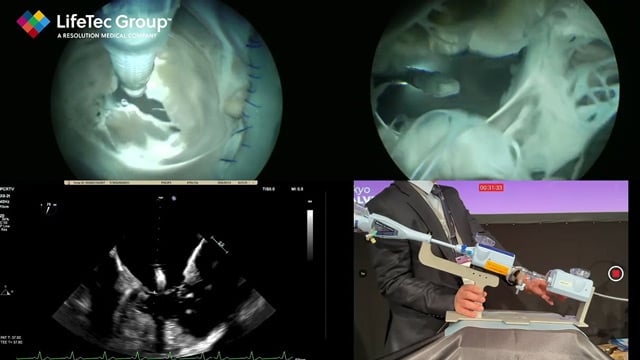
Mastering techniques from basic to complex - Tricuspid TEER fundamentals
13 Feb 2026 – From PCR Tokyo Valves 2026
Gain foundational knowledge in tricuspid TEER by understanding anatomical criteria for patient suitability, key procedural steps, and device techniques, enhanced by simulation-based procedural training.
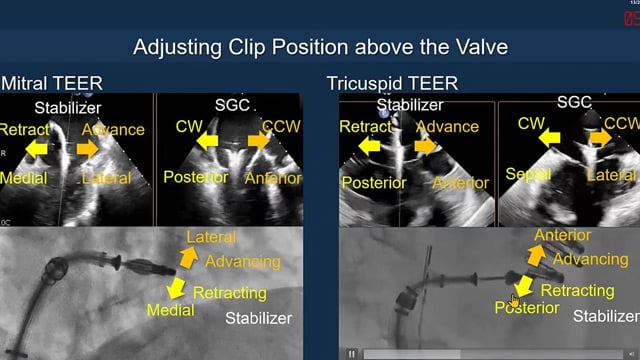
Getting ready for tricuspid TEER: key steps in building a successful programme
14 Feb 2026 – From PCR Tokyo Valves 2026
Prepare to establish a successful tricuspid TEER programme by understanding essential components such as systematic echocardiographic and clinical assessments for patient selection, procedural fundamentals, and programme development supported by clinical evidence.
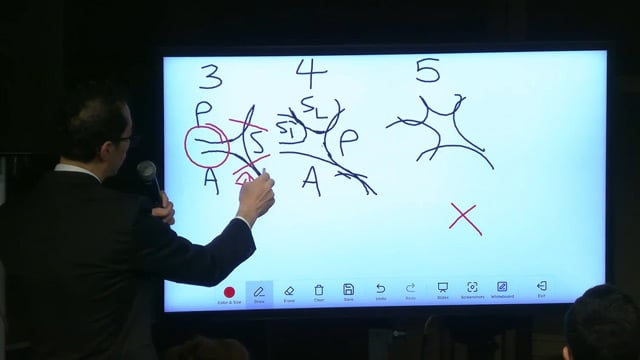
Patient selection for tricuspid TEER in 2026
14 Feb 2026 – From PCR Tokyo Valves 2026
This session focuses on optimizing patient selection for tricuspid transcatheter edge-to-edge repair (TEER) in 2026. It integrates anatomical, haemodynamic, and clinical criteria to identify ideal candidates, explores evolving treatment boundaries between TEER, transcatheter tricuspid valve replacement (TTVR), and medical management, and applies evidence from key trials...
Procedural optimisation for enhanced acute and long-term outcomes
14 Feb 2026 – From PCR Tokyo Valves 2026
This session emphasizes procedural optimization in TAVI to enhance both acute and long-term outcomes. It highlights critical factors such as valve sizing, expansion, implantation depth, and commissural alignment. Practical techniques for pre- and post-dilatation alongside commissural alignment are demonstrated through real cath lab cases, underscoring their...
TAVI: new evidence and clinical trials
14 Feb 2026 – From PCR Tokyo Valves 2026
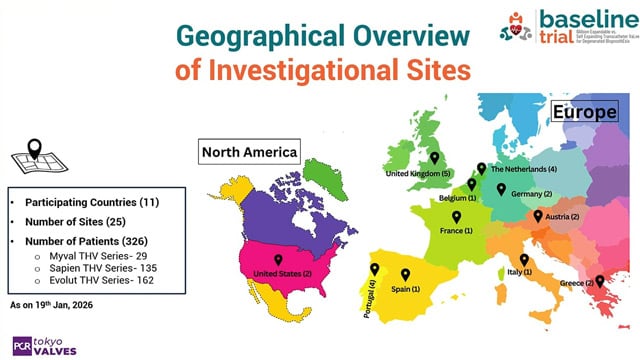
This session reviews the latest evidence from head-to-head clinical trials comparing contemporary TAVI devices, including detailed discussions of the LANDMARK and COMPARE trials. It also highlights ongoing and upcoming clinical trials poised to influence guideline recommendations and expand the therapeutic scope of TAVI, providing crucial insights...
Team approach to structural heart disease: how to handle unexpected situations
14 Feb 2026 – From PCR Tokyo Valves 2026
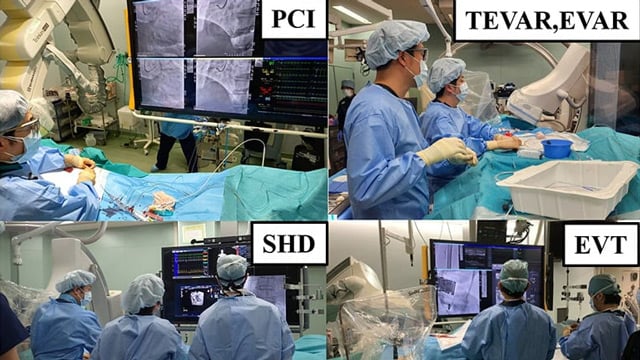
This session highlights the multidisciplinary team approach to managing structural heart disease, focusing on responses to unexpected intraoperative and postoperative situations. It features real-world experiences from a TAVI radiologic technologist, clinical engineer, TEER sonographer, and TEER nurse, emphasizing their respective roles in addressing intraoperative events, sudden...
From diagnosis to device: decision-making and planning for mitral valve interventions
15 Feb 2026 – From PCR Tokyo Valves 2026
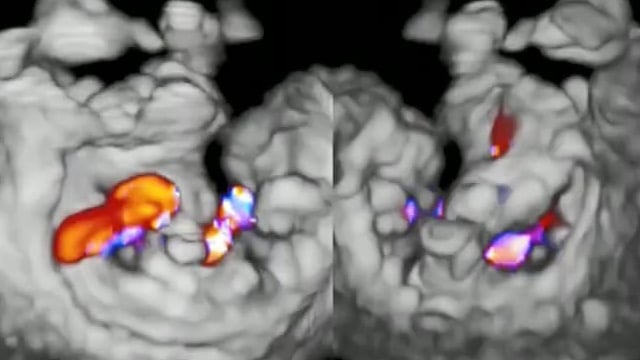
This session offers a structured approach to mitral TEER, integrating advanced imaging techniques for detailed mitral valve morphology evaluation, procedural planning, and complication prediction. It highlights device selection considerations and emerging technologies to tailor interventions for complex mitral valve disease, supported by multiple case presentations and...
Healthcare professionals in the structural heart disease treatment
15 Feb 2026 – From PCR Tokyo Valves 2026
This session highlights the essential roles and contributions of various healthcare professionals involved in structural heart disease treatment. It offers insights into the unique responsibilities of medical technologists, nurses, and radiological technologists across preoperative, intraoperative, and postoperative stages, fostering collaboration and sharing practical tips to strengthen...
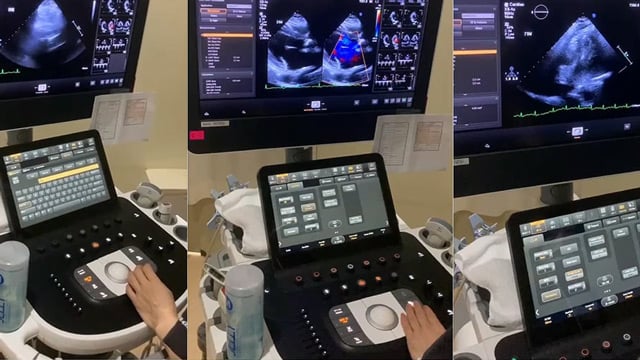
Complications and bailout strategies in transcatheter mitral interventions
15 Feb 2026 – From PCR Tokyo Valves 2026
This session addresses complications arising during transcatheter mitral edge-to-edge repair (TEER), focusing on identification, anticipation, and management strategies. It also highlights the importance of case selection to improve procedural safety, supported by detailed case analyses covering leaflet/device, access/septal, and hemodynamic complications.
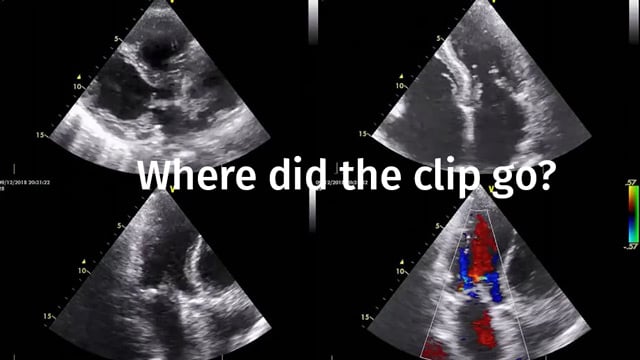
Transcatheter electrosurgery and leaflet modification of the aortic valve
15 Feb 2026 – From PCR Tokyo Valves 2026
This session offers an expert overview of transcatheter electrosurgery and leaflet modification techniques for aortic valve interventions, focusing on TAV-in-SAV scenarios. It reviews patient selection, procedural setup, and material preparation, with detailed step-by-step guidance on BASILICA and UNICORN techniques, supported by recorded cases and troubleshooting strategies...
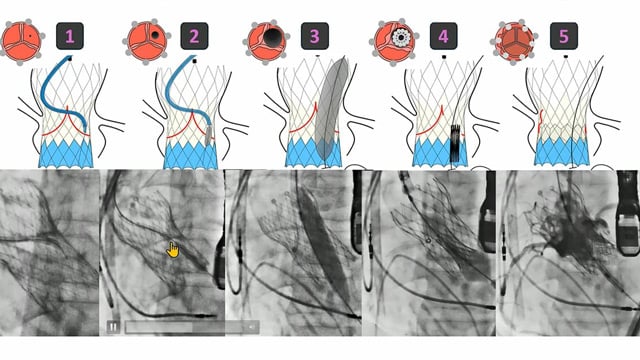
A new meta-analysis supports elective revascularization and medical therapy for reducing cardiac death
18 May 2021
The ISCHEMIA trial found no significant difference between an invasive vs. a conservative strategy in patients with chronic coronary syndromes and moderate to severe ischemia at a mean of 3.2 years. However, the cumulative difference in the estimates of cardiac death between the invasive and conservative...

EuroPCR 2025 – Meta-Analysis of Individual Patient Data from the PROTECTED TAVR and BHF PROTECT-TAVI Trials
21 May 2025
Paris, France, 20-23 May 2025. The EuroPCR Course Directors have selected 3 major late-breaking trials that will be presented for the first time during the 2025 edition of EuroPCR. These trials were selected because of their design, results, and potential to impact practice, among which is the...
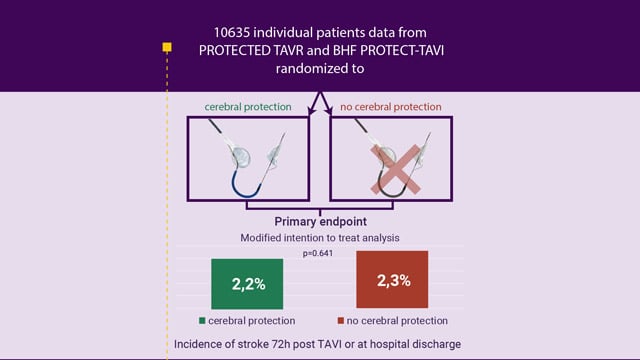
Drug-coated balloon (DCB) technology: A pioneer’s view of the historical evolution and future directions
08 Jan 2025
In this article, Bruno Scheller explores advances in local drug delivery, from drug-coated balloons to novel antiproliferative agents. These innovations aim to reduce restenosis, minimize permanent implants, and pave the way for patient-specific coronary artery disease treatments.

Author