Mariusz Tomaniak
Latest contributions
Evidence in action: advancing care for angina with Shockwave Reducer
20 May 2026 – From EuroPCR 2026
Despite major advances in coronary revascularisation and medical therapy, angina continues to represent a significant clinical burden, affecting both quality of life and long-term patient management.
This EuroPCR 2026 session explores the emerging role of the Shockwave Reducer as a therapeutic option in patients with persistent angina....

Road to relief - Effective treatment of refractory angina patients with Shockwave Reducer
22 May 2025 – From EuroPCR 2025
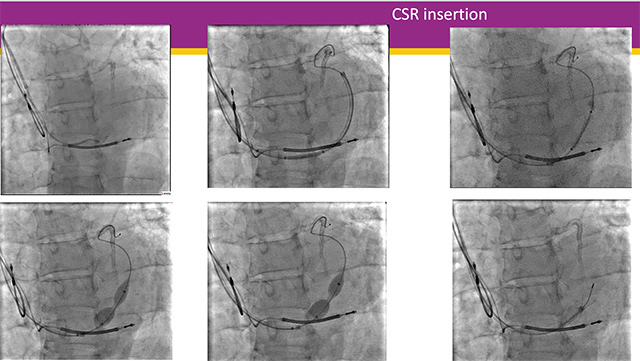
Refractory angina affects more than 100 million people globally and is associated with a significantly increased risk of adverse cardiovascular events. Treating this condition effectively remains a major clinical challenge. This session provides detailed insights into the use of the Shockwave Reducer device as an innovative therapeutic...
Antithrombotic drugs for acute coronary syndromes in women
21 May 2025 – From EuroPCR 2025
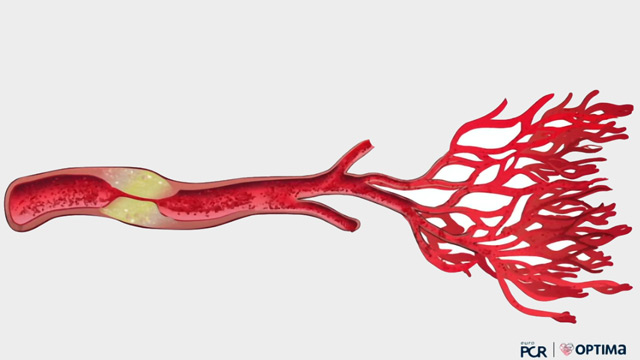
Enhance your understanding of antithrombotic drug management in women with acute coronary syndromes (ACS). This session addresses risk stratification balancing ischemic and bleeding risks, evidence-based tailored antithrombotic and revascularisation strategies in high bleeding risk patients, and diagnostic and treatment approaches for MINOCA, with illustrative cases highlighting...
Invasive treatment of refractory angina
20 May 2025 – From EuroPCR 2025
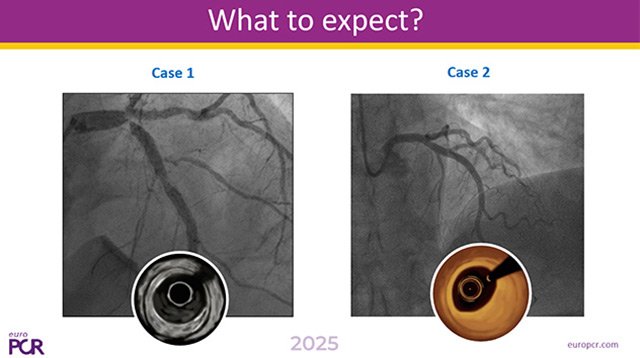
Explore invasive treatment options for refractory angina through clinical case presentations emphasizing coronary physiology guidance, coronary microvascular disease management, and innovative therapies such as coronary sinus reducer implantation. This session highlights provocative test-guided approaches to optimize patient outcomes.
It's not all about the anatomy - When physiology matters!
14 May 2024 – From EuroPCR 2024
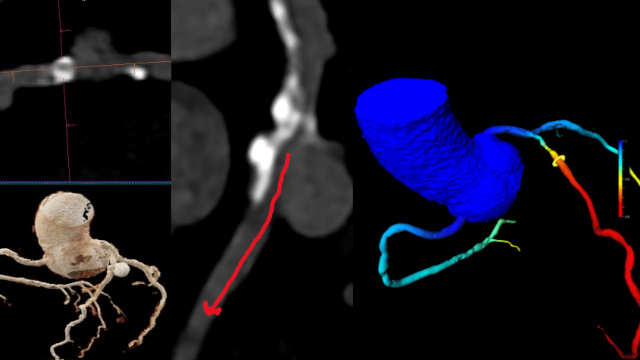
This session, in collaboration with various international cardiology societies, emphasizes the importance of physiology-guided interventions in complex multivessel disease. It presents three cases demonstrating the use of CTCA-derived cFFR, pressure wire assessment in bifurcation PCI, and angio-based FFR to guide treatment decisions. The discussions highlight how...