Roberto Scarsini
Latest contributions
TAVI - Procedural strategy
21 May 2026 – From EuroPCR 2026
This session focuses on procedural strategies for TAVI, examining the influence of coronary artery disease severity on PCI decision-making, revascularisation approaches in high-bleeding risk patients, the role of CT imaging and implant depth in procedural planning, and comparative evaluation of pre-dilatation versus direct valve implantation in...
ARTICA: Coronary revascularisation in patients undergoing TAVI - an individual patient data meta-analysis of 4 randomised trials
21 May 2026 – From EuroPCR 2026
At EuroPCR 2026, Martin Leon and Roberto Scarsini review ARTICA, a patient-level meta-analysis combining data from the ACTIVATION, NOTION-3, FAITAVI, and TCW randomised trials.
The analysis included 1,050 patients with severe aortic stenosis and concomitant coronary artery disease and compared three management strategies: medical therapy, angiography-guided PCI,...

Major Late-Breaking Trials from EuroPCR 2026
20 May 2026 – From EuroPCR 2026
This session presents major late-breaking trials from EuroPCR 2026, reviewing contemporary evidence on coronary revascularization in TAVI patients, long-term outcomes of PCI versus CABG for left main disease, and comparative effectiveness of LAA closure versus NOAC in atrial fibrillation across age groups, with clinical practice implications.
Wireless physiology assessment
22 May 2025 – From EuroPCR 2025
This session examines the evolving field of wireless physiology assessment in PCI. Topics include randomized trials comparing angiography and physiology guidance, prognostic performance of imaging-derived physiology, and outcomes in various patient subsets including elderly patients with multivessel disease.
Role of PCI in the contemporary management of patients with angina and coronary disease
17 May 2024 – From EuroPCR 2024
This session aims to generate awareness about the distinct phenotypes of coronary artery disease (focal, diffuse, serial) that can be identified through contemporary physiological tools, and the implications of these phenotypes on achieving successful functional PCI results. Participants will also discuss the considerations around using PCI...
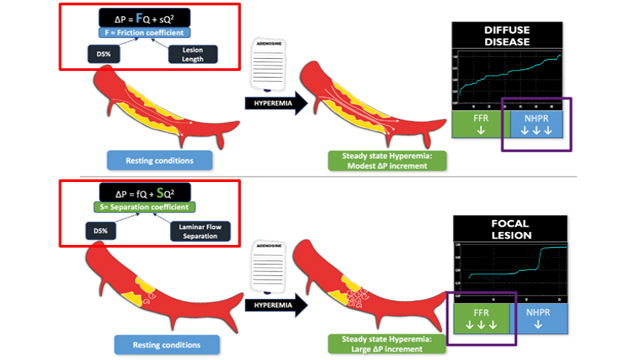
Update on coronary physiology in 2024
17 May 2024 – From EuroPCR 2024
This session provides an update on the available options for invasive coronary physiology in 2024. It reviews the latest evidence supporting the clinical adoption of invasive physiology indexes and shares practical tips and tricks for their application. Topics covered include CT-based physiology, pressure wire-based physiology, angiography-based...
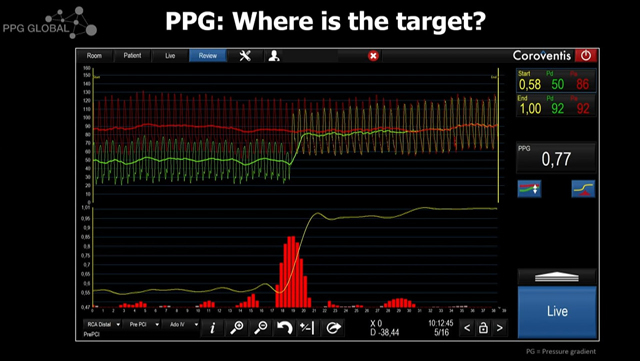
DCB PCI for de novo lesions: when and how?
15 May 2024 – From EuroPCR 2024
In this session, you will learn how to optimally perform DCB PCI, identify which lesions are best suited for this approach, and understand when it's necessary to switch from DCB to stent PCI. The session also features a debate on whether DCB-PCI should be the first...
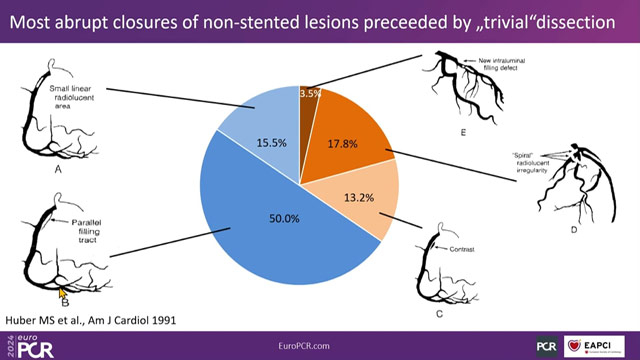
Primary PCI in particular clinical and angiographic scenarios
18 May 2022 – From EuroPCR 2022
Watch these videos to discover some interesting primary PCI cases in particular clinical and angiographic scenarios, such as: a rare cause of myocardial infarction and cardiac arrest in a young patient, a STEMI in a critically unwell surgical ICU patient, a myocardial infarction caused by some non-obstructive coronary lesions, and...