


980 results
Dangers of dissection: the role of ICI
20 May 2026 – From EuroPCR 2026
This session explores the critical role of intracoronary imaging (ICI) in diagnosing and managing coronary artery dissections. Cases include fenestration techniques, stent migration challenges, polytrauma patient management, route selection dilemmas, and intricate procedural navigation to achieve successful outcomes.
Prevention and management of PCI complications
20 May 2026 – From EuroPCR 2026
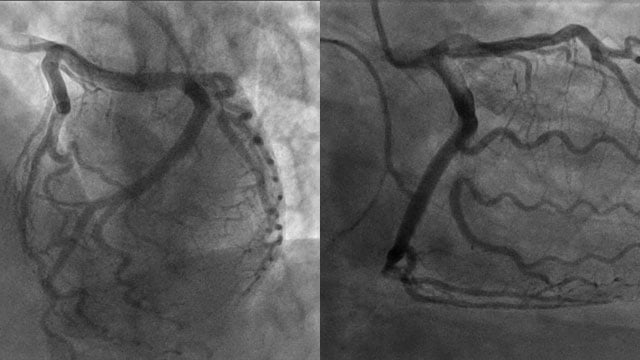
This session addresses the prevention and management strategies for complications arising during percutaneous coronary intervention (PCI). It presents real-world cases including management of entrapped guidewires, thrombosed aneurysms, catheter kinking, stent retrieval challenges, and complex retrieval scenarios, offering valuable insights into effective complication resolution techniques.

Intracoronary imaging evaluation of stent implantation
20 May 2026 – From EuroPCR 2026
Focusing on intracoronary imaging evaluation of stent implantation, this session presents serial OCT data on plaque characteristics and neoatherosclerosis post-STEMI, the clinical impact of stent malapposition in ACS, long-term apposition dynamics, factors influencing stent expansion in calcified lesions by NIRS-IVUS, and OCT insights into coronary artery...
Uncovering ischaemia mechanisms with intracoronary imaging
20 May 2026 – From EuroPCR 2026
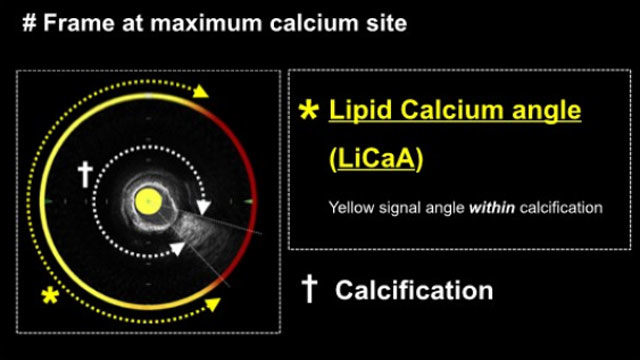
This session delves into the complex mechanisms of ischaemia through the lens of intracoronary imaging, highlighting challenging cases such as very-long, complex woven coronary syndromes, unusual ACS presentations, and the nuanced interplay between physiology and imaging in diagnosing angina in pulmonary hypertension with left main compression.
Multi-device approach to calcified lesions
20 May 2026 – From EuroPCR 2026
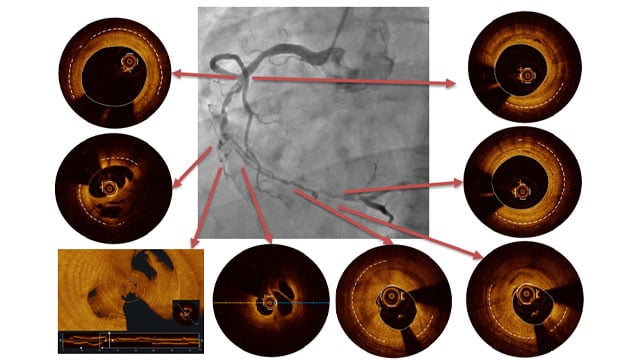
Explore a multi-device strategy for tackling complex calcified coronary lesions in this session. It includes case studies on left main trifurcation stenting, resistant calcified nodules treated with orbital atherectomy, severe restenosis, and critical calcifications in challenging anatomies, showcasing advanced techniques for plaque modification and lesion management.

Imaging guidance in everyday practice
20 May 2026 – From EuroPCR 2026
This session emphasizes the role of imaging guidance in everyday interventional cardiology practice. Through challenging cases involving exertional chest pain, unusual coronary anatomy, complex left ventricular access, side branch navigation, and IVUS-guided re-intervention, it underscores the critical value of advanced imaging for diagnostic clarity and procedural...
AI adoption in the cathlab of tomorrow - Intravascular imaging applications
20 May 2026 – From EuroPCR 2026
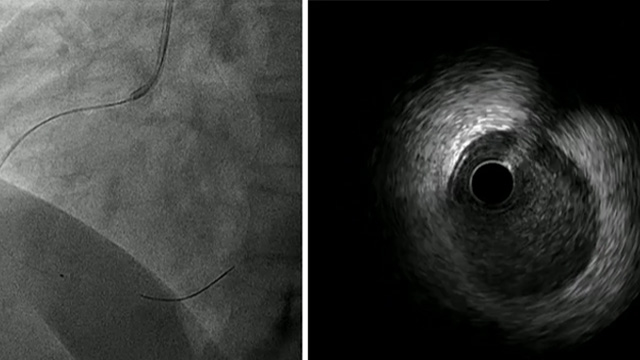
This session examines the integration of artificial intelligence in intravascular imaging within the cath lab, identifying unmet needs in OCT interpretation, exploring AI's role in enhancing procedural decision-making and trust, and discussing barriers to implementation such as prediction reliability and clinical actionability.
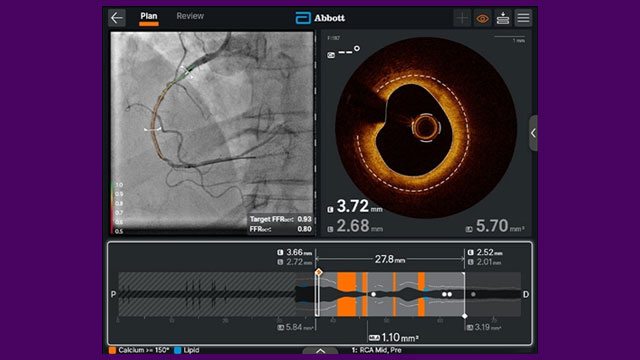
New evidence for the use of DCB
20 May 2026 – From EuroPCR 2026
This session reviews emerging evidence supporting the use of drug-coated balloons (DCB) in complex PCI. It covers data from recent trials such as SELUTION De Novo, studies on vascular healing, restenosis patterns, long-term outcomes compared to DES, and optimal side branch treatment in bifurcation lesions.
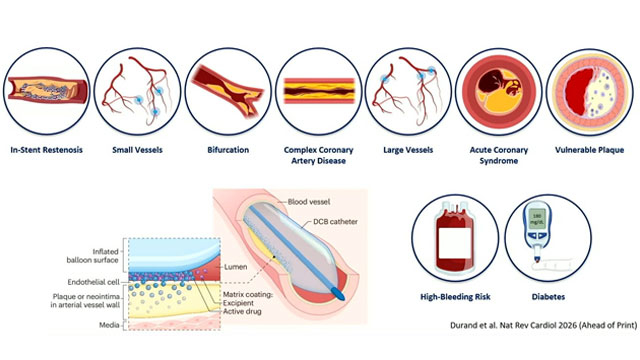
Combination of dedicated devices for optimal treatment of calcified lesions
20 May 2026 – From EuroPCR 2026
Focused on the optimal treatment of heavily calcified coronary lesions, this session presents a comprehensive overview of dedicated device combinations. It highlights strategies such as rotablation, rotatripsy, and approaches to managing protruding calcified nodules and undilatable lesions, emphasizing a stepwise approach to complex calcium modification in...
PCI in cardiogenic shock - Possibilities and limitations
20 May 2026 – From EuroPCR 2026
This session evaluates percutaneous coronary intervention (PCI) in the context of cardiogenic shock, discussing both possibilities and limitations. It features complex cases including Impella-supported rotablation in elderly patients, microaxial flow pump use, and challenging interventions in young patients with multivessel chronic total occlusions, providing insights into...