


24 Apr 2026
Eugene Braunwald: the world of cardiology and medicine mourns the loss of one of its greatest practitioners
In memoriam — Eugene Braunwald, 1929-2026
Eugene Braunwald, whose work reshaped cardiovascular medicine into the rigorous, evidence-based discipline we know today, leaves behind an extraordinary scientific legacy. He transformed how we think about the heart: not just as an organ to observe, but as a system to understand, measure, and treat through science.
It is hard to overstate the impact that Eugene Braunwald has had on the very conception of cardiology as it is understood today, as well as the vast influence his research, teaching and publications have on the health of our patients and our practice of medicine.
From his early years as the clinical director of the American National Institutes of Health, National Heart, Lung and Blood Institute where his leadership in cardiology and research were instrumental in many foundational trials and discoveries to his long tenure as the Chair of the Department of Medicine at Brigham and Women's Hospital of Harvard Medical School (MA, USA), he has been an immeasurable force in ensuring the foundations of medical education and the advancement of cardiology practice both in the United States and throughout the world.
“In the pre-internet era, when global congresses were essentially limited to the AHA and ACC, the writings of Eugene Braunwald were our daily compass in cardiology. His vision has profoundly shaped modern cardiology, particularly in the prevention and treatment of coronary disease.”
Jean Marco
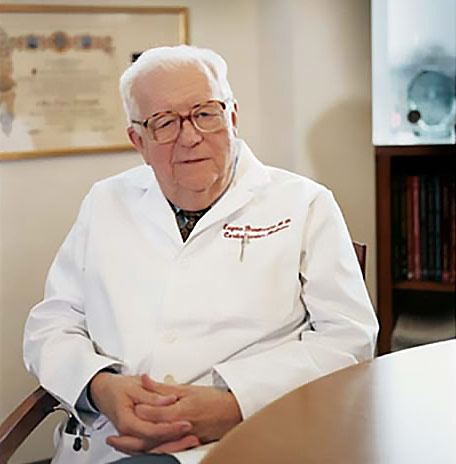
Courtesy of Robert Byrne
There are few if any in the healthcare community today who have not been touched by some part of what he has accomplished – whether from his conception of heart failure, his research in coronary artery disease or his founding of the TIMI academic research group and so much more, on to his work as Editor of the modern bible of cardiology, “Braunwald's Heart Disease” or his many decades editorship of “Harrison's Principles of Internal Medicine” Dr Braunwald seemed be omnipresent in all aspects of modern practice.
His presence will be deeply missed, but his work – at the heart of what we do each day – will never be forgotten by the generations of physicians that follow in his footsteps or of the countless patients he has helped through his dedication and vision.
This editorial, published in EuroIntervention in 2018 on “the legacy of Eugene Braunwald” captures as well today as it did in the last decade why he was considered the person who “contributed the most to the practice of cardiology”…