


20 May 2026
2026 Andreas Grüntzig Ethica Awardee: Roxana Mehran
The Andreas Grüntzig Ethica Award – the highest honour in the interventional cardiology community – is presented to individuals who have contributed in an extraordinary way to the PCR mission.

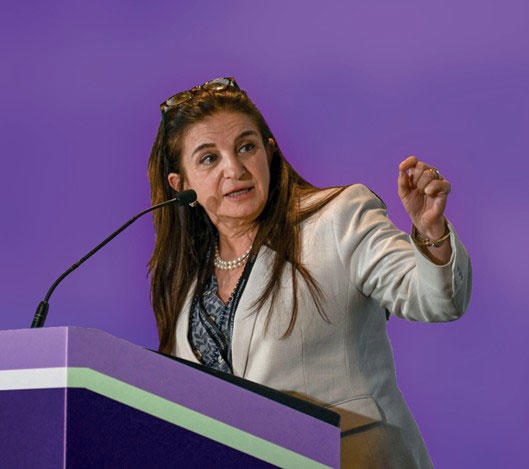
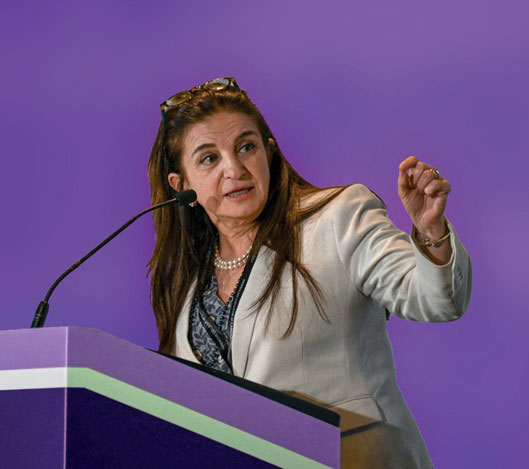
Roxana Mehran
2026 Andreas Grüntzig Ethica Awardee
Roxana Mehran (Icahn School of Medicine at Mount Sinai - New York, USA) will receive the award for her impactful work in improving outcomes for patients undergoing interventional procedures.
What do you consider to be your main achievements?
If I have to pick out some milestones that I’m most proud of, I’d start with my work on evaluating patterns of in-stent restenosis (ISR)1 and developing a risk score for procedure-related acute kidney injury2. I believe that a focus on ensuring our procedures are not only effective but also safe – by minimising complications and understanding how to manage them – is paramount to extending the reach of interventional treatment.
In addition, advancing the field requires the highest-quality clinical evidence. I learned so much about clinical trials during my involvement in conducting the HORIZONS-AMI study3 with Greg Stone. This experience proved invaluable when I later pursued independent research, first examining adherence to dual antiplatelet therapies (DAPT) post-PCI treatment through the PARIS registry4 and subsequently investigating aspirin withdrawal in high-risk patients in the TWILIGHT trials5.
Over the past 30 years, one of the most rewarding aspects of my work has been translating insights gained from individual patients in the cathlab into strategies that improve outcomes across broader patient populations.
What are you currently working on?
Recently, I have been leading a number of trials in both the structural and the coronary fields. These include the SMART trial6, comparing balloon-expandable with self-expanding valves in patients with a small aortic annulus undergoing TAVI, and SELUTION4ISR7, investigating drug-eluting balloons for the prevention of ISR.
A key priority for me is ensuring that the procedure is only the beginning of treatment – it must be integrated with prevention strategies to optimise long-term outcomes and patient longevity. It is important to follow patients after the cathlab, making sure they are receiving guideline-directed risk factor management and maintaining the durability of the procedure. To this end, I am involved in trials in lipid-lowering therapies, anti-inflammatory treatments and renal denervation for hypertension.
What important things have you learned along the way?
Definitely the most important lesson has been that removing barriers and borders – by understanding ethnic, cultural and sex differences – and working collaboratively is the most effective way to get things done well. We already do this in interventional cardiology, working across Heart Teams and learning from each other’s expertise for the benefit of the patient, as demonstrated two decades ago in the SYNTAX study8. I think this is how we can move the needle for the world, and that is one of my aims as President of the American College of Cardiology: to break down silos.PCR provides such a wonderful example of a collaborative environment. I will never forget all those years ago, when Jean Marco and Jean Fajadet asked me – an interventionalist just a couple of years out of my fellowship – to moderate LIVE cases.
I was one of the only women in that position at the time, and I seized the moment. And my advice to everybody is: when you’re given an opportunity, grab it, because it’s how you can shine.
How does it feel to win the Andreas Grüntzig Ethica Award?
I’ve been very, very lucky to have been recognised on many levels, but this one is incredibly special – to be acknowledged in such a way by the peers with whom I began my journey. It is a huge but unexpected honour, and I feel so humbled and grateful beyond words. I also hope this award empowers other women to continue pursuing a career in interventional cardiology – we need your contributions to our community.
References
- Mehran R, et al. Circulation. 1999;100:1970–1978.
- Mehran R, et al. Lancet. 2023;398:794–798.
- Stone GW, et al. N Engl J Med. 2006;352:2216–2230.
- Jaya JC, et al. JACC Cardiovasc Interv. 2012;12:982–992.
- Mehran R, et al. N Engl J Med. 2019;380:1509–1524.
- Heffernan HC, et al. N Engl J Med. 2024;390:1959–1971.
- City DDE, et al. Am Heart J. 2025;281:14–20.
- Oliny AT, et al. Am Heart J. 2025;281:194–204.