


21 May 2026
Euro4C strides forward with a new president
Euro4C – the Contemporary Care of patients with Calcified Complex lesions initiative – aims to improve clinical outcomes for patients with advanced, diffuse and calcified atherosclerotic CAD.
The important mission of Euro4C is achieved through activities including an Annual Meeting, educational sessions held during Courses, dedicated webinars, the publication of clinical cases and research initiatives.
At EuroPCR 2026, Mohamed Abdel-Wahab was announced as the new Euro4C president for 2026–2028, and here he outlines some plans for his tenure:
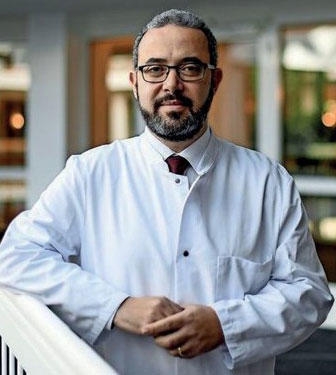
“It is an honour and a privilege to take on the role and to build on the great work of Beatriz Vaquerizo, our outgoing president, who has led the group so well over the last 2 years. The initiative is still relatively young and the need to gather interested individuals together to standardise practice and promote education remains as important as ever for this growing group of patients who have distinct needs.
It was under Professor Vaquerizo’s leadership that Euro4C held its first Annual Meeting in February. Around 250 participants met in Madrid for a successful 2-day event organised by Professor Vaquerizo and Professor Flavio Ribichini. The main feedback received was related to how highly practical the event was. We have plans to hold a second Annual Meeting in November 2027 where we hope to attract even more participants.
Professor Vaquerizo also introduced new dedicated Research and Educational Working Groups, which have helped to increase the visibility of these functions within Euro4C.
An aim of my presidency is to further support research efforts. For many years, the treatment of calcified CAD has been driven by expert opinion, and it was considered very difficult to conduct clinical studies. We now have established registries and scientific evidence is being generated to guide practice further.
It is my ambition that prospective randomised studies are initiated by the group, but for this to happen, we first need to define endpoints and outcome measures. This will take considerable efforts by the group and involve other stakeholders, but we must work together to standardise definitions, as our structural heart disease colleagues have done, to provide a backbone for robust clinical studies.
It seems that the field is in a period of transition at the moment where one generation of interventional cardiologists is handing over responsibility to the next generation. I think it is important that we address this transition as a group and set the standards for education.
Courses like EuroPCR, with the Calcium Skills Lab and collaborative sessions, help in this regard. Establishing online educational programmes will also be key to ensuring that knowledge is passed on in a structured way.
Sharing expertise and gaining insights from fellow professionals enhances our practice, and the Euro4C group is always happy to have input from new members who share our vision to improve the treatment of patients with complex calcified lesions.”