


20 May 2026
Spotlight on major Late-Breaking Trials presented at EuroPCR 2026
The EuroPCR Course Directors have selected 3 major late-breaking trials to be presented during the Course's 2026 edition.
These trials were selected for their design, results, and potential to impact clinical practice: discover the key findings of an IPD meta-analysis on coronary revascularisation in TAVI patients, a long-term comparison of PCI vs. CABG for left main disease, and a study on LAA closure vs. DOAC outcomes in atrial fibrillation.
Table of content
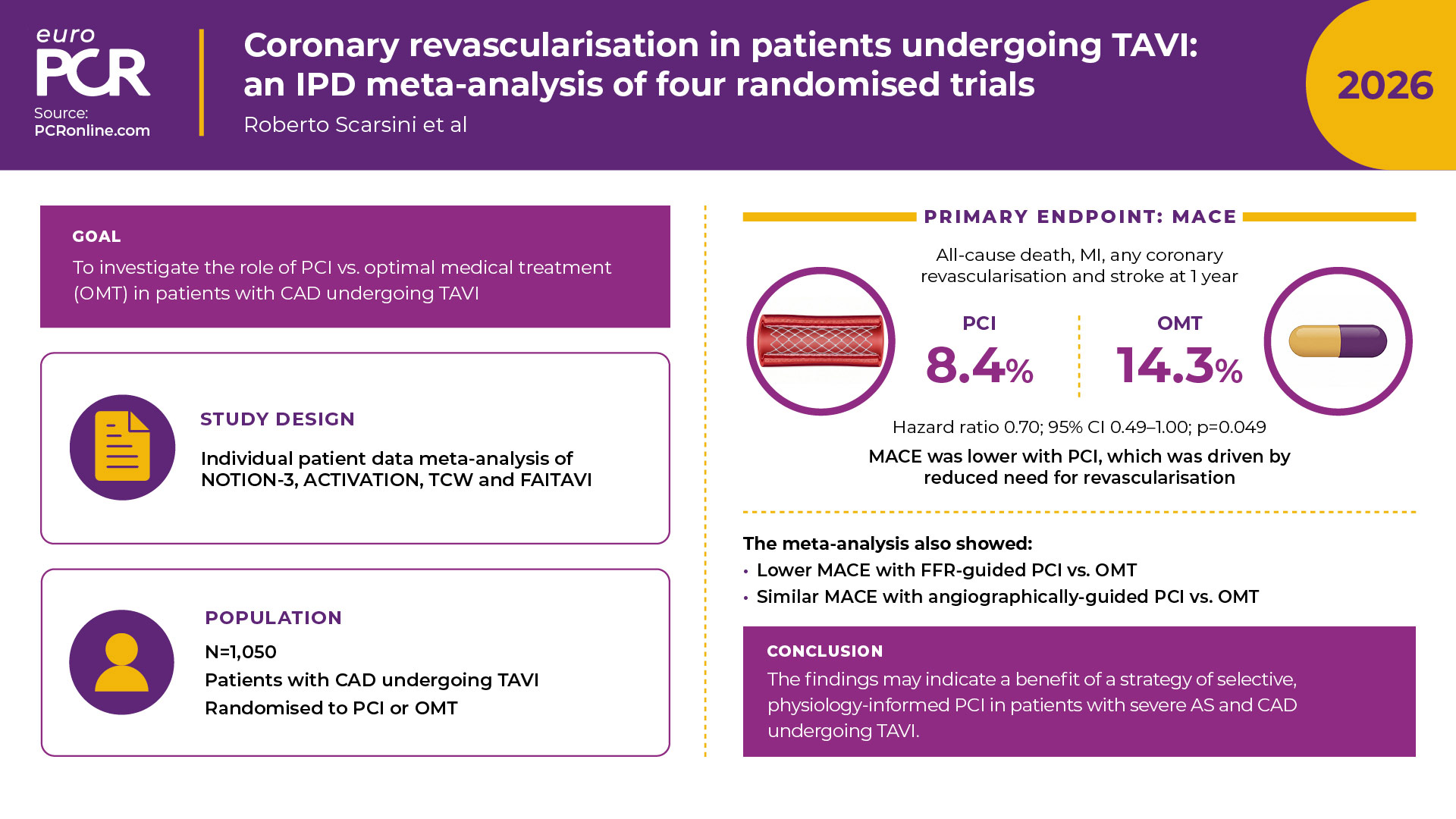
Coronary revascularisation in patients undergoing TAVI: an IPD meta-analysis of four randomised trials
Presented for the first time at EuroPCR 2026, the ARTICA individual participant data meta-analysis provides new insights into the role of coronary revascularisation in patients with coronary artery disease undergoing TAVI.
Pooling data from four randomised trials, the analysis suggests that physiology-guided PCI may reduce adverse cardiac events compared with optimal medical therapy alone, while routine angiography-guided PCI showed no clear benefit.
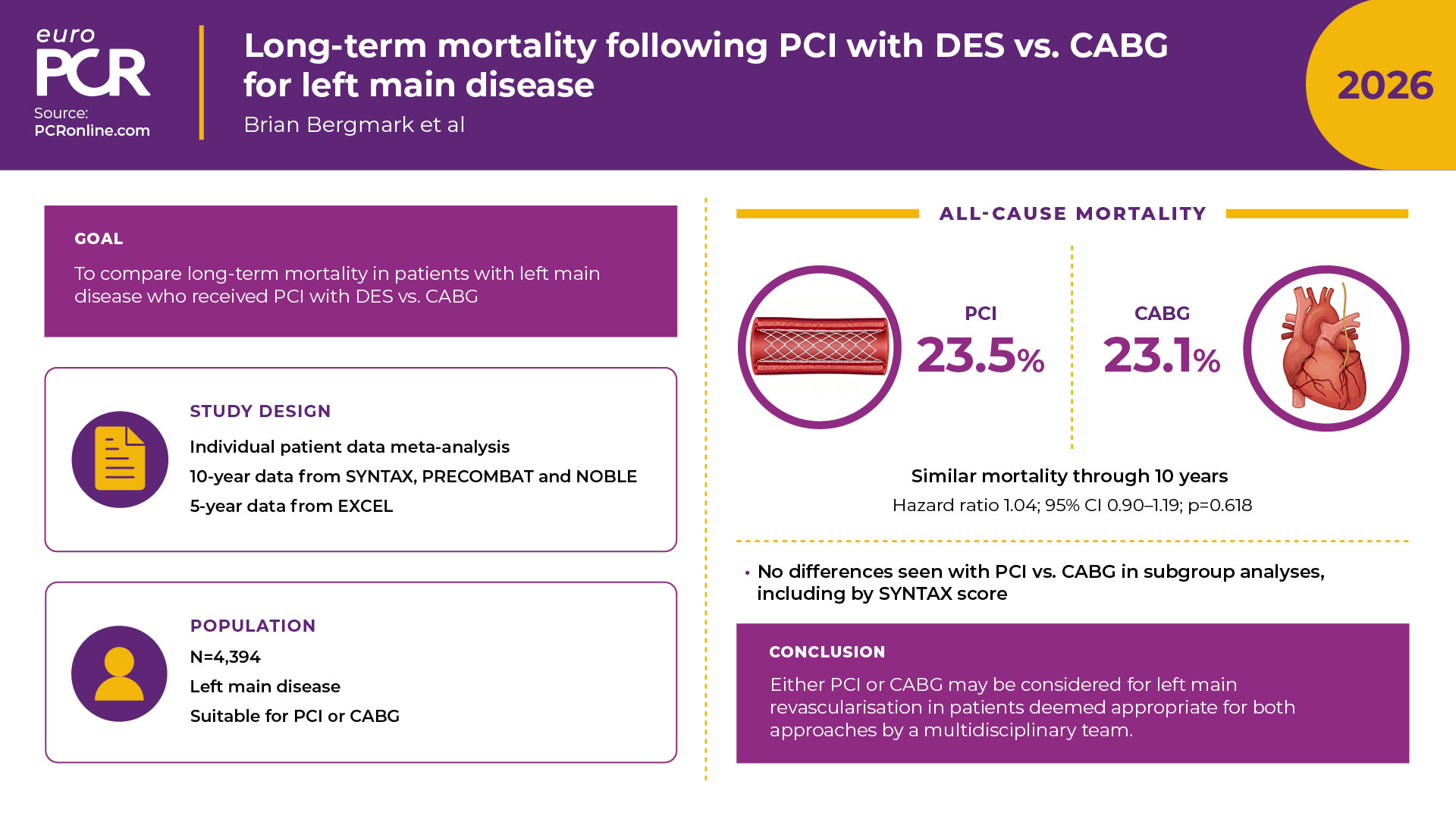
Long-term mortality following PCI with DES vs. CABG for left main disease
New long-term data unveiled at EuroPCR 2026 shed further light on the optimal revascularisation strategy for patients with left main coronary artery disease.
Combining individual patient data from four major randomised trials, this meta-analysis found comparable mortality outcomes between PCI with drug-eluting stents and CABG over up to 10 years of follow-up, reinforcing the role of both treatment strategies in carefully selected patients.
Outcomes of LAA closure vs. DOAC in patients with atrial fibrillation across different age groups
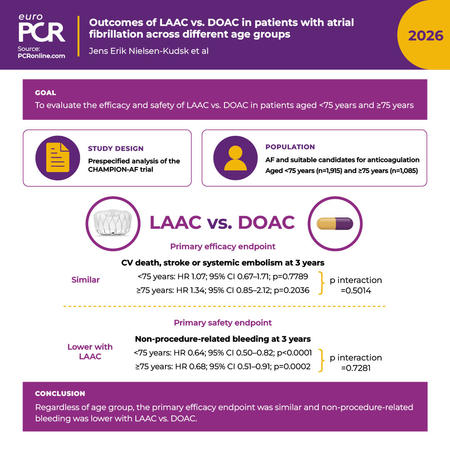
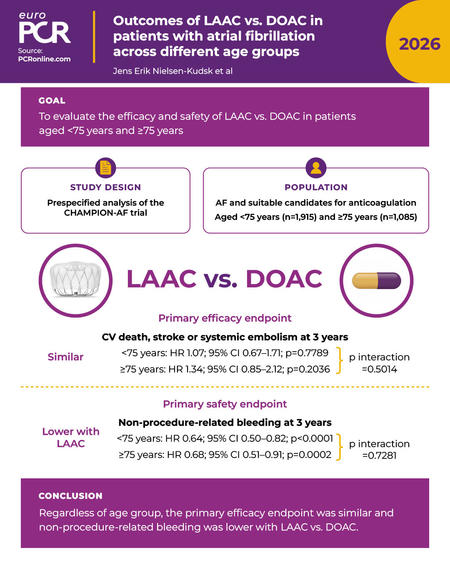
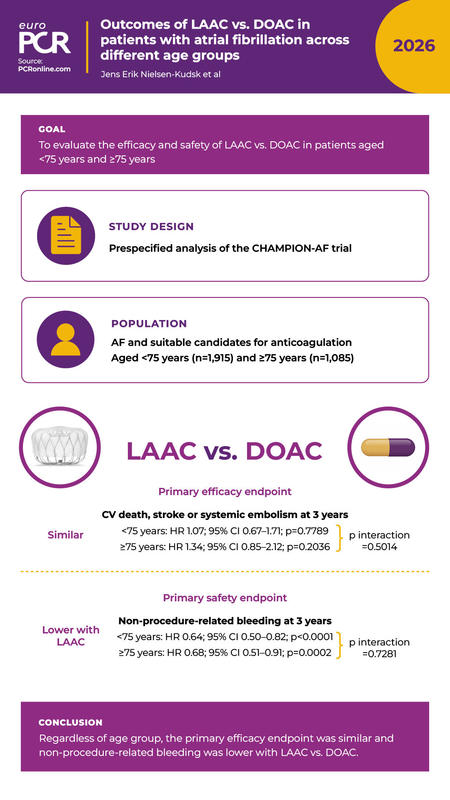
A new subgroup analysis presented at EuroPCR 2026 explored the impact of age on outcomes with left atrial appendage closure compared with direct oral anticoagulants in patients with atrial fibrillation.
Based on data from the CHAMPION-AF trial, the analysis showed consistent efficacy and safety outcomes across age groups, suggesting that age alone should not exclude suitable patients from consideration for LAAC.
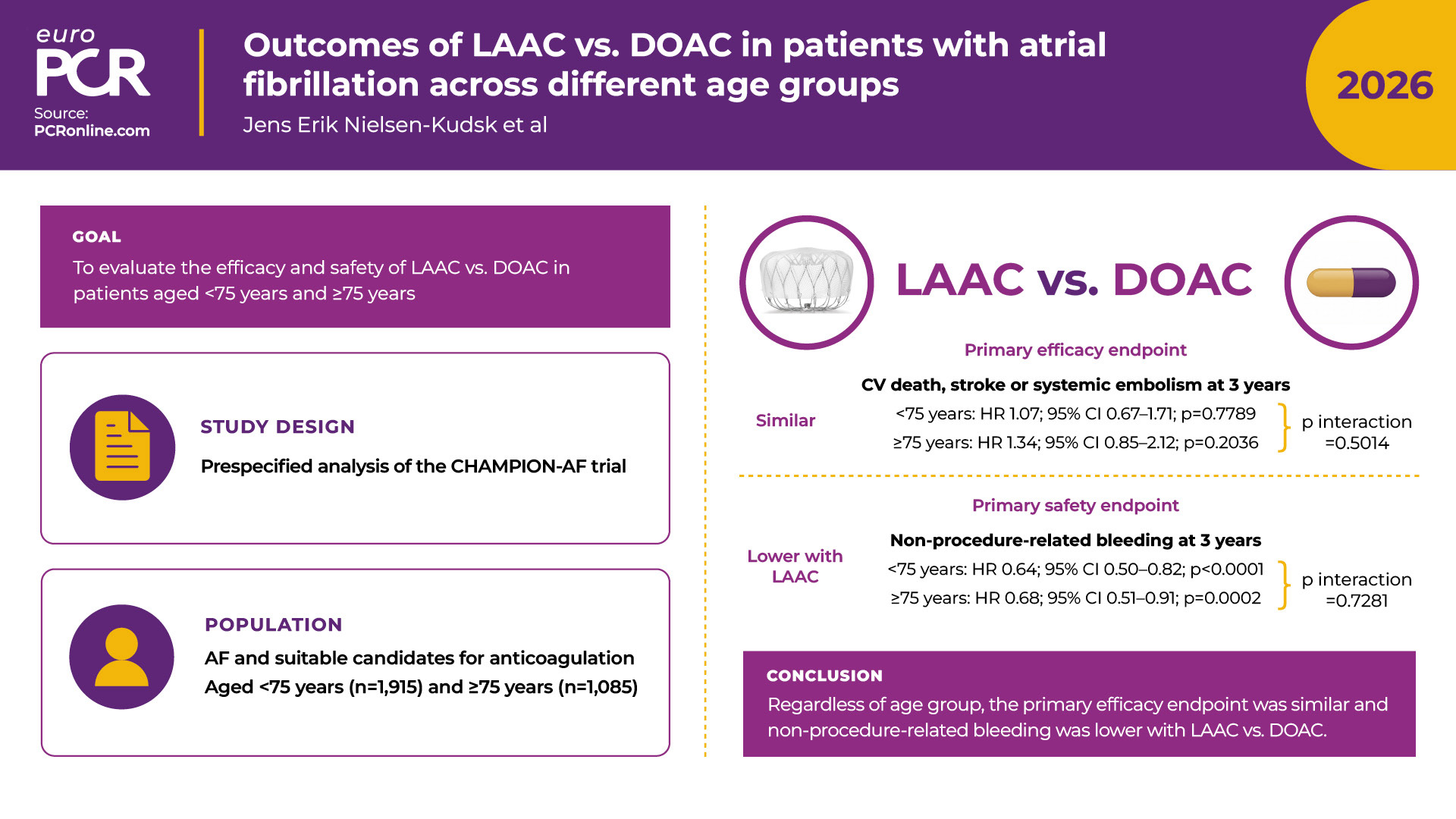


#EuroPCR 2026 Major LBTs: @HelleSoholm interviews @Nielsen_Kudsk about the results of a prespecified sub analysis of the CHAMPION-AF trial, which evaluated the efficacy and safety of LAAC vs. DOAC by age. #interventionalcardiology#LAACpic.twitter.com/0nP6bWslgy
— PCRonline (@PCRonline) May 20, 2026
#EuroPCR 2026 Major LBTs: @stefano_garzon interviews @MdScarsini about this meta-analysis which included data from 1,050 patients and analysed coronary revascularisation in patients undergoing #TAVI
— PCRonline (@PCRonline) May 20, 2026
#interventionalcardiology#TAVR#ClinicalResearch#sciencepic.twitter.com/Y4t6IPK91L