Massimo Leoncini
Latest contributions
Primary PCI dilemmas: when imaging saves the day
21 May 2026 – From EuroPCR 2026
This session highlights the pivotal role of imaging in resolving dilemmas during primary percutaneous coronary intervention (PCI). It presents complex cases illustrating challenges such as coronary compression, thrombus burden in large vessels, and culprit lesion identification, including the use of high-definition intravascular ultrasound (HD-IVUS) to reclassify...
Challenges and complications in coronary interventions
23 May 2025 – From EuroPCR 2025
Discuss real-world challenges and complications in coronary interventions including heavily calcified LAD PCI, cardiac crisis management, and rare intramural hematoma cases. The session emphasizes the importance of IVUS guidance and operator expertise in complex scenarios.
Best companion's case on intravascular lithotripsy
23 May 2025 – From EuroPCR 2025
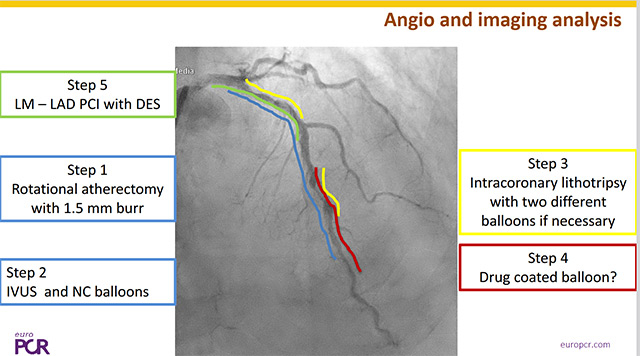
Join this session focusing on intravascular lithotripsy in challenging cases, emphasizing device and drug synergy, IVUS guidance, and strategies to avoid exacerbating complications. Clinical cases demonstrate management of tough calcified lesions with novel approaches.
Atherectomy for CTO-PCI
22 May 2025 – From EuroPCR 2025
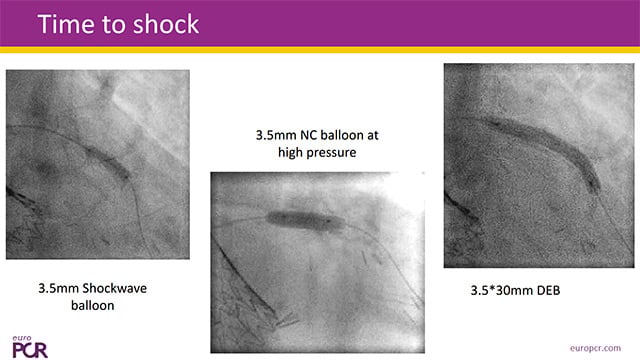
Explore atherectomy applications in CTO-PCI with cases demonstrating reverse cart technique, orbital atherectomy in heavily calcified occlusions, and management of atherectomy-induced coronary dissection. Gain practical insights into navigating complex CTO lesions with atherectomy support.
Retrograde removal of the broken sheath
22 May 2025 – From EuroPCR 2025
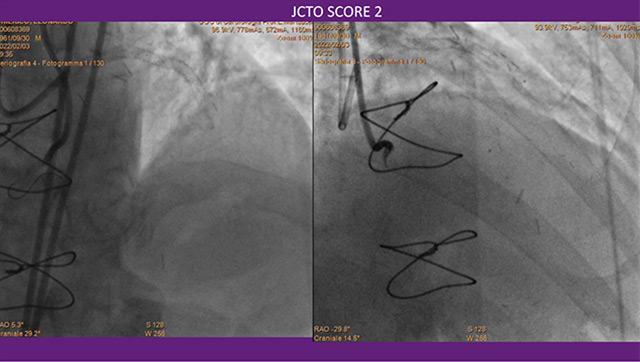
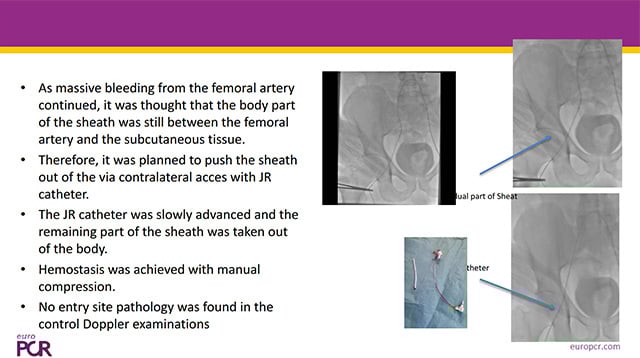
This session addresses complex complications during vascular access with a focus on retrograde removal of broken sheaths. Learn to recognize critical signs, manage rare but severe complications including broken guidewires in the radial artery, and explore innovative off-label solutions for challenging scenarios.
Large thrombus burden: contemporary solutions
21 May 2025 – From EuroPCR 2025
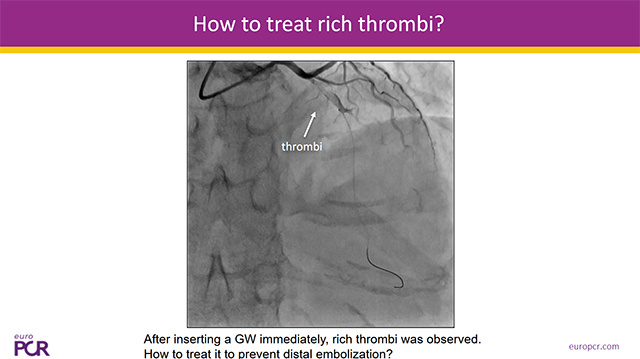
This session presents contemporary strategies for managing large thrombus burden in STEMI patients. Learn from expert cases demonstrating multiple effective approaches including modified manual thrombus aspiration guided by intravascular ultrasound (IVUS) and streamlined primary PCI techniques, essential for optimizing outcomes in complex thrombotic scenarios.
Catheter-based treatment of pulmonary embolism
20 May 2025 – From EuroPCR 2025
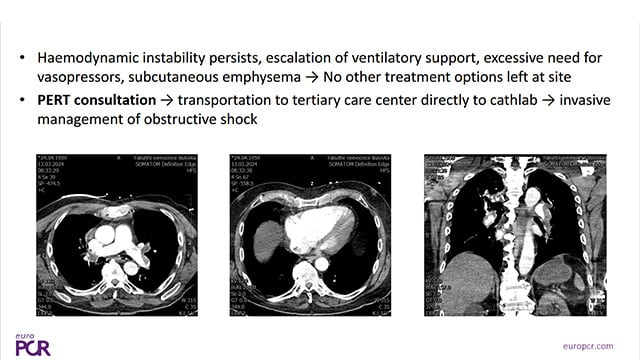
Explore catheter-based interventions for pulmonary embolism, addressing high-risk and massive thrombus cases, management of severe complications, and clinical scenarios involving multiple concurrent challenges to optimize patient care and procedural success.
Endovascular thrombectomy for pulmonary embolism
14 May 2024 – From EuroPCR 2024
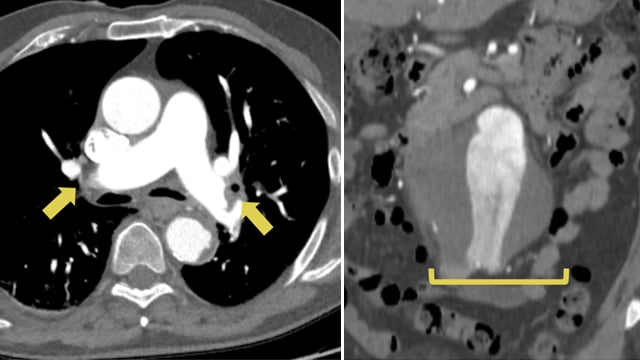
This session comprises selected EuroPCR 2024 Clinical Case submissions focused on endovascular thrombectomy for pulmonary embolism. It includes cases of pulmonary embolism resistant to systemic thrombolytic therapy, simultaneous acute pulmonary embolism and abdominal aortic aneurysm, paradoxical thrombus in transit with concomitant pulmonary embolism, and the successful...
Treatment of calcified lesions
18 May 2023 – From EuroPCR 2023
Discover innovative approaches in the treatment of calcified lesions in this session: witness the success of protected CHIP PCI in a patient with chronic kidney disease, explore the challenges posed by acute calcific stent recoil and the utilization of intravascular lithotripsy as an effective solution, uncover...
Interventional options
17 May 2023 – From EuroPCR 2023
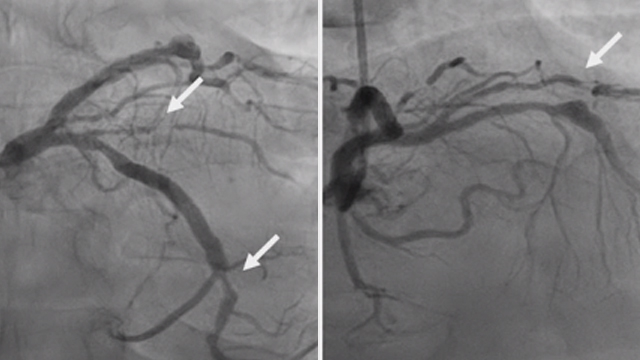
Enhance your understanding of pulmonary embolism management: Delve into a comprehensive selection of clinical cases and abstracts that provide in-depth analysis and commentary on interventional approaches, enabling you to grasp the intricacies of managing complications effectively.
PCI with BRS
17 May 2023 – From EuroPCR 2023
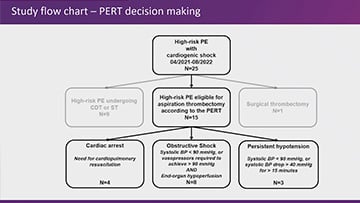
Looking to enhance your expertise in percutaneous coronary intervention using a bioresorbable scaffold? Join your collegues for a series of case presentations where you can observe different strategies in complicated situations.
STEMI and unusual thrombus
16 May 2023 – From EuroPCR 2023
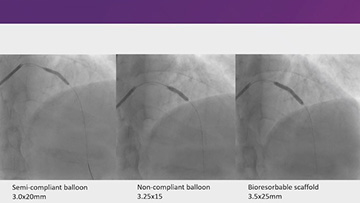
If you'd like to deepen your understanding of complications in ST-segment elevation myocardial infarction, join the speakers as they present a series of cases focusing on atypical thrombus formation.
Complications: chronic total occlusions
12 May 2021 – From EuroPCR 2021
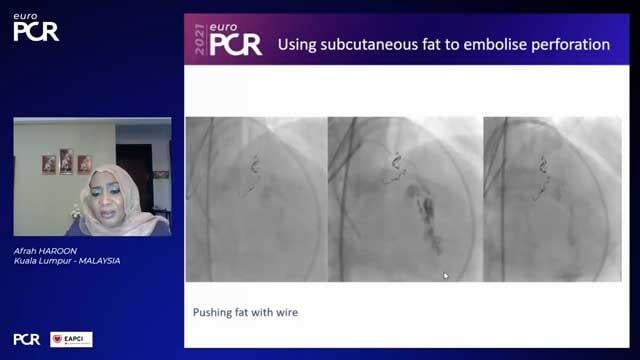
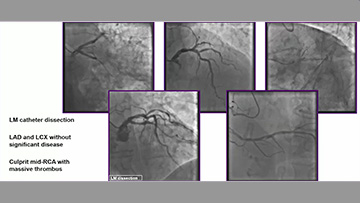
Watch this session to get proved that IVUS is extremely helpful in finding potential threats, and that fast recognition of coronary perforation is crucial, to learn more about the Ping-Pong technique, and to discover how to use subcutaneous fat to embolise perforation.