


509 results
Behind standard practice: a place for DCB
19 May 2026 – From EuroPCR 2026
This session examines the role of drug-coated balloons (DCB) beyond standard practice in coronary revascularization. It includes discussions on revascularization strategies in young patients, rescue of early distal LIMA–LAD anastomosis, treatment of in-stent restenosis, stepwise complex CTO bifurcation revascularization using kissing DCBs, and management of calcified...

PCI for complex left main disease
19 May 2026 – From EuroPCR 2026
This session delves into the complexities of percutaneous coronary intervention (PCI) for left main disease, emphasizing strategic approaches to dual critical lesions and innovative techniques such as excimer laser and drug-eluting balloons. It also explores hybrid strategies for treating in-stent restenosis and redo revascularisation, offering a...

Bioresorbable devices in clinical practice
19 May 2026 – From EuroPCR 2026
This session examines the evolving role of bioresorbable devices in coronary intervention, showcasing hybrid PCI strategies, novel applications in myocardial bridging, and innovative solutions for complex coronary lesions, including the use of bioadaptors and dual-device techniques.
PCR's Got Talent Round 1 - Session 2
19 May 2026 – From EuroPCR 2026
PCR's Got Talent Round 1 - Session 2 offers a diverse collection of studies addressing coronary microvascular dysfunction, atrial fibrillation management, TAVI outcomes, AI applications in imaging, mitral and tricuspid valve interventions, and in-stent restenosis treatment. The session culminates with deliberations and results announcements, reflecting cutting-edge...
Stent failure evaluation with intracoronary imaging
19 May 2026 – From EuroPCR 2026
This session provides an in-depth evaluation of stent failure using intracoronary imaging modalities such as IVUS and OCT. It presents diverse cases illustrating late drug-eluting stent failure, in-stent restenosis, neoatherosclerosis, and complications following rotational atherectomy, underscoring imaging's role in diagnosis and guiding reintervention.
DCB in contemporary PCI: evidence, technique and physiology-guided decision-making
19 May 2026 – From EuroPCR 2026
This EuroPCR 2026 session explores the evolving role of drug-coated balloons (DCB) in contemporary PCI, highlighting how growing clinical evidence, refined procedural strategies and physiology-guided tools are reshaping everyday practice.
The discussion reviews the latest data supporting DCB use, including long-term outcomes from major registries and trials...
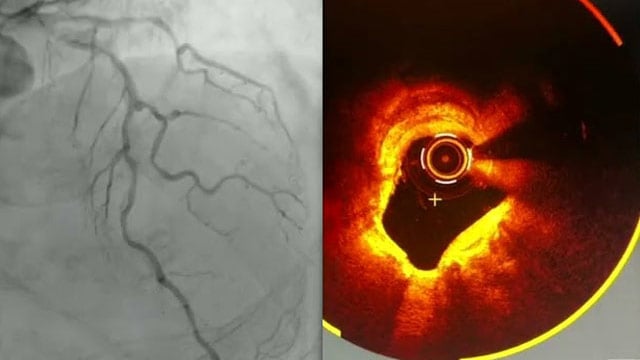
Evolving bifurcation treatment practices: DCB, angio-based FFR and side branch optimisation
19 May 2026 – From EuroPCR 2026
This EuroPCR 2026 session explores the evolving landscape of bifurcation PCI, focusing on drug-coated balloon (DCB) strategies, angio-based fractional flow reserve (FFR) and side branch optimisation. It highlights how new evidence and physiology-guided tools are reshaping decision-making in this complex lesion subset.
Discussions include insights from the...
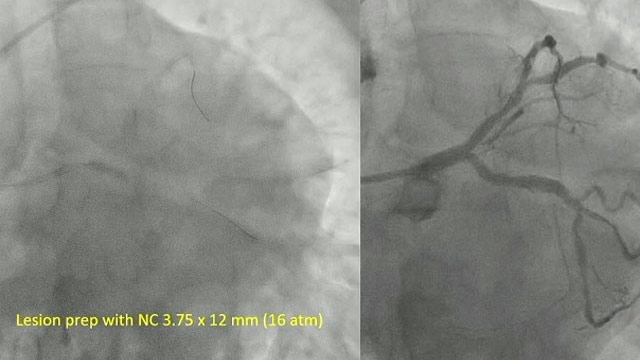
The metal-free strategy: shaping the new era of hybrid vessel restoration with DCB and BRS
19 May 2026 – From EuroPCR 2026
This EuroPCR 2026 session explores the emerging metal-free strategy in coronary intervention, combining drug-coated balloons (DCB) and bioresorbable scaffolds (BRS) to support a “leave-nothing-behind” approach to vessel restoration.
It focuses on lesion preparation, scaffold sizing and deployment, and the integration of hybrid therapies to optimise procedural outcomes....
Rethinking stentless PCI strategy - Improving outcomes with Bioadaptor
19 May 2026 – From EuroPCR 2026
This EuroPCR 2026 session explores contemporary PCI strategies through the concept of stentless intervention using the Bioadaptor device in complex coronary disease.
It highlights the bioadaptive design features of Bioadaptor and reviews the supporting clinical evidence, with a focus on how this technology may influence procedural outcomes.
The...
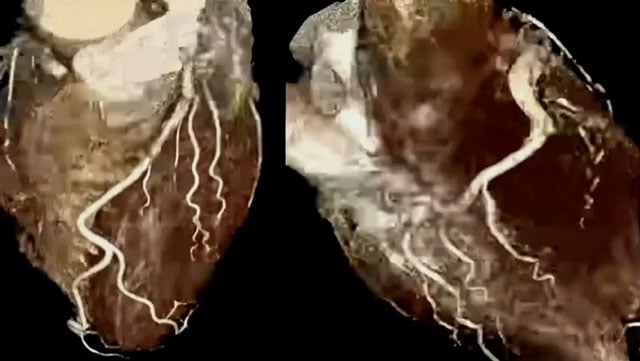
News from drug-eluting therapies in 2026
19 May 2026 – From EuroPCR 2026
This session presents the latest advancements in drug-eluting therapies for 2026, including predictors of target lesion failure after drug-coated balloon treatment, clinical outcomes related to stenting length, and novel insights into sirolimus transfer evidenced by in vivo OCT imaging.