277 results
Unusual structural interventions - Part 2
18 Nov 2025 – From PCR London Valves 2025
This session highlights unusual structural interventions in cardiology, featuring comprehensive CT screening for left atrial appendage closure, management of procedural complications, novel access techniques for balloon aortic valvuloplasty, transcatheter treatment of mitral bioprosthetic valve vegetation, and percutaneous ventricular septal rupture closure success criteria.

Featured research - TAVI - Part 13
18 Nov 2025 – From PCR London Valves 2025
This session delves into key clinical and procedural advances in TAVI, including the randomized PAF-TAVI trial assessing amiodarone for preventing post-TAVI atrial fibrillation, cost comparisons of balloon-expandable tissue preservation valves versus other devices, leaflet modification methods to reduce coronary obstruction risk, optimization techniques for valve-in-valve TAVI...

Paravalvular leak closure - Part 1
17 Nov 2025 – From PCR London Valves 2025
This session focuses on paravalvular leak closure challenges and solutions. It features complex cases such as extraction of plugs jailed between mechanical valves, managing leaks associated with severe annular calcification, aorto-mitral curtain leaks, device embolisation post-TMVR, and device-related haemolysis after closure procedures.
TAVI valve-in-valve - Part 4
17 Nov 2025 – From PCR London Valves 2025
This advanced session addresses complex valve-in-valve TAVI procedures, including management of challenging cases involving combined valve-in-valve TAVI and thoracic endovascular aortic repair. It also discusses technical considerations such as retrieval of lost stents in the left main coronary artery and critical aspects of TAV-in-TAV selection, sizing,...
Complex valve-in-valve leaflet modification - LIVE Case
17 Nov 2025 – From PCR London Valves 2025
Watch this LIVE case followed by a recorded case, regarding a 79-year-old male with permanent AF and a history of surgical aortic valve replacement in 2010 (Magna Ease 25) who presented with symptomatic bioprosthetic valve stenosis, normal LV function, and no CAD. A Sapien 3 Ultra...
Paravalvular leak closure - Part 2
17 Nov 2025 – From PCR London Valves 2025
This session is dedicated to paravalvular leak (PVL) closure techniques, featuring percutaneous approaches after surgical valve implantation and TAVI complications such as annulus rupture. It includes advanced management using multiple plugs for long-tunnel mitral PVLs, innovative transformation from pop-up to plug strategies, and transapical approaches following...
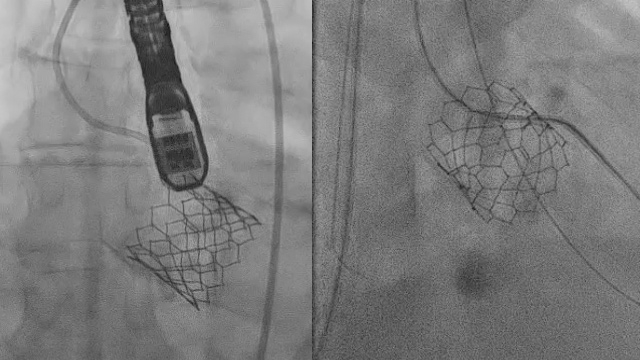
Early Career Research Award Final
17 Nov 2025 – From PCR London Valves 2025
Highlighting pioneering research in structural heart interventions, this session presents studies on the impact of transcatheter tricuspid valve replacement (TTVR) on left ventricular geometry and function, myocardial remodeling in aortic stenosis, physiological responses after mitral and tricuspid edge-to-edge repairs, advancing the understanding of device effects on...
TAVI complications - Part 2
17 Nov 2025 – From PCR London Valves 2025
This session explores complex and uncommon complications associated with TAVI procedures, highlighting challenging clinical scenarios such as neurological complications in bicuspid valves, management of critically unstable left ventricles, and outcomes in complex valve interventions. Each topic offers valuable lessons for improving procedural safety and patient outcomes...
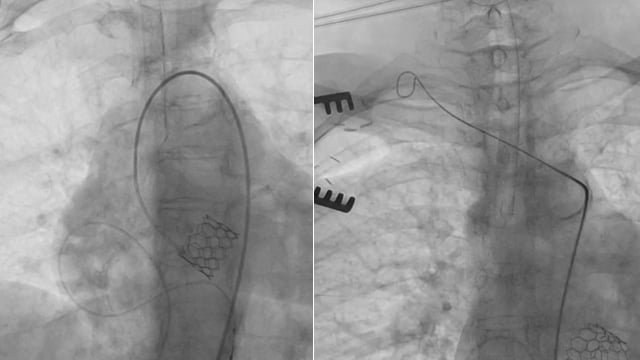
Complications of LAA closure - Avoidance and management
17 Nov 2025 – From PCR London Valves 2025
Focused on the prevention and management of complications in left atrial appendage (LAA) closure, this session covers recognition of key procedural risks, techniques for safe transseptal puncture, and strategies to prevent and address device embolisation, pericardial effusion, residual leaks, and device-related thrombus, ensuring procedural safety and...
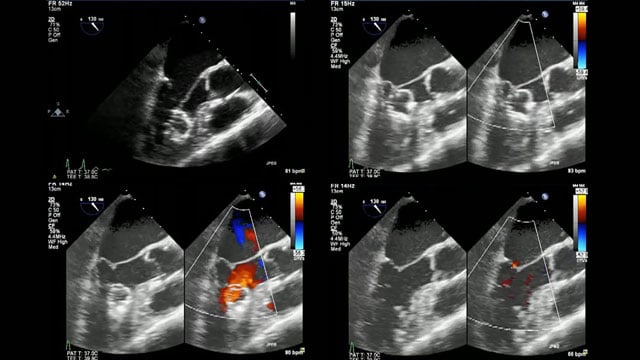
Unusual structural interventions: infective endocarditis, ventricular septal rupture & hypertrophic obstructive cardiomyopathy
17 Nov 2025 – From PCR London Valves 2025
This session explores unusual structural interventions, focusing on percutaneous solutions for right-sided infective endocarditis, post-myocardial infarction ventricular septal rupture closure, and novel septal reduction techniques for hypertrophic obstructive cardiomyopathy. It presents challenging cases and device selection considerations in complex structural heart disease.