3653 results for «358»
3653 results
CTO beyond the conventional: when new strategies come to the rescue
22 May 2025 – From EuroPCR 2025
Delve into advanced strategies for chronic total occlusion (CTO) beyond conventional methods. This session covers step-by-step re-entry techniques with electrified guidewires, approaches to CTO in small vessels, and indications and methods for occlusion of saphenous vein grafts, illustrated by detailed case discussions and key learnings.
Bifurcation CAD: presentation and PCI strategies
22 May 2025 – From EuroPCR 2025
Navigate the complexities of coronary bifurcation disease with a comprehensive session covering decision-making, imaging applications, and PCI strategies. Review clinical scenarios involving left main disease, calcifications, and acute presentations. Understand the pivotal role of intracoronary imaging and explore provisional and two-stent techniques through detailed case discussions...
Should STEMI treatment be related to specific clinical patient characteristics
22 May 2025 – From EuroPCR 2025
This session evaluates whether STEMI treatment should be tailored to specific clinical patient characteristics. It includes insights into STEMI management in very young patients, benefits of revascularisation of LAD non-culprit lesions in older AMI patients, clinical outcomes from the NAMI registry for young STEMI patients, and...
Understanding research: insights from a groundbreaking study
22 May 2025 – From EuroPCR 2025
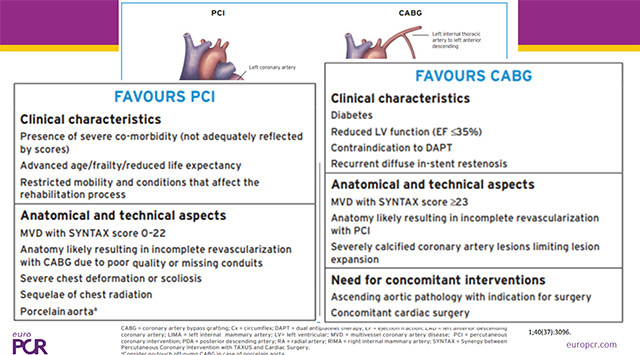
Enhance your understanding of contemporary research in PCI versus CABG with this session. Learn foundational research principles, latest study findings, and how to translate evidence into clinical practice to improve patient communication and outcomes, bridging the gap between research and everyday cardiology care.
Predictors outcome after tricuspid TEER: is there a perfect tool
22 May 2025 – From EuroPCR 2025
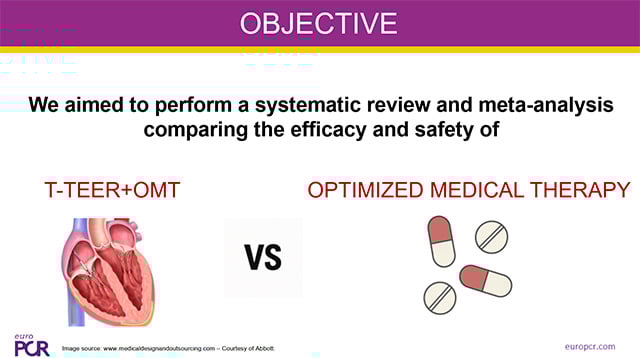
Examine predictors of outcome following tricuspid transcatheter edge-to-edge repair (TEER) in this focused session. Review meta-analyses on TEER efficacy, survival benefits in high-risk patients from the EuroTR registry, and prognostic value of MELD?XI score from the TRISPA registry. Learn about TRI.Fr eligibility criteria and validation of...
High-risk PCI in acute coronary syndrome
22 May 2025 – From EuroPCR 2025
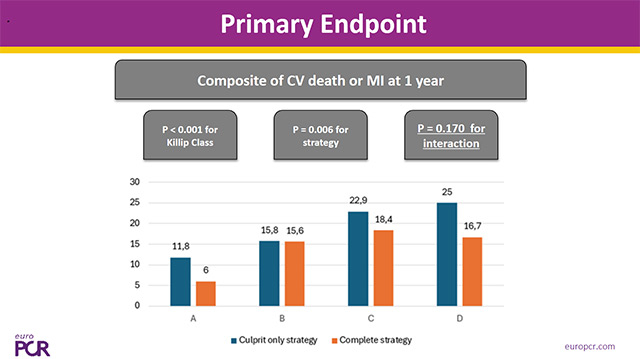
Explore high-risk PCI strategies in acute coronary syndrome patients who are unsuitable for surgery. This session presents insights on Killip class influence, haemodynamic support with micro-axial flow pumps, disease progression patterns in complicated STEMI, and the prognostic value of QFR-guided functional SYNTAX scores in ACS management.
When things threaten to go wrong: navigating procedural complications
22 May 2025 – From EuroPCR 2025
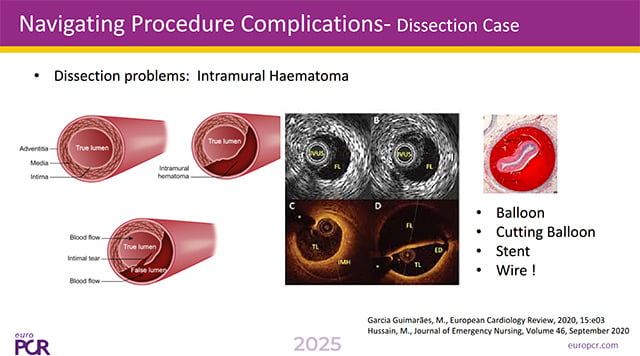
Develop critical skills for managing procedural complications in interventional cardiology. This session focuses on the identification and real-time management of common adverse events such as coronary dissection, perforation, tamponade, and embolism. Learn how to utilize echocardiographic imaging to assist in complication recognition and support your team...
When strange things happen, CTO and complications
23 May 2025 – From EuroPCR 2025
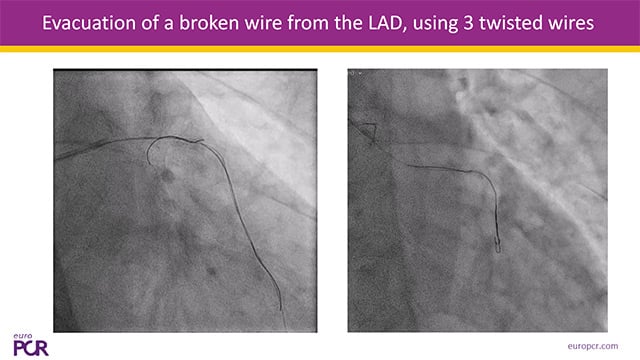
This session addresses complications and unexpected challenges encountered in chronic total occlusion (CTO) interventions. Learn from cases involving retrieval of stuck wires, coronary perforations, and strategies to manage complex and unusual procedural difficulties.
Challenges and complications in coronary interventions
23 May 2025 – From EuroPCR 2025
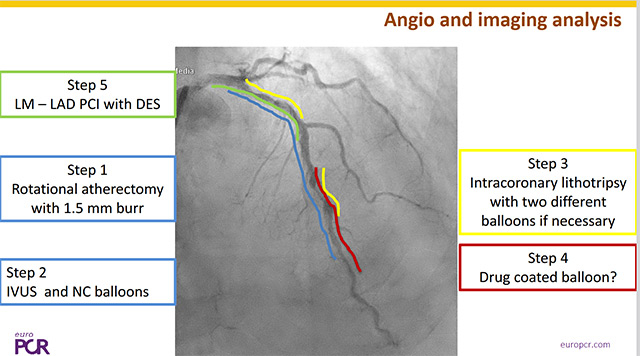
Discuss real-world challenges and complications in coronary interventions including heavily calcified LAD PCI, cardiac crisis management, and rare intramural hematoma cases. The session emphasizes the importance of IVUS guidance and operator expertise in complex scenarios.
Navigating complexity in high-risk patients with multivessel disease undergoing PCI
23 May 2025 – From EuroPCR 2025
This educational session focuses on navigating the complexities of PCI in high-risk patients with multivessel disease. Learn the roles of imaging and physiology, low-contrast PCI techniques, and optimal strategies for patients with concomitant aortic stenosis, illustrated through detailed case discussions.
Essential role of imaging in left main PCI
23 May 2025 – From EuroPCR 2025
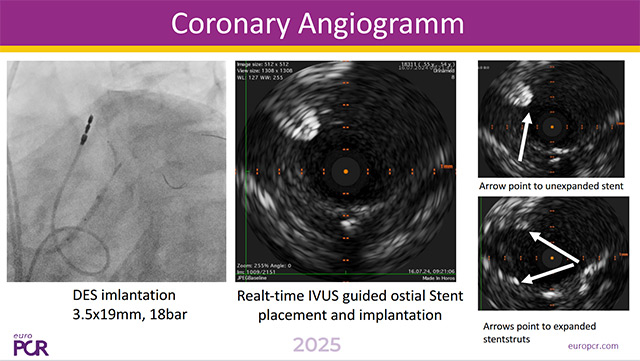
Discover the essential role of intravascular imaging, particularly IVUS, in guiding left main PCI. Case studies highlight real-time guidance, management of complex bifurcation lesions, and strategies for stent failure, emphasizing imaging's impact on procedural outcomes.
Innovative approaches to refractory heart failure: devices and therapies to the rescue
23 May 2025 – From EuroPCR 2025
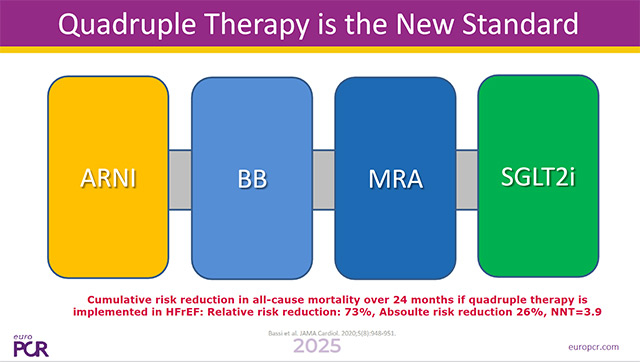
This session highlights innovative device-based therapies for refractory heart failure, emphasizing the integration of neuromodulation, decongestive strategies, and the synergy with pharmacological treatments. Case presentations illustrate the evolving landscape of advanced heart failure management.
Life threatening complications in CTO PCI
23 May 2025 – From EuroPCR 2025
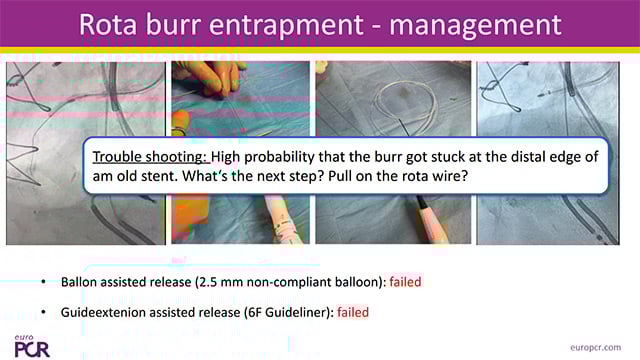
Focus on life-threatening complications during CTO PCI with topics including rotational atherectomy challenges, interventricular septal puncture, surgical retrieval of fractured guidewires, and image-guided strategies for managing multivessel CTO complications, enhancing procedural safety.
Coronary complications: sharing the unusual ones
23 May 2025 – From EuroPCR 2025
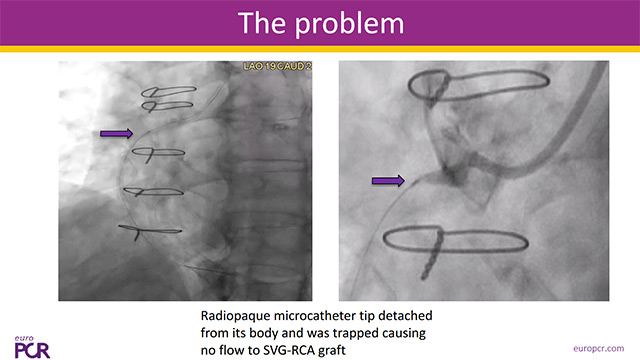
This session shares unusual coronary complications including microcatheter tip entrapment, balloon shaft fracture, coronary balloon rupture salvage, and retained equipment retrieval, highlighting innovative solutions and procedural vigilance.
Optimal acute heart failure care: must have, must do
22 May 2025 – From EuroPCR 2025
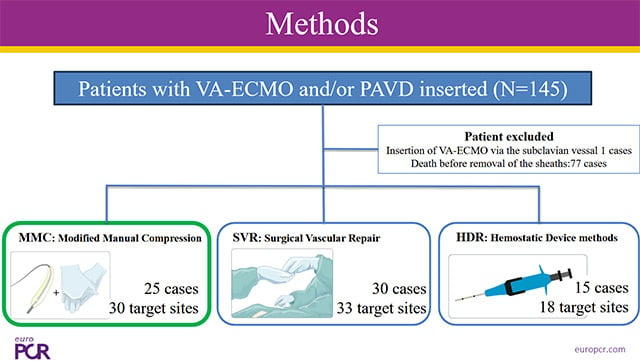
This session presents must-have strategies for optimal acute heart failure care. Topics include establishing an extracorporeal cardiopulmonary resuscitation referral center with patient outcomes, percutaneous closure in ventricular septal rupture, modified manual compression for large-bore sheaths, antithrombotic therapy considerations in AMI complicated by cardiogenic shock with mechanical...
Prevention and management of TAVI complications
14 Feb 2026 – From PCR Tokyo Valves 2026
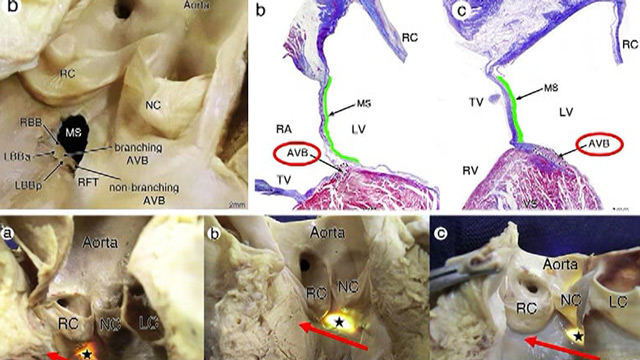
This session addresses the prevention and management of major complications associated with transcatheter aortic valve implantation (TAVI). Attendees will gain a detailed understanding of mechanisms behind cerebral infarction, haemolysis, valve infolding, pacemaker implantation, and valve migration, along with expert strategies for recognition, decision-making, and bailout techniques...
Primary mitral TEER in small anatomy - LIVE case
15 Feb 2026 – From PCR Tokyo Valves 2026
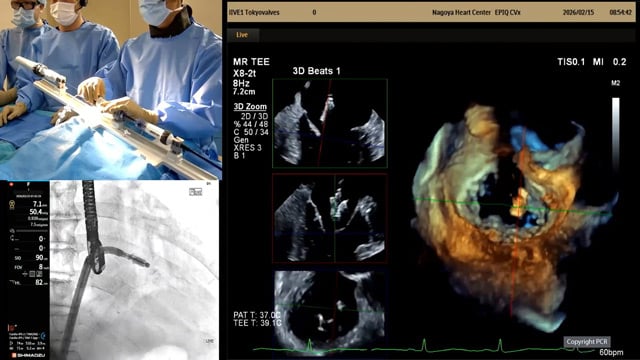
An 89-year-old male with diabetes mellitus, hypertension, chronic kidney disease (eGFR: 46), and CAD with a history of NSTEMI and CTO of the RCA, presented with symptomatic primary mitral regurgitation (P1–P2 prolapse) and preserved LV function (56%).
One Pascal ACE device was implanted.
LIVE Educational Case from Nagoya...
Guidelines update
15 Feb 2026 – From PCR Tokyo Valves 2026
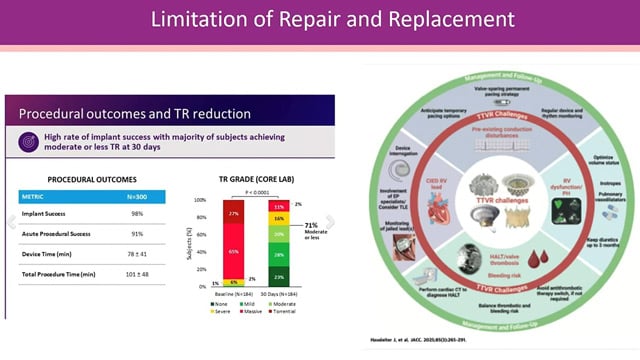
This session reviews the latest updates in the ESC/EACTS guidelines for structural heart disease, emphasizing their clinical implications and future trends. Participants will gain understanding of changes in aortic, mitral, and tricuspid valve recommendations, including new age cutoffs, asymptomatic disease management, and the evolving role of...
Future devices and techniques for structural heart disease
15 Feb 2026 – From PCR Tokyo Valves 2026
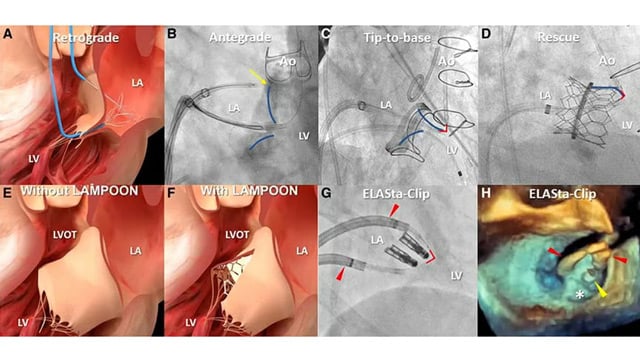
This session surveys the future landscape of structural heart disease treatment, addressing current limitations in transcatheter valve technologies and presenting emerging devices and techniques for aortic, mitral, and tricuspid valves. Attendees will gain insights into innovations poised to transform therapeutic options for structural heart disease.
PCR Tokyo Valves 2026 Closing Ceremony
15 Feb 2026 – From PCR Tokyo Valves 2026
The Closing Ceremony marks the conclusion of this cardiology conference, providing a formal wrap-up and reflection on the key highlights and advancements presented throughout the event. It serves as an opportunity to acknowledge contributors and set the stage for future initiatives in interventional cardiology.