3895 results for «2025»
3895 results
Fractured stent and aneurysmal expansion of the coronary artery
17 May 2022 – From EuroPCR 2022
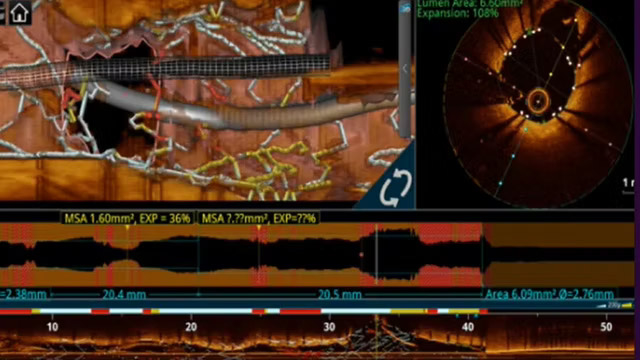
Discover the case of a 51 year-old male presenting with stable angina, with an history of ischemic heart disease (stented several times), hypertension and benign lung tumor (active smoker). Angiogram revealed a mid LCx CTO, a mid LAD aneurysmal extended with distal part occluded and an...
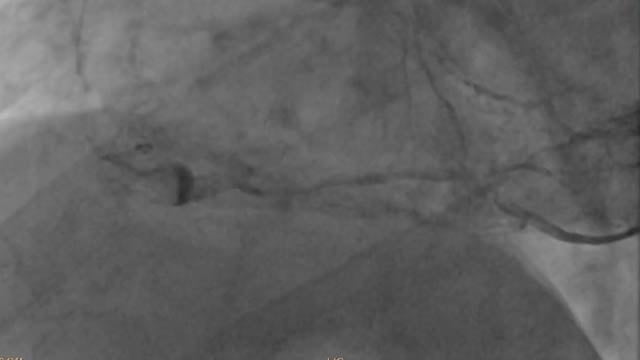
Repeat NSTEMI late after self-expanding TAVR
17 May 2022 – From EuroPCR 2022
Discover the case of a 79 year-old man presenting to the ER with NSTEMI and chest pain, with an history of NSTEMI with PCI and TAVR (CTO of the dominated RCA and intermediate stenosis of the proximal LAD). Angiography reveals a tight stenosis of proximal and...
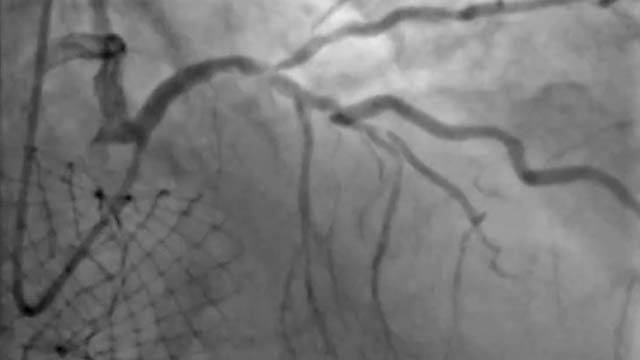
Severe coronary calcification: a setting for more than one lesion preparation method
17 May 2022 – From EuroPCR 2022
Discover the case of a 85 year-old male patient with an inferior NSTEMI, a severely reduced LVEF 20%, a symptomatic COVID-19 infection and various comorbidities. The RCA subocclusion was successfully stented, while the predilation of the proximal LAD calcification remained unsuccessful. How did the team treat...
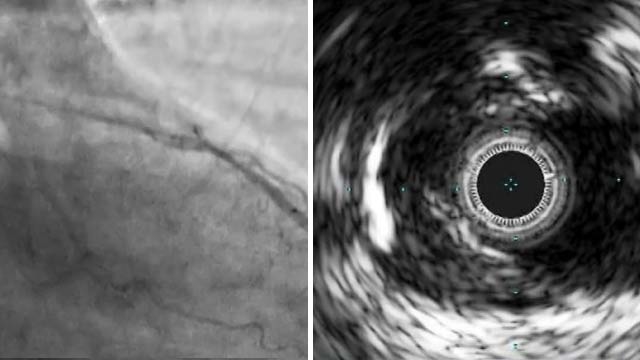
The freaky and rocky road
17 May 2022 – From EuroPCR 2022
Discover the case of a 85 year-old female patient presenting with angina during dialysis and LVEF 55% with hypokinesia in inferior wall. Angiogram reveals an anomalous RCA from left sinus with a mid-RCA calcified CTO. Watch the video to learn more about the treatment's option!
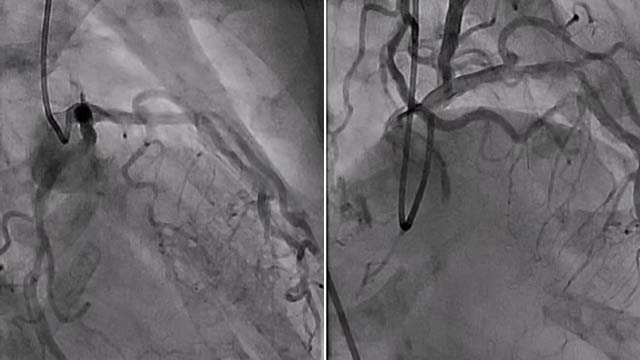
Treatment of atherosclerotic vasospastic plaque in proximal left anterior descending and left main
17 May 2022 – From EuroPCR 2022
Discover the case of a 57 year-old male patient presenting with chest pain, ECG-ST segment depression in all precordial leads and elevated HS troponins. He already suffered from this event 2 years ago (treated conservatively). Angiogram reveals a vasospastic atherosclerotic plaque in proximal LAD and LM....
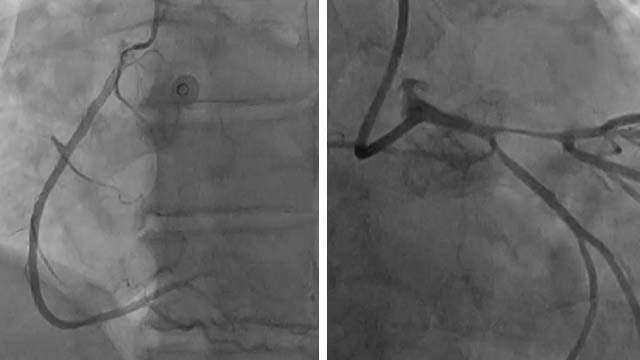
New insights in coronary artery disease and OHCA
17 May 2022 – From EuroPCR 2022
Consult this session to gain insights into coronary artery disease and OHCA: learn about the 4-year clinical outcomes of the RESTORE SVD trial regarding the Restore DCB, the results of the FAVOR III trial comparing QFR-guided vs angiography-guided PCI in patients with MVD, and more!
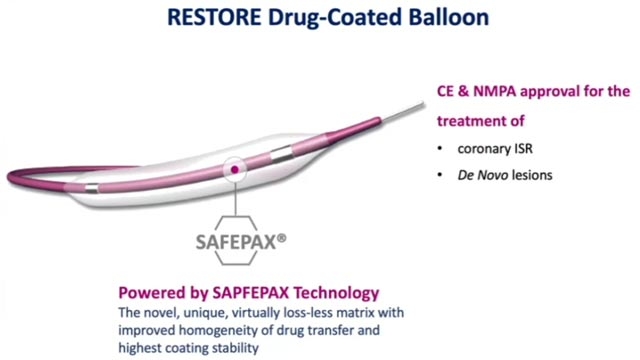
Peripheral Interventions
17 May 2022 – From EuroPCR 2022
Watch this video to learn more about the rationale, design and status of the SirPAD phase III randomized controlled trial, investigating whether the use of sirolimus-coated balloon catheters in patients with peripheral artery disease is not inferior to that of uncoated balloon catheters for major clinical...
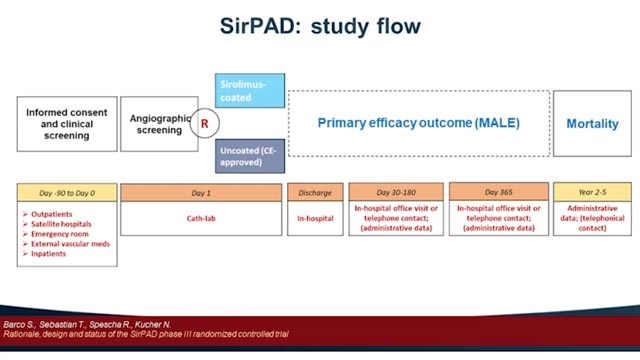
TAVI - New insights
17 May 2022 – From EuroPCR 2022
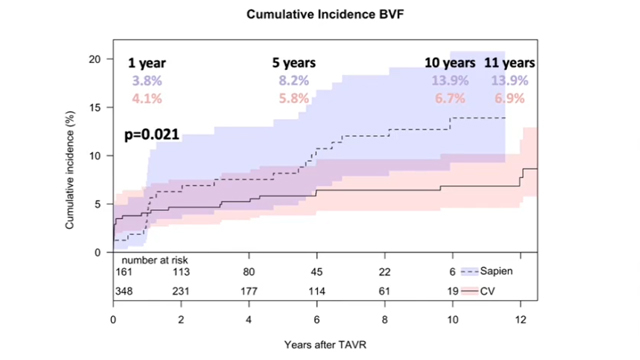
Watch this session to learn about the latest studies regarding TAVI, and gain insights into paravalvular leakage 5 years post-TAVI, infective endocarditis after TAVI, survival and structural valve degeneration in first generation transcatheter aortic valves, and more!
Clinical Cases on Peripheral Interventions - Part 1
17 May 2022 – From EuroPCR 2022
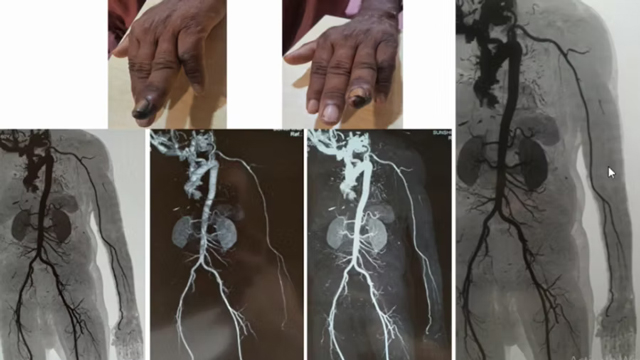
Consult this session to discover a selection of cases on peripheral interventions: peripheral angioplasty for gangrenous left ring finger with septicaemia, dangerous leaks in thoracic aortic aneurysm secondary to ataphylococcus aureus, and much more!
Innovative solutions in complex coronary lesions - Part 2
18 May 2022 – From EuroPCR 2022
Consult this session to learn about innovative solutions in complex coronary lesions, thanks to a variety of cases such as: PCI in a patient with absolute contraindication to contrast administration, another kiss in bifurcation, unexplained hypotension and a new mass, and more!
Innovative solutions in complex coronary lesions - Part 3
18 May 2022 – From EuroPCR 2022
Watch these videos to discover some innovative solutions in complex coronary lesions, thanks to a selection of cases: a 27-year-old woman with STEMI and multiple culprit lesions, an unusual communication between aorta and the heart, CTO RCA done with retrograde approach with reverse CART technique, and more!
PCR Valves e-Course 2020: Opening Ceremony
22 Nov 2020 – From PCR Valves e-Course 2020
Get a feel of the positive vibrations at #PCRvalves by watching a recording of the Opening ceremony, which was broadcast live from 3 TV studios in London, Paris and Toulouse! It shares how the comprehensive and innovative 3-day e-Course on the 3 valves – aortic, mitral...
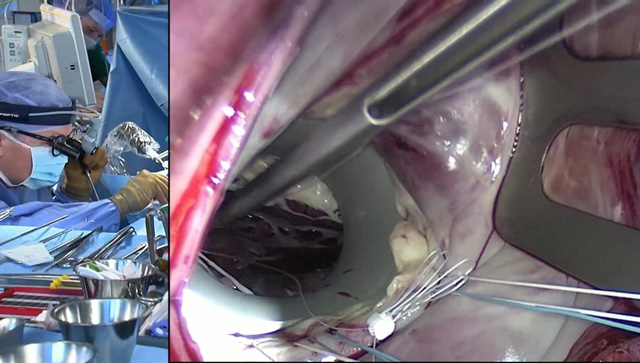
Minimally invasive mitral valve repair case - Session with LIVE case
23 Nov 2020 – From PCR Valves e-Course
View this virtual LIVE case surgery recorded in Leipzig Heart Center, Germany – followed by LIVE call-ins from different city pods around the globe.
This session was originally presented during PCR Valves e-Course 2020.
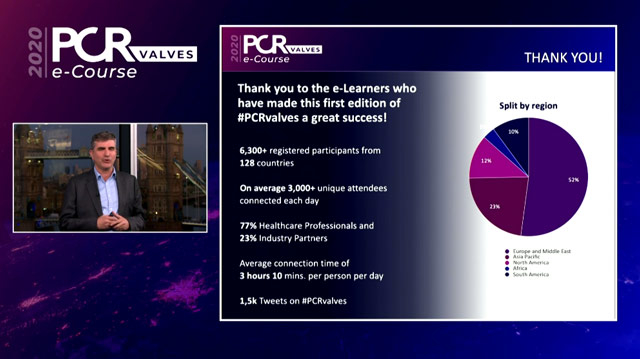
PCR Valves e-Course 2020 closing ceremony
24 Nov 2020 – From PCR Valves e-Course 2020
On behalf of the Core Team, Bernard Prendergast thanks those who participated and contributed to PCR Valves e-Course 2020. During three days, imaging specialists, interventionists, cardiac surgeons and Heart Valve Teams from all across the world shared their knowledge, experience and practice, contributing to reinventing education and...
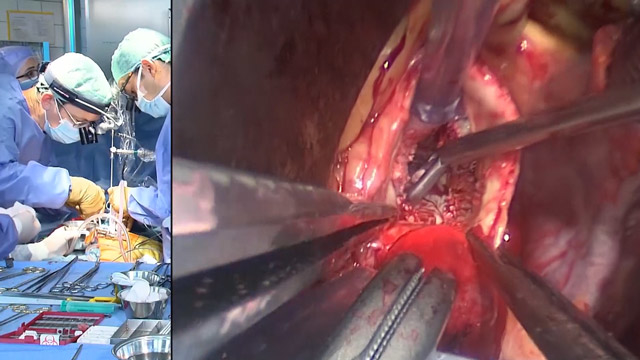
Minimally invasive aortic valve and ascending aortic replacement case from Leipzig Heart Center - Leipzig, Germany - Session with LIVE case
22 Nov 2020 – From PCR Valves e-Course 2020
A 62-year-old active male with severe stenosis of bicuspid aortic valve, ascending aortic aneurysm and obesity…
View this virtual LIVE case surgery recorded in Leipzig Heart Center, Germany – followed by LIVE call-ins from different city pods around the globe.
This session was originally presented during PCR Valves...
MitraClip for primary mitral regurgitation case from Clinique Pasteur - Toulouse, France - Session with LIVE case
23 Nov 2020 – From PCR Valves e-Course 2020
View this virtual LIVE case transcatheter intervention recorded in Clinique Pasteur - Toulouse, France – followed by LIVE call-ins from different city pods around the globe.
This session was originally presented during PCR Valves e-Course 2020.
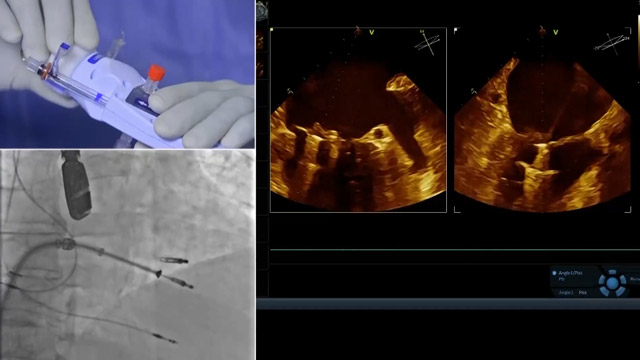
TAVI in bicuspid case from London Bridge Hospital, London, United Kingdom - Session with LIVE case
22 Nov 2020 – From PCR Valves e-Course 2020
A 77-year-old low-risk female patient with symptomatic aortic stenosis and bicuspid valve, suitable for TF access...
View this virtual LIVE case transcatheter intervention recorded in London Bridge Hospital, London, United Kingdom – followed by LIVE call-ins from different city pods around the globe.
This session was originally presented during...
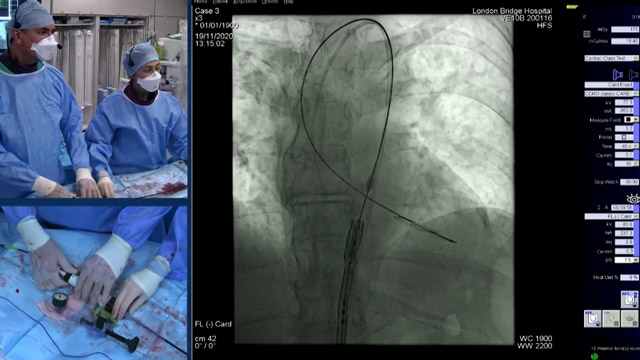
Tricuspid valve-in-valve case from London Bridge Hospital - London, United Kingdom - Session with LIVE case
24 Nov 2020 – From PCR Valves e-Course 2020
A 67-year-old male with degenerating 29mm Perimount tricuspid valve, right heart failure, and dyspnea on exertion (NYHA II), on optimal medical therapy…
View this virtual LIVE case transcatheter intervention recorded in London Bridge Hospital, London, United Kingdom – followed by LIVE call-ins from different city pods around...
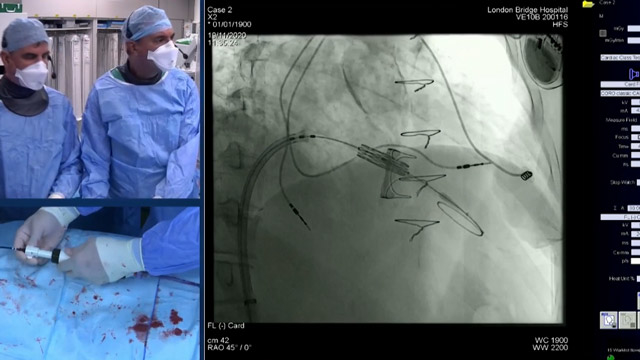
Minimally invasive tricuspid valve repair and MAZE case from Leipzig Heart Center - Leipzig, Germany
24 Nov 2020 – From PCR Valves e-Course 2020
View this virtual LIVE case surgery recorded in Leipzig Heart Center, Germany – followed by LIVE call-ins from different city pods around the globe.
A 67-year-old low-risk active lady with severe tricuspid regurgitation, persistent atrial fibrillation with dilated atria and moderate RV dilatation but preserved RVEF.
This session...
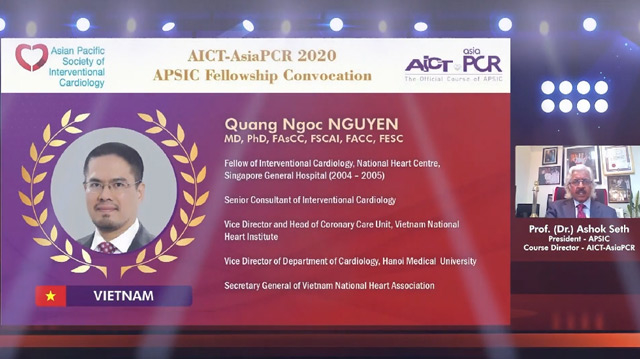
APSIC Fellowship ceremony
13 Dec 2020 – From AICT-AsiaPCR 2020
Discover the names of the new members of the APSIC Fellowship who showed excellence in the field of interventional cardiology and will continue to promote expertise, training, research, education, exchange, interaction across the Asia Pacific region.
This session was originally presented during AICT-AsiaPCR 2020.