3645 results for «2473»
3645 results
How to face resistent hypertension: when pharmacological treatment is not an option
19 May 2026 – From EuroPCR 2026
Focused on resistant hypertension, this session explores interventional options when pharmacological treatments fall short. It discusses urgent intervention indications, complex cases involving renal artery occlusion, and the role of fractional flow reserve (FFR) in managing pan-vascular disease associated with hypertension.

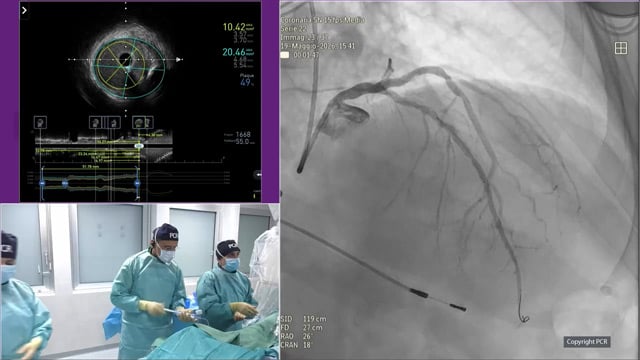
FFR- and IVUS-guided PCI of a long and calcified LAD lesion - LIVE case
19 May 2026 – From EuroPCR 2026
A 71‑year‑old man with hypertension and dyslipidemia presented with CCS class II angina and three‑vessel coronary artery disease. Functional assessment included CT‑derived micro‑FFR, angiography‑based FFR, and stress myocardial scintigraphy. The only hemodynamically significant lesion was a long, calcified lesion of the LAD.
Lesion preparation was performed with...
TAVI procedural complications - Part 3: vascular complications, coronary issues and more
19 May 2026 – From EuroPCR 2026
This session addresses critical procedural complications during TAVI, emphasizing vascular issues, coronary complications, and complex bailout scenarios. Through challenging case examples, it offers insights into the management and anticipation of such complications to optimize patient outcomes.

Identifying problems and solving complex anatomies during TAVI
19 May 2026 – From EuroPCR 2026
A comprehensive session on managing complex anatomies during Transcatheter Aortic Valve Implantation (TAVI), emphasizing risk markers for peri-operative complications and strategies to address difficult anatomical challenges. Real-world cases illustrate practical approaches and key learnings for handling intricate TAVI scenarios.
Evidence base: A description of the key, so far published, studies in the space of drug coated balloons
23 Jan 2025
Authored by Hector Garcia-Garcia and Jorge Sanz-Sanchez, this article examines pivotal randomized clinical trials on drug-coated balloons in coronary artery disease. It highlights their role in managing in-stent restenosis, de novo small vessel lesions, and large vessel lesions while exploring future directions through ongoing trials.

Author

Author