3628 results for «2185»
3628 results
Abstracts session 1
06 Dec 2023 – From GulfPCR-GIM 2023
Broaden your knowledge with this selection of abstracts submitted to GulfPCR-GIM 2023, covering topics such as aortic procedures, LV function recovery after CTO recanalization, and the state of PCI in the region of Kurdistan in Iraq.

Planning and execution of re-do TAVI (TAV-in-TAV) procedures
19 Nov 2023 – From PCR London Valves 2023
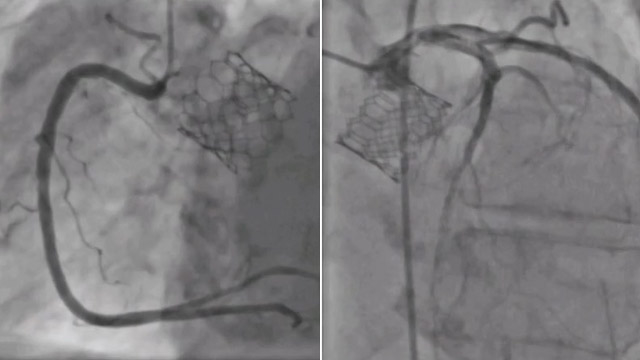
Redo TAVI poses challenges but can be managed with a step-by-step procedural plan, ensuring better acute and long-term outcomes. Guidelines and industry resources aid in planning, yet forthcoming registry studies are essential for further data and insights. Watch this session to find out more!
How to treat my patient with primary mitral regurgitation?
20 Nov 2023 – From PCR London Valves 2023
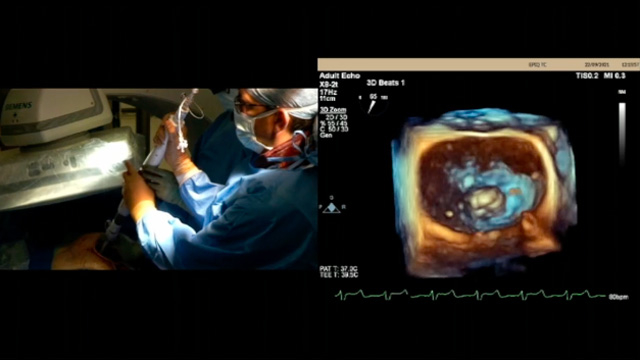
In this session, study the different cases of primary mitral regurgitation in detail, with diagrams, videos and even recommendations, to find out when to opt for replacement rather than repair, how to better manage transcatheter mitral replacement, and how to get to grips with endoscopic mitral...
Challenging STEMI scenarios: part 1
06 Dec 2023 – From GulfPCR-GIM 2023
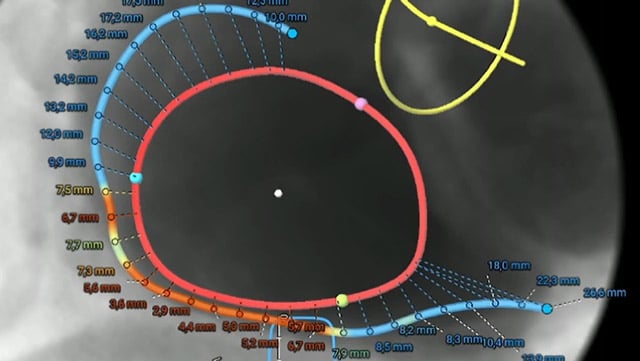
Explore a selection of case studies focusing on challenging STEMI scenarios, such as an inferior STEMI with a large thrombus burden, management of coronary dissection in a patient with ectatic coronary artery, and an unusual case of an RCA with an anomalous origin.

What does the interventionist need to know from the imager?
21 Nov 2023 – From PCR London Valves 2023
Take inspiration from the discussions on the case of a 78-year-old patient with HTN, HLD, and AF, presenting with symptomatic heart failure, or that of a 59-year-old female patient, former smoker, with HTN, DM, and persistent AF, who had been treated for breast carcinoma and post-chemotherapy...
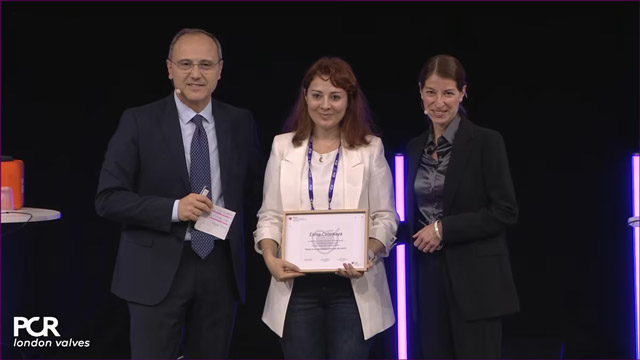
PCR London Valves 2023 EAPCI Awards Ceremony
21 Nov 2023 – From PCR London Valves 2023
Discover the winners of the EAPCI Awards in this ceremony jointly presented by Emanuele Barbato, EAPCI President, and Tanja Rudolph, Co-Chair of the EAPCI Fellowship Grants Committee. While 14 nominees were shortlisted, seven had already been honored at EuroPCR 2023: Find out who the lucky winners...
Nightmare in the cathlab
06 Dec 2023 – From GulfPCR-GIM 2023
These presentations focus on complications that may occur during PCI in the cathlab. Through the lens of these cases, be prepared about what type of complications one might face during PCI, and get updates on the latest guidelines and tools developed for emergencies.
PCR London Valves 2023 Closing Ceremony
21 Nov 2023 – From PCR London Valves 2023
Experience the highlights of PCR London Valve 2023 in this video retrospective, followed by insights from the Course Directors as they reflect on 3 dynamic and fruitful days that united 3,700 participants. Gratitude is extended to all contributors whose support was instrumental in the event's success....

Interventional cardiologists in the space of peripheral arterial disease: when and why
06 Dec 2023 – From GulfPCR-GIM 2023
How do interventional cardiologists deal with the burden of peripheral arterial disease in the Gulf region? Review the basic tool box for peripheral intervention and learn how to overcome daily challenges in structural cases.
Challenging CTO interventions: part 2
06 Dec 2023 – From GulfPCR-GIM 2023
Keep learning about challenging cases of CTO interventions in the continuation of this session. Discover how IVUS may be used to better guide intervention, gain insight into the use of the knuckle wire technique as a last resort during difficult cases, and learn how to deal...
Cardiovascular pot pourri
07 Dec 2023 – From GulfPCR-GIM 2023
In this selection of Clinical Case submissions to GulfPCR-GIM 2023, explore a wide variety of scenarios, such as a rare case of double primary ischemic stroke compounded by a myocardial infarction, and neoatherosclerosis leading to late stent failure.
When complications storm through the cathlab: part 2
07 Dec 2023 – From GulfPCR-GIM 2023
The continuation of this session focuses on complications that may occur during PCI in the cathlab. Through the lens of these cases, be prepared about what type of complications one might face during PCI, and get updates on the latest guidelines and tools developed for emergencies.
Stuck between a rock and a hard place: when calcium is the enemy!
07 Dec 2023 – From GulfPCR-GIM 2023
Have you ever wondered what tools and techniques to use when faced with calcified lesions? Watch this session to discover various cases of severely calcified lesions: the use of IVUS guidance and rota-cut when faced with tough calcium, PCI of a stubborn fibrotic coronary lesion, as...
Challenging CTO interventions: part 3
07 Dec 2023 – From GulfPCR-GIM 2023
In this session, broaden your knowledge in CTO treatment by exploring these diverse cases: delve into the complexities of managing double CTO lesions with ACS, gain insights into the ambiguous ostium antegrade CTO, and explore effective techniques such as the semi stent crush technique for closing...
Challenging structural interventions: part 2
07 Dec 2023 – From GulfPCR-GIM 2023
In this session, discover challenging structural interventions cases, such as the treatment of a large perm catheter related right atrial massa, transcatheter tricuspid valve-in-valve, post-TAVI severe hypotension, and more!
Challenging STEMI scenarios: part 2
07 Dec 2023 – From GulfPCR-GIM 2023
In this session, delve into intricate STEMI cases, featuring presentations on the challenges of primary PCI for left main, the significance of IVUS in STEMI patients during primary PCI, a compelling exploration of myocardial infarction in an anomalous coronary artery, and much more!
Tailored approaches to complex bifurcation PCI: part 2
07 Dec 2023 – From GulfPCR-GIM 2023
Consult this session to discover various complex PCI bifurcation cases, and learn more about the step by step approach on how to treat an ostial LAD lesion, and relevant procedures, such as the cutting balloon angioplasty, CABG or the trifurctional intervention.
Complex left main PCI: ancillary tools for safer interventions
07 Dec 2023 – From GulfPCR-GIM 2023
Consult this session to discover complex left main PCI cases, such as a severe stenosis in the distal left main bifurcation and differentiating atherosclerotic lesions from catheter-induced vasospasm, explore effective techniques such as imaging-guided optimisation for complex angioplasty, and more!
When complications storm through the cathlab: part 3
07 Dec 2023 – From GulfPCR-GIM 2023
These slides focus on complications that may occur during PCI in the cathlab. Through the lens of this case, be prepared about what type of complications one might face during PCI, and get updates on the latest guidelines and tools developed for emergencies.
Welcome to GulfPCR Valves 2023
05 Dec 2023 – From GulfPCR-GIM 2023
Find out more about this very first edition of GulfPCR Valves by discovering its Course directors, its objectives, its programme, its partners and its interactivity. If you are a heart valve interventionist or an imager, and you have a keen interest in valve disease, and TAVI in...