3648 results for «461»
3648 results
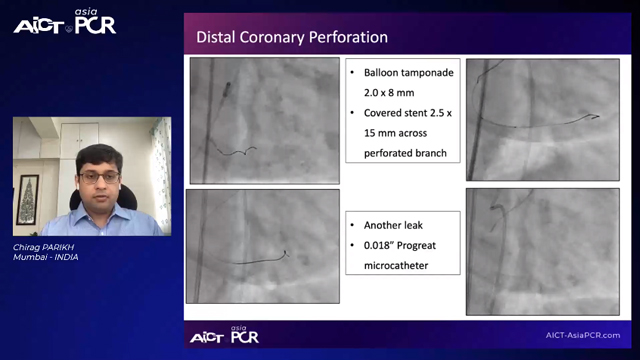
Cases and complications: coronary perforation
08 Oct 2021 – From AICT AsiaPCR 2021
Watch this session to learn more about various complications of coronary perforation and discover how to face them, thanks to a selection of challenging cases.
Best cases and research
08 Oct 2021 – From AICT-AsiaPCR 2021
Watch this session to discover the best cases and research unveiled at AICT-AsiaPCR 2021: "Positive remodelling of coronary arteries on computed tomography coronary angiogram", "Investigation of heavy metals in coronary artery tissues in autopsy cases", "DEB vs DES in the main vessel for the treatment of...
AICT-AsiaPCR 2021 Opening Ceremony and APSIC Fellowship Ceremony
08 Oct 2021 – From AICT-AsiaPCR 2021
Complications: calcified LM-LAD PCI, CHIP and TAVI
08 Oct 2021 – From AICT-AsiaPCR 2021
Watch this session on complications to see 3 clinical cases: "calcified LM-LAD PCI with rotablator", "cascading events in a CHIP case" and "complications in TAVI", and discover how they managed to face them.
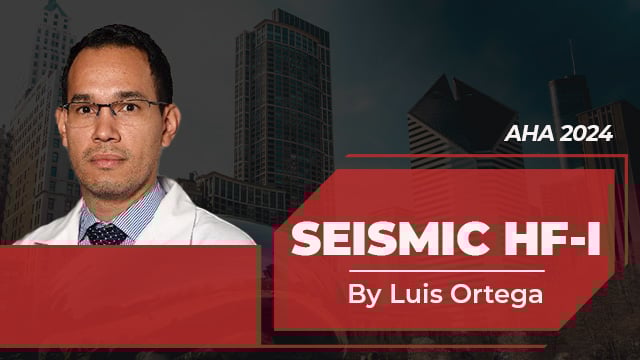
SEISMIC-HF I - Exploring non-invasive methods for monitoring intracardiac filling pressures
16 Nov 2024
Luis Ortega provides his take on the SEISMIC-HF I study presented by Liviu Klein at AHA 2024, in Chicago.

Author
BIOSOLVE-IV full-cohort two-year data confirm excellent safety and efficacy profile of Magmaris resorbable magnesium scaffold
23 Sep 2022
Three-year results of HOST-POLYTECH-ACS RCT comparing durable- vs. degradable-polymer DES
30 Aug 2023
Alex Sticchi provides his take on the 3-year results of HOST-POLYTECH-ACS RCT which were presented by Hyo-Soo Kim during the ESC 2023 congress in Amsterdam.

Author

Evidence base: A description of the key, so far published, studies in the space of drug coated balloons
23 Jan 2025
Authored by Hector Garcia-Garcia and Jorge Sanz-Sanchez, this article examines pivotal randomized clinical trials on drug-coated balloons in coronary artery disease. It highlights their role in managing in-stent restenosis, de novo small vessel lesions, and large vessel lesions while exploring future directions through ongoing trials.

Author

Author