3186 results for «7929»
3186 results
A central role for cardiac imaging in transcatheter LAA closure
22 May 2025 – From EuroPCR 2025
Discover the central role of cardiac imaging in transcatheter left atrial appendage (LAA) closure. This session covers sealing techniques, advances in cardiac tomography for assessing LAA wall thickness, fusion of 3D computational modeling with fluoroscopy guidance, device healing evaluation through early serial imaging, and complex cases...
Optimal acute heart failure care: must have, must do
22 May 2025 – From EuroPCR 2025
This session presents must-have strategies for optimal acute heart failure care. Topics include establishing an extracorporeal cardiopulmonary resuscitation referral center with patient outcomes, percutaneous closure in ventricular septal rupture, modified manual compression for large-bore sheaths, antithrombotic therapy considerations in AMI complicated by cardiogenic shock with mechanical...
Optimal SCAD treatment
22 May 2025 – From EuroPCR 2025
Navigate the complexities of spontaneous coronary artery dissection (SCAD) treatment through clinical case discussions. This session explores identifying the culprit lesion, recurrent ACS challenges, the conservative versus PCI treatment dilemma, and real-world presentation scenarios emphasizing decision-making in SCAD management.
PCI in a challenging coronary anatomy
22 May 2025 – From EuroPCR 2025
This session tackles PCI in challenging coronary anatomies, featuring cases with anomalous coronary arteries, complex access routes, and specialized stenting techniques. Learn from experiences managing dual anomalous arteries, navigating to difficult lesions, and applying innovative modified chimney stent methods to restore coronary flow.
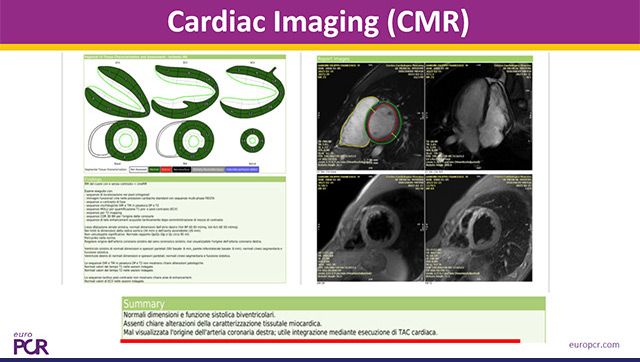
Combined LAA closure and transcatheter mitral valve repair - LIVE Case
22 May 2025 – From EuroPCR 2025
An 82-year-old male patient with a history of PM (pacemaker) implantation in 2024, and ischaemic cardiomyopathy presented with symptomatic heart failure due to severe secondary mitral regurgitation and impaired LV function (EF 40 %). He also presented with recurrent gastro-intestinal bleeding while on DOAC for atrial...
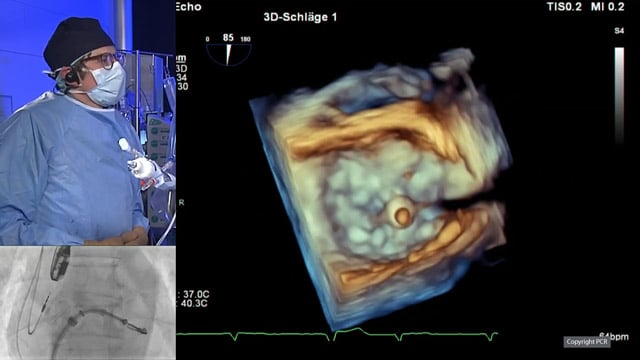
Redo TAVI - How to treat different TAVI platforms when they fail
22 May 2025 – From EuroPCR 2025
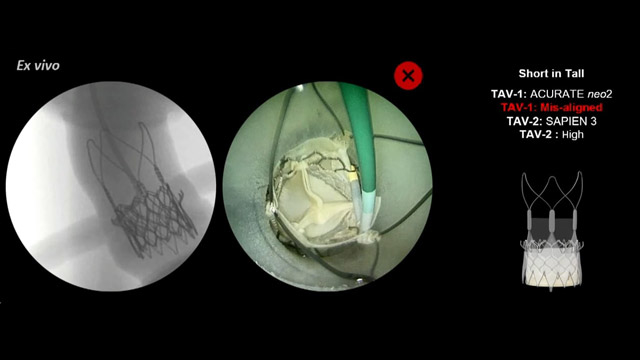
Understand the complexities of redo TAVI procedures with emphasis on planning, valve platform characteristics, and tailored procedural strategies. This session features cases of redo TAVI for failed short-frame and tall-frame valves, alongside discussions on current evidence gaps guiding optimal management.
When angina cannot be cured with stents: what are the remaining options
22 May 2025 – From EuroPCR 2025
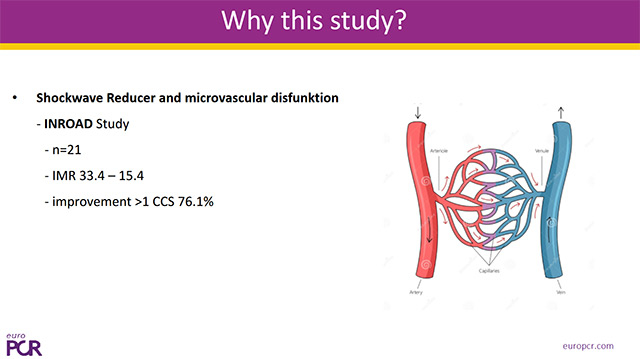
Explore therapeutic options for patients with angina refractory to stenting. This session reviews the efficacy and clinical outcomes of coronary sinus (CS) reducer implantation for microvascular dysfunction, factors influencing procedural success, next-generation CS reducer innovations, and the role of aspirin in angina without obstructive coronary disease.
High thrombus burden in STEMI
22 May 2025 – From EuroPCR 2025
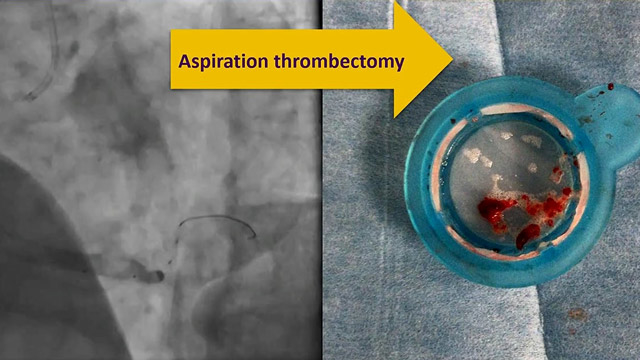
This session addresses the management of high thrombus burden in STEMI patients. It reviews available tools and strategies for thrombus management, presents multiple case-based discussions illustrating treatment decisions, and explores the evolving role of thrombus aspiration in contemporary practice.
Beyond the intervention: outcomes of CTO PCI
22 May 2025 – From EuroPCR 2025
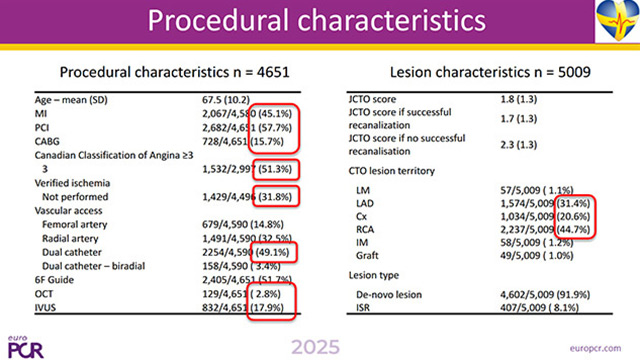
Discover long-term outcomes and practical insights into chronic total occlusion (CTO) PCI. This session presents real-world registry data, cost-effectiveness analyses, effects of successful revascularisation in reduced ejection fraction and heart failure patients, and specific outcomes in octogenarian populations.
TAVI - Outcomes predictors
22 May 2025 – From EuroPCR 2025
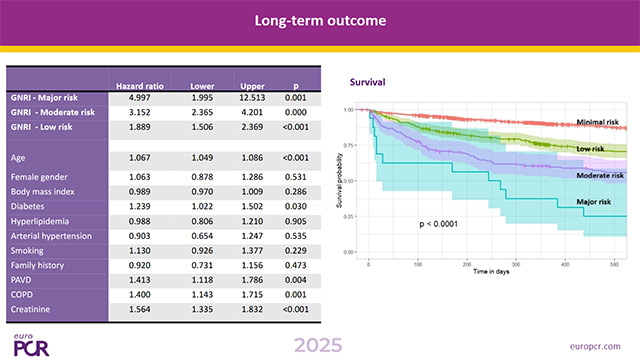
Examine novel predictors of outcomes following TAVI. This session compares a new nutritional risk index against traditional scores for early post-TAVI mortality prediction and evaluates uric acid as a marker for aortic valve calcification and mortality risk in TAVI patients.
Artificial intelligence in the cathlab
22 May 2025 – From EuroPCR 2025
Delve into the transformative role of artificial intelligence (AI) in the cathlab. This session covers AI applications for vulnerable plaque identification using intracoronary OCT, automated coronary angiogram analysis, rapid AI-based OCT interpretation, AI-enhanced decision-making for PCI optimization, and noninvasive microvascular resistance assessment powered by AI.
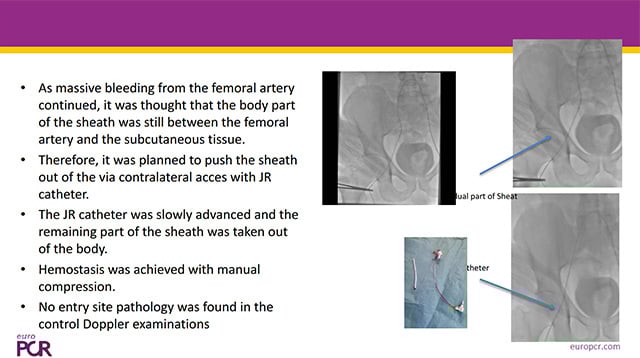
Retrograde removal of the broken sheath
22 May 2025 – From EuroPCR 2025
This session addresses complex complications during vascular access with a focus on retrograde removal of broken sheaths. Learn to recognize critical signs, manage rare but severe complications including broken guidewires in the radial artery, and explore innovative off-label solutions for challenging scenarios.
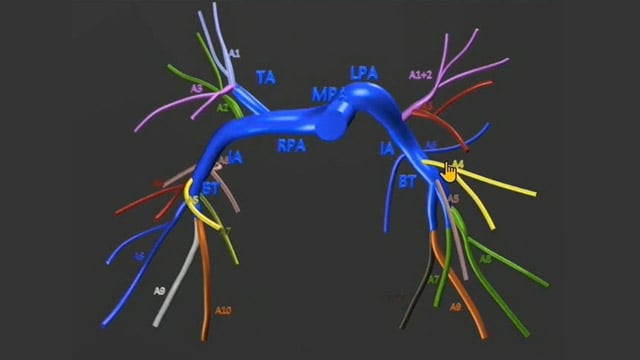
Deep dive on pulmonary embolism catheter technologies - Clinical trial data and how to use
22 May 2025 – From EuroPCR 2025
Deep dive into pulmonary embolism catheter technologies through case-based presentations. Learn about established and novel devices for acute pulmonary embolism treatment, indications for device use, and management of procedural complications to optimize patient outcomes.
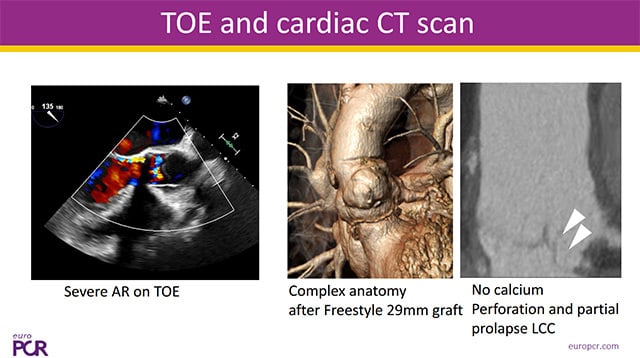
TAVI for aortic regurgitation off label
22 May 2025 – From EuroPCR 2025
Explore off-label applications of TAVI for aortic regurgitation in complex clinical scenarios. Topics include TAV-in-SAV with Trilogy valve for severe regurgitation, challenges of transcatheter prosthesis in pure aortic regurgitation, management of surgical valve perforations, and treatment strategies in post-surgical anatomies including degenerative homografts and aortic dissection.
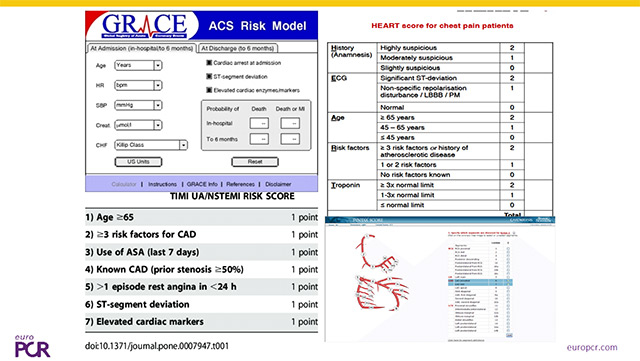
Risk stratification of NSTEMI patients
22 May 2025 – From EuroPCR 2025
Explore the latest insights on risk stratification in NSTEMI patients through comparative analysis of established risk scores such as GRACE, HEART, and TIMI in predicting coronary artery disease severity. This session also reviews outcomes based on diabetes status and left ventricular ejection fraction, prospective validation of...
Acute complications during distal left main PCI - Part 3
22 May 2025 – From EuroPCR 2025
This session highlights acute complications during distal left main PCI. It presents cautionary cases of incorrect left main stenting, catastrophic left main V stenting outcomes, unprotected left main thrombosis, and survival strategies when new technologies fail unexpectedly.
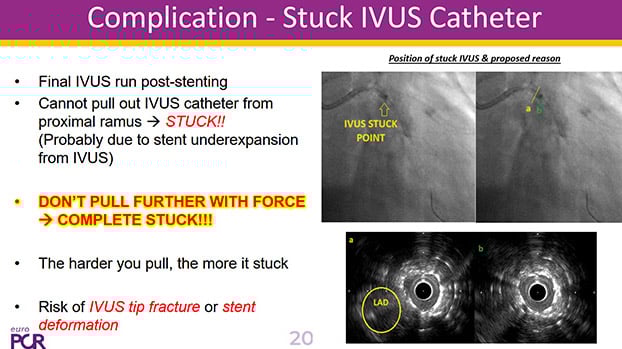
TAVI and coronary artery disease
22 May 2025 – From EuroPCR 2025
Examine the evolving role of coronary artery disease assessment in TAVI patients. This session compares coronary tomography and angiography for pre-TAVI evaluation, reviews safety and effectiveness of CT angiography-based strategies, and introduces the UNICORN procedure for managing high coronary obstruction risk in complex TAVI scenarios including...
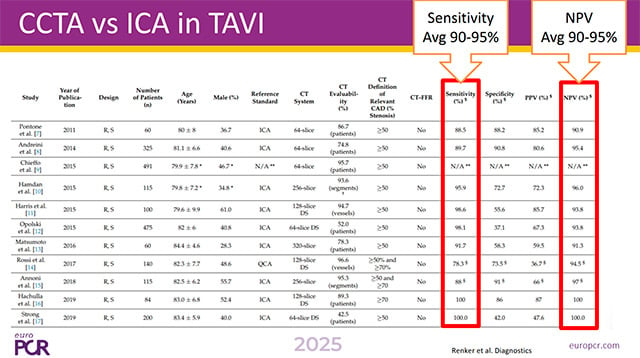
Calcified coronaries: novel devices and techniques
22 May 2025 – From EuroPCR 2025
Gain expert insights into managing calcified coronary lesions with novel devices and techniques. Topics include the safety and efficacy of rotational atherectomy, the distal rail-tracking technique, impact of burr speed and duration, innovative scoring balloon designs, and the RODIN-CUT sequential cutting balloon angioplasty method for moderate-to-severe...
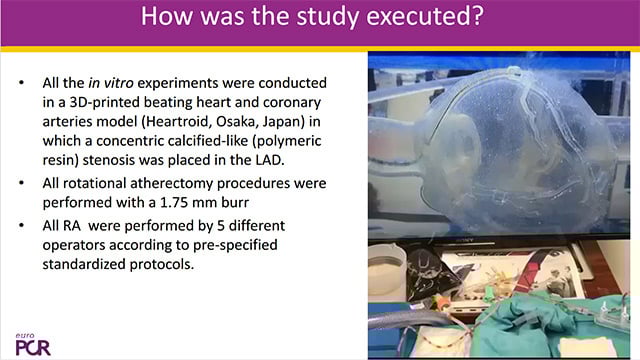
Which device for which patient: DES, BRS or DCB?
22 May 2025 – From EuroPCR 2025
This session provides comprehensive guidance on selecting the appropriate device—DES, BRS, or DCB—for individual patients and lesions. It examines patient and lesion characteristics, strengths and limitations of each device type, and regional considerations, illustrated by case presentations demonstrating practical device choice and resolution.
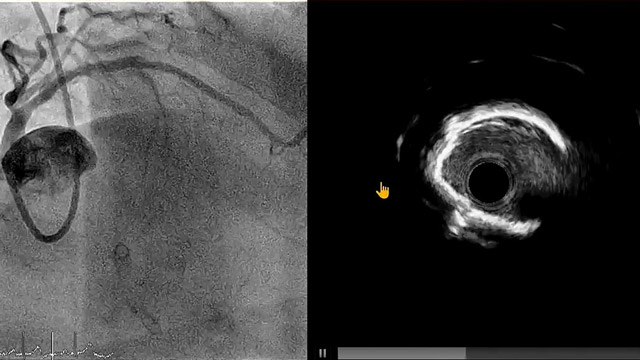
CTO beyond the conventional: when new strategies come to the rescue
22 May 2025 – From EuroPCR 2025
Delve into advanced strategies for chronic total occlusion (CTO) beyond conventional methods. This session covers step-by-step re-entry techniques with electrified guidewires, approaches to CTO in small vessels, and indications and methods for occlusion of saphenous vein grafts, illustrated by detailed case discussions and key learnings.