3644 results for «2647»
3644 results
Patient-tailored TAVI in bicuspid and tricuspid aortic stenosis
16 Nov 2025 – From PCR London Valves 2025
This session focuses on patient-tailored TAVI strategies for bicuspid and tricuspid aortic stenosis. It reviews recent comparative studies of TAVI devices, discusses the development of individualized TAVI programs for tricuspid aortic stenosis patients, and provides guidance on selecting optimal devices for those with bicuspid aortic valve...
Complex coronary complications
11 Dec 2025 – From GulfPCR-GIM 2025
This session addresses complex coronary complications through a series of challenging cases including dextrocardia with acute STEMI, fragile coronary anatomy risks, left main complications, and stent-related issues. It provides critical insights into recognizing and managing unexpected procedural challenges to improve patient safety.
PCR London Valves 2025 Closing Ceremony
18 Nov 2025 – From PCR London Valves 2025
The PCR London Valves 2025 Closing Ceremony provides a reflective and conclusive overview of the event, highlighting key advancements and collaborative efforts in the field of structural heart interventions. This session encapsulates the progress made during the congress and sets the stage for future innovations and...
Prevention and management of TAVI complications
17 Nov 2025 – From PCR London Valves 2025
This session is dedicated to the prevention and management of complications associated with transcatheter aortic valve implantation (TAVI). Participants gain critical knowledge on managing vascular access challenges, anticipating and preventing valve malposition, handling device embolism, and evaluating coronary obstruction risks with effective prevention and bailout strategies.
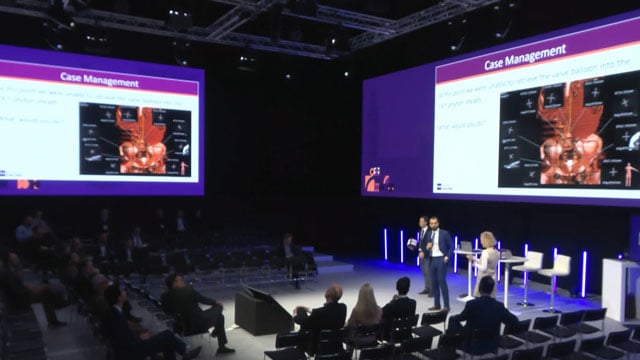
Redo TAVI for transcatheter heart valve failure
18 Nov 2025 – From PCR London Valves 2025
This session addresses the critical considerations involved in re-do TAVI procedures for transcatheter heart valve failure. It guides through key decision-making processes, step-by-step CT analysis for procedural planning, and established protocols to effectively execute valve-in-valve interventions, enhancing outcomes in complex repeat valve therapies.
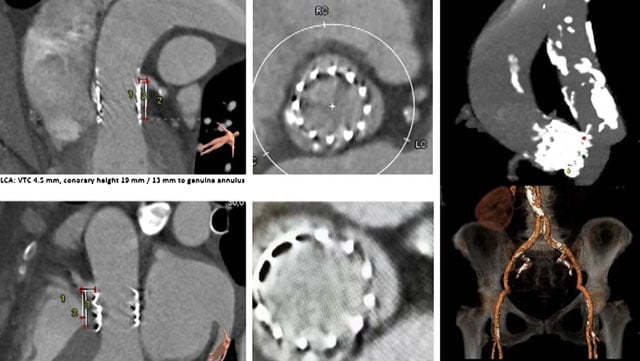
Transcatheter mitral valve replacement in practice
18 Nov 2025 – From PCR London Valves 2025
This session provides an in-depth overview of transcatheter mitral valve replacement (TMVR) in clinical practice, focusing on patient and anatomical suitability assessments including imaging parameters and risk factors for left ventricular outflow tract obstruction. It covers anatomical preparation techniques such as leaflet modification, prior clip removal,...
Tricuspid repair or replacement - Matching the patient to the procedural strategy
17 Nov 2025 – From PCR London Valves 2025
This session addresses the nuanced decision-making process in selecting appropriate transcatheter tricuspid repair or replacement strategies. It covers the current device landscape, patient selection criteria based on anatomical and clinical factors, and discusses emerging challenges such as pacing lead management, anticoagulation, and outcome definitions.
Alain Cribier EuroIntervention Award
16 Nov 2025 – From PCR London Valves 2025
This session honors the legacy and contributions of Alain Cribier through the EuroIntervention Award, recognizing excellence and innovation in interventional cardiology. It reflects on the advancements inspired by Dr. Cribier's pioneering work and highlights key achievements in the field.
Special Recognition Award Ceremony
17 Nov 2025 – From PCR London Valves 2025
The Special Recognition Award Ceremony honors outstanding achievements and contributions within the field of cardiology. This distinguished event celebrates excellence, innovation, and dedication, acknowledging individuals and teams who have significantly advanced interventional cardiology and patient care.
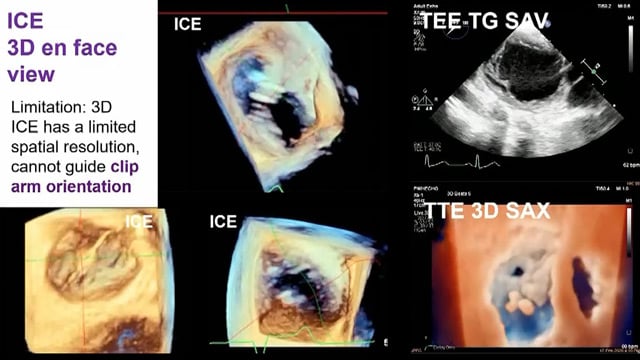
Procedural imaging for tricuspid valve interventions
15 Feb 2026 – From PCR Tokyo Valves 2026
Dedicated to procedural imaging for tricuspid valve interventions, this session elucidates anatomical and pathophysiological features critical for successful transcatheter procedures. It emphasizes technical aspects of TEE and ICE imaging, including 3D multiplanar reconstruction, and offers case-based learning to refine imaging skills and optimize procedural outcomes.
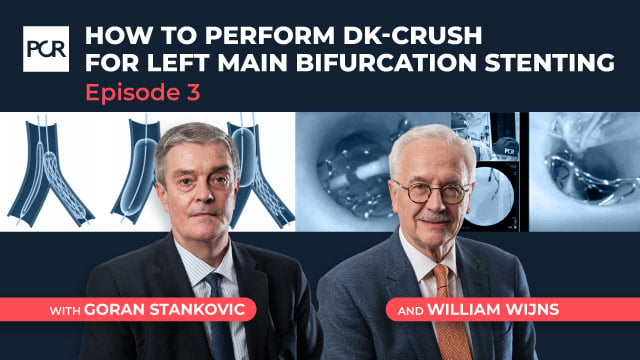
DK Crush like you’ve never seen it before
- Multi-modality simulation to unveil the hidden parts & small obstacles that can result in complications
- Angioscopy directly inside the coronary artery to provide a better understanding of 3D stent configuration
Commented by Goran Stankovic and William Wijns
Part 1 of a 3-part series.
Next episode: How to correct incomplete crush and...
How to correct incomplete crush and how to prevent lack of carina coverage
- Differentiating between complete and incomplete crush
- The importance of sequential crush and bigger balloons, adequately sized according to proximal vessel diameter
Commented by Goran Stankovic and William Wijns
Part 2 of a 3-part series:
Previous episode: DK Crush like you’ve never seen it before
Coming up next: Main vessel stenting in DK-Crush, lessons...

Main vessel stenting in DK-Crush: lessons from stepwise provisional strategy
- Optimisation of side branch stenting
- How to optimally deploy the second stent
Commented by Goran Stankovic and William Wijns
Part 3 of a 3-part series. Previous episode: How to correct incomplete crush and how to prevent lack of carina coverage
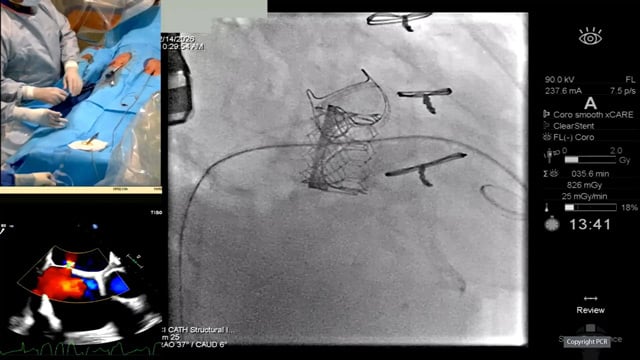
Mitral and aortic transcatheter valve-in-valve intervention - LIVE case
14 Feb 2026 – From PCR Tokyo Valves 2026
Live case
An 83-year-old male with AF, CKD (stage 3A), preserved LV function, and a history of AVR (27 mm Magna Ease) and MVR (33 mm Magna) in 2014 presented with symptomatic stenosis of the mitral bioprosthesis. A Sapien 3 valve was implanted in the Magna mitral...
PCR Tokyo Valves 2026 Welcome Ceremony
14 Feb 2026 – From PCR Tokyo Valves 2026
The Welcome Ceremony marks the commencement of the conference, setting the stage for an engaging and informative program dedicated to advances in cardiology and interventional techniques. It provides attendees with an overview of the event's objectives and highlights the collaborative spirit of the cardiology community.
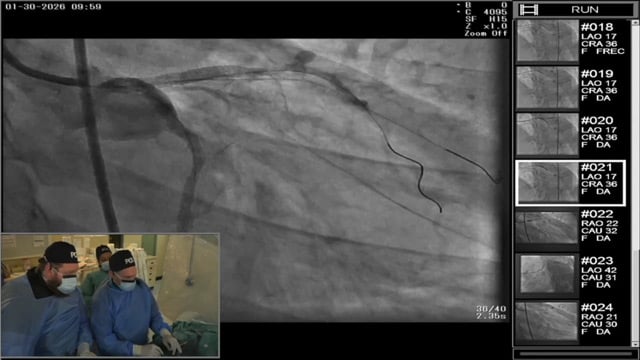
Left main and LAD bifurcation - LIVE Case
30 Jan 2026 – From SASCI-AfricaPCR
A 59‑year‑old man with a history of STEMI in 2019 (Cx PCI), as well as hypertension and dyslipidemia, presented with CCS class III angina. Coronary angiography revealed a chronic total occlusion (CTO) of the OM2 and a calcified ostial lesion of the LAD and first diagonal...
Late-breaking trials of PCR Tokyo Valves 2026
14 Feb 2026 – From PCR Tokyo Valves 2026
This session presents pivotal late-breaking trials from PCR Tokyo Valves 2026, offering one-year outcomes and real-world experiences in transcatheter valve therapies. Highlights include the AltaValve early feasibility study on atrial fixation TMVR, invasive registry insights on prosthesis-patient mismatch post-TAVR, and registry data on tricuspid and mitral...
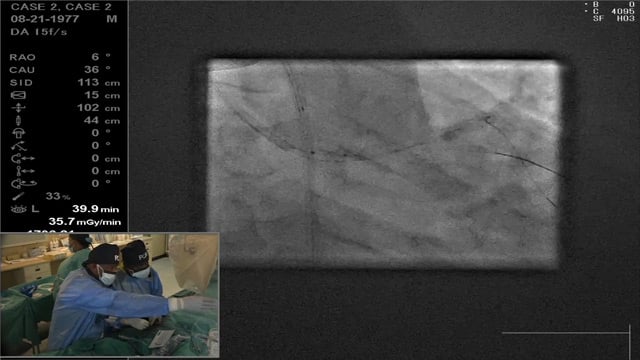
Calcified left main distal trifurcation PCI - LIVE Case
A 48‑year‑old man with hypertension and diabetes mellitus presented with a recent history of thrombolysed anterior acute MI and preserved left ventricular function. Coronary angiography revealed a severely calcified ostial LAD and ostial ramus lesion, along with diffuse disease of the RCA.
The ramus was treated with...
TEER in complex tricuspid regurgitation - LIVE case
14 Feb 2026 – From PCR Tokyo Valves 2026
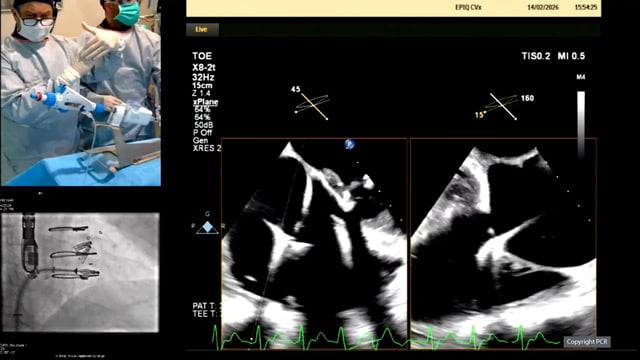
A 79-year-old male with permanent AF, prior colorectal and prostate cancer, and a Mosaic bioprosthetic mitral valve implanted in 2016, presented with torrential tricuspid regurgitation and preserved LV function.
Three G5 clips were implanted: two anteroseptal (1 XTW and 1 XT) and one posteroseptal XTW.
LIVE Educational Case...
Introducing the next era of coronary intravascular lithotripsy: an aero-volution in calcium modification
27 Feb 2026 – From Euro4C Annual Meeting
Explore the next era of coronary intravascular lithotripsy featuring innovative technology for calcium modification. This session covers the unique mechanism of action, practical application in complex cases, and recent clinical evidence supporting its safety and efficacy.