


408 results
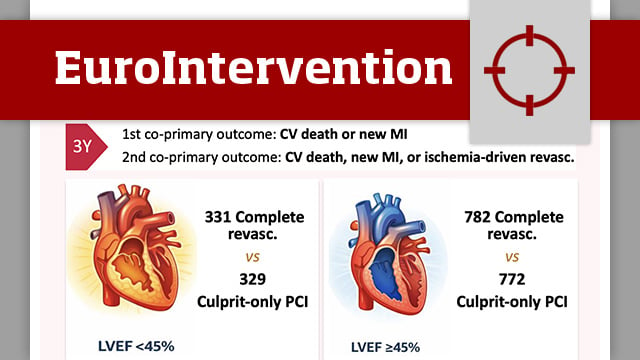
Impact of complete revascularisation in relation to left ventricular function in patients with ST-segment elevation myocardial infarction and multivessel disease: a post hoc analysis of the COMPLETE randomised trial
05 Feb 2026
This study represents a prespecified subgroup analysis of the COMPLETE randomised trial, a large, international, randomised controlled study comparing a strategy of complete revascularisation with culprit-only percutaneous coronary intervention (PCI) in patients presenting with ST-segment elevation myocardial infarction (STEMI) and multivessel coronary artery disease (MVD).
The present...

Reviewer

Reviewer
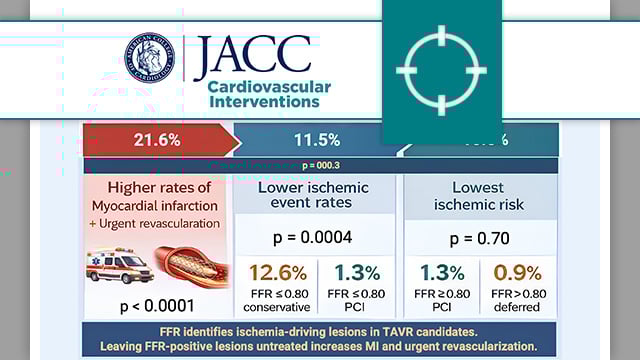
Fractional flow reserve to guide revascularisation in patients with coronary artery disease undergoing TAVR
07 Jan 2026
The present analysis compared major adverse cardiac events in patients with significant coronary stenosis (FFR ≤ 0.80 or visual stenosis ≥ 90 %) versus those with non-significant stenosis (FFR > 0.80).

Reviewer

Reviewer
Coronary Pot Pourri - 2
11 Dec 2025 – From GulfPCR-GIM 2025
This session presents a diverse range of complex coronary interventions, highlighting advanced techniques and strategies. Topics include the use of ECMO support for high-risk PCI and TAVI in cardiogenic shock, innovative approaches in left main interventions, challenging stent optimisation, and management of patients with combined severe...

Challenging STEMI scenarios - Part 1
11 Dec 2025 – From GulfPCR-GIM 2025
This session addresses challenging STEMI scenarios with a focus on atypical presentations, complex complications, and advanced management strategies. Through diverse case discussions, it highlights approaches to overcome procedural difficulties, manage large thrombus burdens, and avoid clinical pitfalls in acute STEMI care.

Challenging STEMI scenarios - Part 2
11 Dec 2025 – From GulfPCR-GIM 2025
This session presents complex STEMI cases that highlight the challenges of acute coronary syndrome management, including difficult arterial access, balancing reperfusion with embolization risks, and rare complications such as spontaneous coronary artery dissections. It emphasizes nuanced decision-making in high-stakes clinical scenarios.
Complex coronary complications
11 Dec 2025 – From GulfPCR-GIM 2025
This session addresses complex coronary complications through a series of challenging cases including dextrocardia with acute STEMI, fragile coronary anatomy risks, left main complications, and stent-related issues. It provides critical insights into recognizing and managing unexpected procedural challenges to improve patient safety.
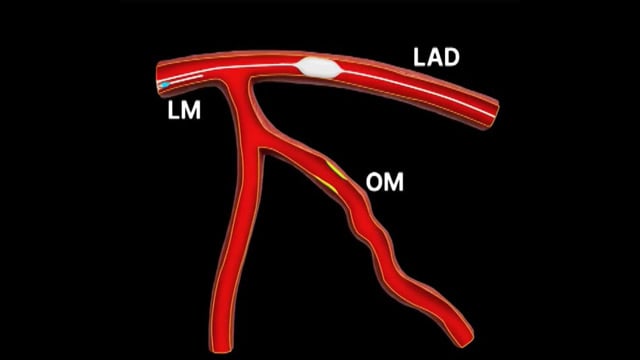
Complex bifurcation interventions
10 Dec 2025 – From GulfPCR-GIM 2025
This session examines complex bifurcation interventions, addressing challenging cases such as isolated Medina 0,0,1 left main bifurcation and imaging-guided trifurcation angioplasty in acute coronary syndromes. It emphasizes strategic approaches and device selection to overcome anatomical complexities, manage complications, and achieve successful outcomes in bifurcation PCI.
Abstracts session 1
10 Dec 2025 – From GulfPCR-GIM 2025
This abstracts session presents contemporary research and clinical insights in interventional cardiology, covering topics such as colchicine therapy post-stenting, ranolazine use in chronic coronary syndrome, artificial intelligence applications in quantitative coronary analysis, and optimization techniques in transcatheter aortic valve implantation. It also explores novel predictors of...
Occlusion myocardial infarction
10 Dec 2025 – From GulfPCR-GIM 2025
This session addresses the evolving paradigm from STEMI to occlusion myocardial infarction, presenting evidence-based advances for recognizing occlusion MI cases that do not meet traditional STEMI criteria. It also offers troubleshooting strategies for managing these complex patients.
Coronary Pot Pourri 1
10 Dec 2025 – From GulfPCR-GIM 2025
This session presents a diverse array of challenging coronary cases, highlighting complex diagnostic and therapeutic dilemmas. It offers practical insights into decision-making for scenarios such as difficult catheterizations, myocardial bridging, and unexpected procedural challenges.