20 May 2026
Why are most unstable coronary lesions missed by angiography?
PCR Perspectives
Summary
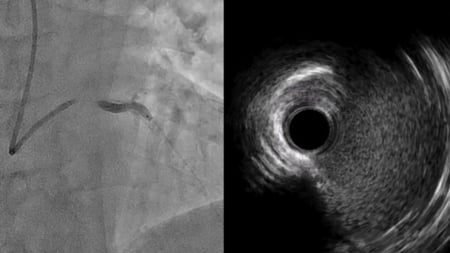
Inflammation is increasingly recognised as a key driver of residual cardiovascular risk and plaque instability in coronary artery disease. Yet many vulnerable plaques remain difficult to identify using conventional angiography, often appearing as non-obstructive lesions despite their potential to cause acute coronary events.
In this interview, Davide Capodanno speaks with Peter Libby about the biological mechanisms underlying plaque vulnerability and the central role of inflammation in atherosclerosis. They discuss how advances in vascular biology have improved our understanding of thin-cap fibroatheromas and plaque rupture, while highlighting the limitations of current imaging techniques in identifying high-risk lesions. The conversation also explores the potential of inflammation-focused therapies and emerging therapeutic targets to reduce residual cardiovascular risk.
This interview was filmed at EuroPCR 2026: see more videos here.