


19 May 2026
EuroPCR 2026: Education saves lives - Preventing and solving complications
The EuroPCR 2026 Course Directors set the stage for a programme focused on sharing experiences, advancing practice, and improving patient care, with a renewed emphasis on learning from complications and keeping patients at the heart of everything we do.

Learning together − with patients at the heart
Welcome to Paris!
Preparing for EuroPCR 2026, we have been inspired by lessons learnt from William Wijns and Jean Fajadet who relinquished their roles as EuroPCR Course Directors at the end of 2025. It is our privilege to build on their legacy and maintain the educational philosophy established by Jean Marco in creating a programme of practically orientated, patient-centred education for the entire global interventional cardiology community.
Sharing problems, sharing solutions
It is said that ‘a problem shared is a problem halved’. This year, we have chosen to highlight the importance of education in the prevention and management of complications. By sharing our problems – not only our successes – we can help each other to reduce the frequency of complications and lessen their impact, refine our practice and improve patient safety.
Advancing practice
As interventional cardiology evolves, techniques that were once practised by a select few operators are increasingly in demand. Additions to this year’s programme include the Calcium Skills Lab and a dedicated CTO Track. In carefully curated sessions, international experts will pass on their specialised knowledge and technical know-how in interactive learning environments.
In another first, the Innovation Hub aims to extend the bright ideas and concepts discussed at PCR Innovators Day across the whole EuroPCR programme, offering individual zones that showcase innovation in different ways – the AI Lab, Innovation Theatre and Innovations Showroom.
The first day saw another new course added to the traditional EuroPCR warm-up calendar. As well as PCR Innovators Day and the ever-popular PCR Fellows Course, The Physiology Course (TPC) expanded the learning opportunities available in Paris.
Embedding coronary physiology into decision making has never been so important, and TPC represents the benchmark for training in this field.
Discussing cutting-edge science
We are delighted by the huge number, high quality and broad scope of this year’s scientific submissions, which came from more than 65 countries across the world. Late-breaking trial submissions continue to grow, highlighting the fact that EuroPCR is not only a platform for the exchange of practical progress, but also a place to share scientific advances. In addition to the major late-breaking trial and Hotline sessions, ‘Translate the Top Trials into Practice’ sessions will address the clinical impact of recently published data.
Practical learning
Our industry partners play a vital role in shaping the learning experiences available at EuroPCR, and we are very grateful for their continued support in providing a wide range of opportunities for participants. The Training Village hosts more than 150 hands-on workshops, which complement sessions in the Imaging Skills and Hands-On Labs. Simulation-based learning remains central to our educational approach, and simulators will again support some of the LIVE Educational Cases.
Rewarding excellence
The Andreas Grüntzig Ethica Award recognises the outstanding achievements of a trailblazer in our field. And it is always a privilege to be part of the Jon DeHaan Foundation Award to the best new submission at PCR Innovators Day. The Michele Pighi Young Investigator Award and PCR’s Got Talent competition acknowledge the tremendous ambition of the next generation, while the NAPs Awards Ceremony this afternoon recognises the vital contributions of nurses and allied professionals to our community and our patients.
Interventional cardiology – and the EuroPCR Course – continue to flourish because of your contributions.
With over 1,100 faculty, more than 500 sessions and 3,494 submissions, the 2026 edition promises to be a very special event that will further advance the boundaries of possibility.




Learning from complications: A core focus of EuroPCR 2026
The programme at EuroPCR 2026 has been designed to maximise opportunities to share experiences on preventing and managing complications. Course Director, Nicolas Dumonteil, tells us why this fil rouge was chosen.
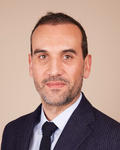
Nicolas Dumonteil
EuroPCR Course Director
Clinique Pasteur - Toulouse, France
“At last year’s course, we discussed how the complexity of procedures is increasing. We are all striving to make complex procedures as predictable and safe as possible, but inevitably, due to the invasive nature of our work, complications happen.
Education tends to focus on how to achieve procedural success, but we felt there is an important need to learn how to prevent and how to deal with complications when they arise.
Some complications are thankfully rare – we might only face a particular complication once in our entire careers – but that may be once more than another operator, particularly a young operator who is at the beginning of their learning journey. By gathering together in Paris to share our experiences as a global community, we will gain knowledge on risk factors and determinants so we can avoid complications in the future.
We will also share how we overcame a complication so that others will have ideas on how to tackle a similar situation in their own practice.
Acting as the foundations for our Complications Track are case-based sessions that have been built from your submissions, across the broad spectrum of interventional cardiology and from National Societies and Working Groups around the world.
These reach a peak on Friday with two Best Complications sessions that will be presented in collaboration with our new journal, EuroIntervention Case Reports.
The Learning Track has several sessions that discuss complications for early-career operators, while sessions in collaboration with our specialist partners, Euro CTO Club and the Euro4C Group, provide granularity on complication management during very complex procedures. The Calcium Skills Lab and the Simulation Learning Room have interactive sessions discussing some of the more common complication scenarios. In addition, the Hands-On Lab is the perfect place to develop your own practical skills and be ready should the need arise. Sessions in the NAPs Track acknowledge the key role of nurses and allied professionals in maintaining patient safety, with a TAVI complications session tomorrow.
Improving patient care is at the heart of EuroPCR – sharing your own experiences for the benefit of others and returning to the cathlab equipped with your own new knowledge. When you prevent a serious problem or recognise a complication early and deal with it effectively, it is at that moment that education will have saved a life.”