523 results
Tricuspid valve interventions in complex scenarios - Part 2
17 Nov 2025 – From PCR London Valves 2025
This session delves into transcatheter interventions for the tricuspid valve in complex clinical scenarios. It covers techniques for native annular reduction via TEER, management of lead-related regurgitation, challenging cases of torrential regurgitation with device detachment, and innovative methods facilitating valve-in-ring implantation, enhancing procedural efficacy in tricuspid...
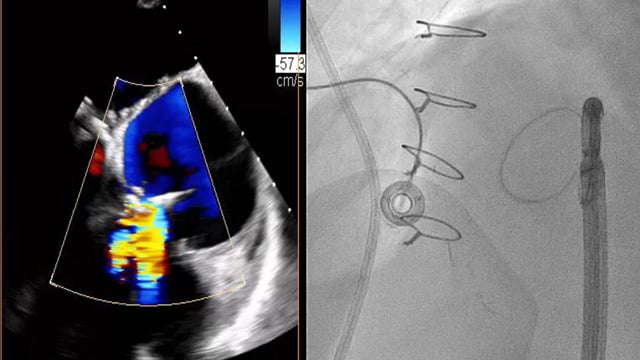
Tricuspid repair or replacement - Matching the patient to the procedural strategy
17 Nov 2025 – From PCR London Valves 2025
This session addresses the nuanced decision-making process in selecting appropriate transcatheter tricuspid repair or replacement strategies. It covers the current device landscape, patient selection criteria based on anatomical and clinical factors, and discusses emerging challenges such as pacing lead management, anticoagulation, and outcome definitions.
Featured research - Tricuspid valve intervention: the TRIPLACE registry
17 Nov 2025 – From PCR London Valves 2025
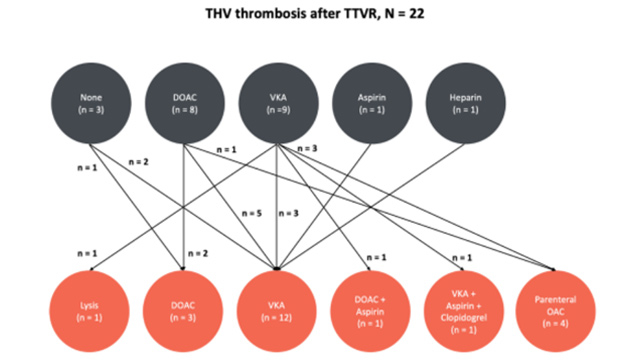
This session features cutting-edge research on tricuspid valve interventions, including insights from the TRIPLACE registry on orthotopic TTVR thrombosis, predictive value of three-dimensional tricuspid annulus measurements for procedural outcomes, early clinical experiences with novel TTVR systems, and procedural clipping strategies based on results from the BRIGHT...
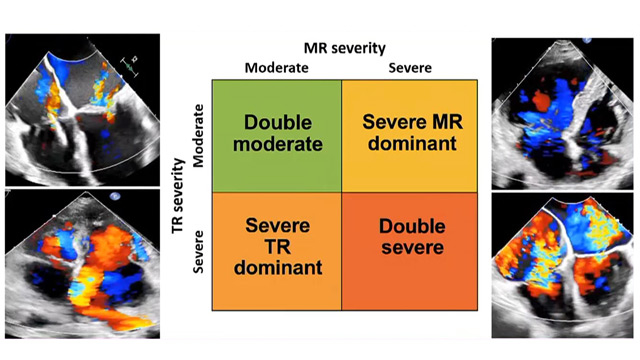
Unravel the complexity of multi-valve disease
17 Nov 2025 – From PCR London Valves 2025
This session unpacks the complexities inherent in multi-valve disease involving combined mitral and tricuspid regurgitation. It emphasizes diagnostic challenges, the critical role of invasive hemodynamics in decision-making, and strategies for optimal timing and staging of interventions, demonstrated through illustrative patient cases.
Featured research - Tricuspid valve intervention: latest advanced insights
17 Nov 2025 – From PCR London Valves 2025
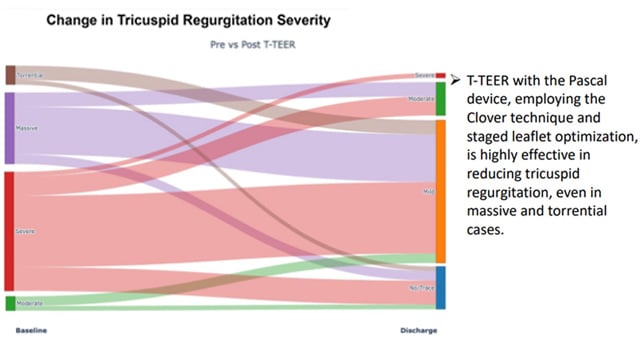
This featured research session delves into advanced insights on tricuspid valve interventions, focusing on the significance of right ventricular function and dimension in patient outcomes. It explores prognostic factors such as right ventricular loading mismatch, innovations like the clover technique in Pascal TEER, myocardial work recovery,...
Pulmonary valve interventions
17 Nov 2025 – From PCR London Valves 2025
This session presents complex cases and innovative solutions in pulmonary valve interventions. It highlights a novel balloon-expandable valve for the right ventricular outflow tract, management of severe prosthetic pulmonary valve stenosis in congenital heart disease, approaches to residual lesions in Fallot's anomaly, treatment of double outlet...
Thrombotic complications of transcatheter valves
17 Nov 2025 – From PCR London Valves 2025
Focusing on thrombotic complications following transcatheter valve implantation, this session presents a series of complex cases illustrating acute and late thrombotic events, their clinical presentations, and the pivotal role of multimodality imaging in diagnosis and management. Insights include coronary embolism and cardiogenic shock scenarios, emphasizing challenges...
TARGET study interim results: safety and performance of Cardiovalve replacement system for tricuspid regurgitation
16 Nov 2025 – From PCR London Valves 2025
Georg Nickenig and Christopher Allen discuss transcatheter replacement for the tricuspid valve and a dedicated transfemoral device in this interview, focusing on the TARGET study.
TARGET set out to answer two questions: can tricuspid regurgitation (TR) be reduced to mild or zero, and what are the safety...

Should we consider TTVR in patients with straightforward anatomy who are eligible for T-TEER?
17 Nov 2025 – From PCR London Valves 2025
Lukas Stolz and Rebecca Hahn discuss advances in transcatheter tricuspid valve intervention, emphasising that reducing tricuspid regurgitation (TR) to mild levels is key for improving patient outcomes, including mortality and heart failure hospitalisations. Decision-making between transcatheter edge-to-edge repair (T-TEER) and transcatheter tricuspid valve replacement (TTVR) depends...

Is iatrogenic atrial septum defect closure a necessary procedure?
19 Nov 2025 – From PCR London Valves 2025
Philipp Lurz and Saibal Kar discuss iatrogenic atrial septal defects from transseptal procedures. Small ones usually close on their own, while large defects causing significant shunting need closure to prevent right heart overload. Some moderate defects may be beneficial by decompressing the left atrium, so closure...