


3630 results for «571»
3630 results
DCB: what we know and what we do not know
22 May 2026 – From EuroPCR 2026
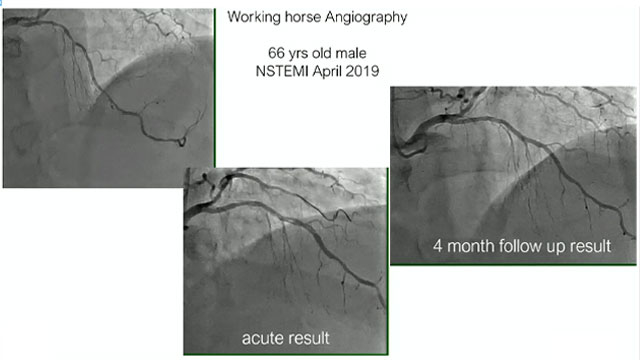
This session provides a detailed update on drug-coated balloons (DCB) in interventional cardiology, covering the latest clinical data and trials. It identifies scenarios where DCB use is most effective and offers guidance on optimizing procedural techniques to enhance clinical outcomes.
Asymptomatic high-risk patients: can CT coronary angiography improve our practice?
21 May 2026 – From EuroPCR 2026
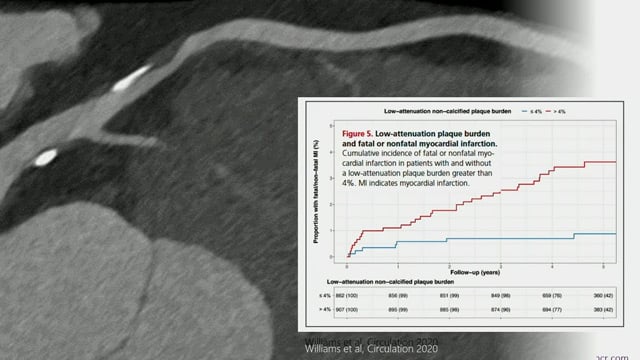
This session examines the role of cardiac computed tomography (CT) coronary angiography in improving clinical practice for asymptomatic high-risk patients. It discusses detection of vulnerable plaque features, the importance of inflammation and physiology in risk assessment, and explores individualized treatment pathways including PCI, medical therapy, or...
Ambiguous left main lesions: how to assess severity and make the right decision
21 May 2026 – From EuroPCR 2026
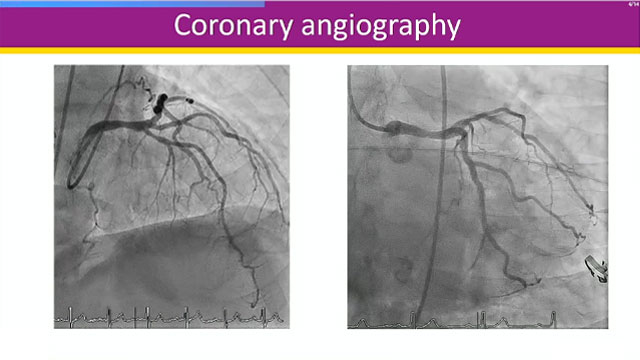
Addressing the complexities of ambiguous left main coronary lesions, this session elucidates the integration of physiology, intracoronary imaging, and CT scanning for comprehensive assessment. It highlights multimodality diagnostic strategies and decision-making frameworks to guide appropriate revascularization.
Imaging-guided strategy for understanding coronary calcification
21 May 2026 – From EuroPCR 2026
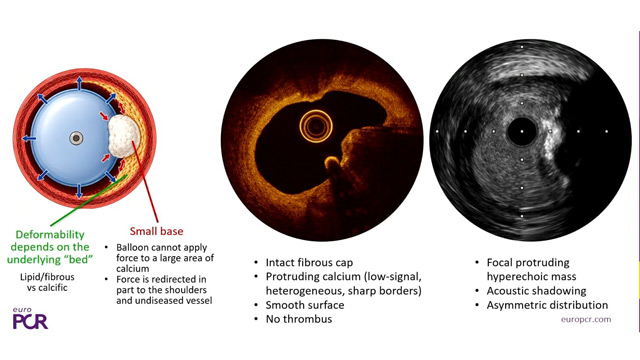
Focusing on coronary calcification, this session teaches the application of CT and intracoronary imaging to characterize calcium patterns, select appropriate modification tools, and assess procedural success. It emphasizes imaging-guided strategies to optimize treatment of calcified coronary lesions.
TAVI vs. surgery - Are the latest long-term data creating a dilemma for aortic stenosis patients?
21 May 2026 – From EuroPCR 2026
This session critically evaluates the latest long-term data comparing transcatheter aortic valve implantation (TAVI) and surgical aortic valve replacement (SAVR). It explores differing perspectives between surgeons and interventional cardiologists regarding valve durability and lifetime management, fostering a high-quality debate to achieve consensus within Heart Team discussions...
Repair or replace the tricuspid valve: how to decide?
19 May 2026 – From EuroPCR 2026
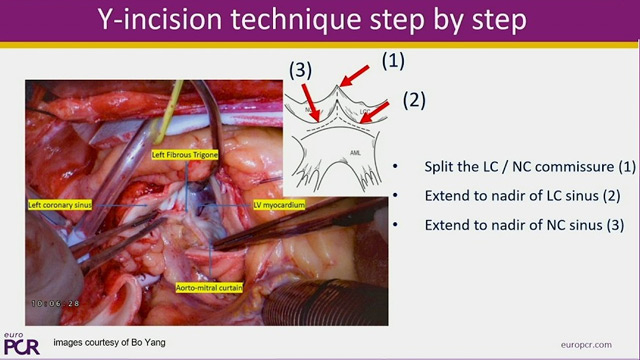
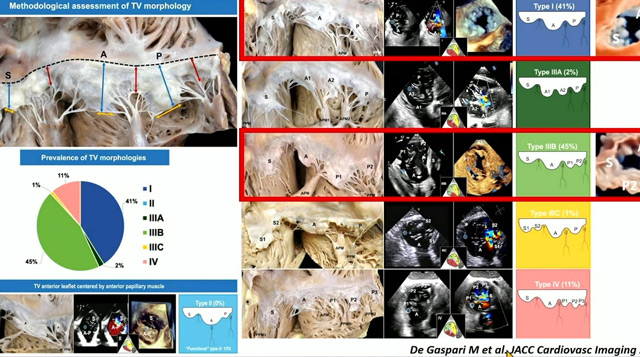
This session focuses on decision-making in tricuspid valve interventions, balancing the choice between repair and replacement. It covers clinical and anatomical criteria guiding treatment selection, pacing lead management from an electrophysiological and surgical perspective, and the application of multimodality imaging—including TTE, TOE, and CT—to inform real-world...
How should I treat a patient with a calcified mitral anatomy?
19 May 2026 – From EuroPCR 2026
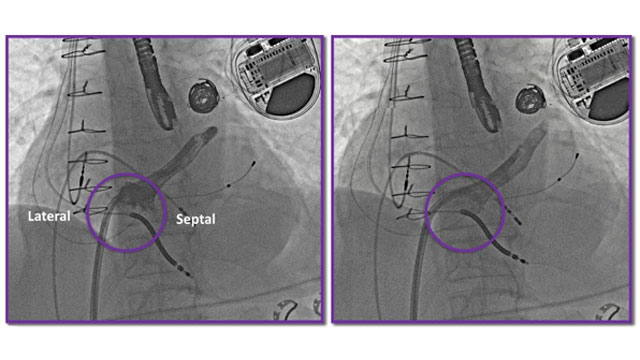
This session explores the management of patients with calcified mitral anatomy, from advanced imaging assessment to intervention planning. It evaluates the suitability of mitral annular calcification for transcatheter edge-to-edge repair (TEER) and discusses alternative therapeutic options for patients ineligible for TEER.
Challenges of multivessel disease in ACS
21 May 2026 – From EuroPCR 2026
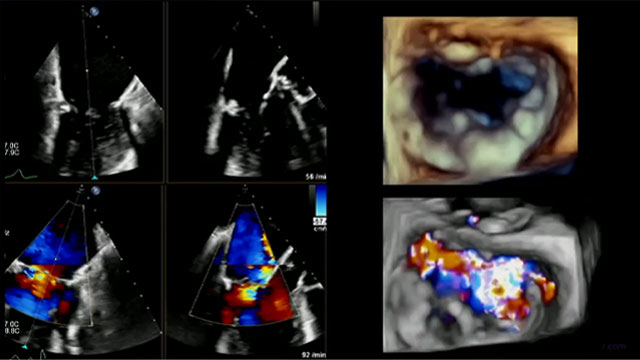
Dedicated to the challenges of multivessel disease in acute coronary syndrome (ACS), this session explores strategies to identify culprit versus non-culprit lesions and plan multivessel revascularisation using physiology, intravascular imaging, and artificial intelligence. It further discusses the timing considerations for revascularisation, whether ad-hoc or staged, illustrated...
High-risk PCI: how to optimise the result
19 May 2026 – From EuroPCR 2026
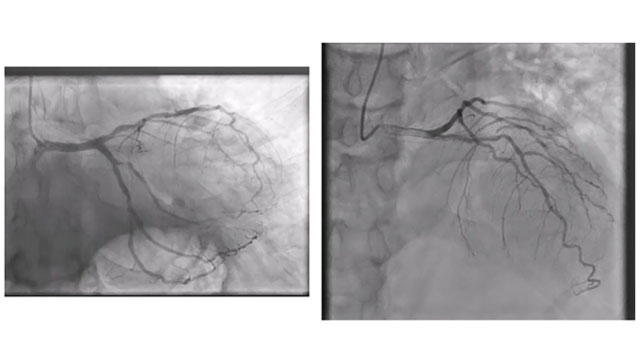
Focused on high-risk PCI, this session presents strategies to optimize procedural outcomes in complex cases. Discussions include contemporary approaches to challenging coronary anatomy, the role of balloon aortic valvuloplasty as a bridge to Impella-supported interventions, advanced mechanical support and thrombectomy in cardiogenic shock related to left...

Angiography-based physiology in clinical practice
19 May 2026 – From EuroPCR 2026
Investigate the clinical application of angiography-based physiology in coronary artery disease management. This session covers quantitative flow ratio (QFR) guided PCI strategies, risk stratification in chronic coronary syndrome, and prognostic value of angiography-derived indices, offering a wire-free diagnostic approach supported by recent trial data.

Selecting PCI devices in specific scenarios
19 May 2026 – From EuroPCR 2026
This session addresses device selection strategies tailored to specific interventional cardiology scenarios. It covers innovative approaches such as coronary laser use in difficult lesions, intravascular imaging-guided treatments for in-stent restenosis, and physiological assessment post-magnesium scaffold resorption, supported by real-world data and emerging machine learning applications.
Tricuspid interventions: find the best candidate
20 May 2026 – From EuroPCR 2026
This session reviews the phenotypes of tricuspid regurgitation and their diagnostic pathways, emphasizing standardized and pragmatic diagnostic steps. It also addresses criteria for identifying optimal timing and candidates for tricuspid valve interventions.
Optimal management of primary PCI complications
19 May 2026 – From EuroPCR 2026
This session delves into the optimal management of complications arising during primary PCI. It addresses critical scenarios from initial hesitation and unexpected challenges to confident treatment strategies for vessel complications. Notably, it explores complex cases such as paradoxical embolisation following rescue PCI in STEMI patients, providing...
Innovating heart failure care: from real-time monitoring to mechanical support
18 May 2026 – From EuroPCR 2026
Innovations in heart failure care are transforming patient management, from real-time, non-invasive congestion monitoring to advanced mechanical support systems. This session presents the Anusar congestion assessment tool, early clinical data on the NuPulse intravascular ventricular assist system for ambulatory support, and explores AI-driven voice biomarker technology...
The microcirculation: the next frontier in coronary practice
18 May 2026 – From EuroPCR 2026
Delve into the complexities of coronary microcirculation and its clinical implications. This session highlighted advanced diagnostic techniques such as bolus and continuous thermodilution, the interpretation of microvascular resistance reserve, and practical guidance on establishing a high-impact ANOCA clinic to manage microvascular angina and coronary dysfunction.
The Jon DeHaan Foundation Award competition
18 May 2026 – From EuroPCR 2026
Explore the forefront of interventional cardiology innovation with the Jon DeHaan Foundation Award competition, featuring pioneering solutions for valvular heart disease and mechanical support. This session highlights novel devices such as TriFlo for tricuspid regurgitation, the extravascular ventricular assist device (eVAD System), and the first-in-human experience...
Once you find microvascular disease, what do you actually do?
18 May 2026 – From EuroPCR 2026
Addressing coronary microvascular disease requires a comprehensive understanding of current medical therapies and emerging interventions. This session reviews state-of-the-art pharmacological treatments, elucidates the mechanisms and clinical data surrounding the coronary sinus reducer (CSR), and offers critical discussion on its therapeutic role in microvascular dysfunction.
The physiological mindset: foundations every modern operator must own
18 May 2026 – From EuroPCR 2026
This session delves into the fundamental principles governing coronary blood flow regulation, emphasizing coronary autoregulation and the influence of epicardial haemodynamics on vascular morphology. Participants deepen their understanding of coronary physiology beyond formulas, exploring the intersection of physiology and atherosclerosis.
Physiology in the real world: how to measure, when to trust it, what to do?
18 May 2026 – From EuroPCR 2026
This session provides comprehensive insights into coronary physiology assessment tools, emphasizing techniques for reliable haemodynamic measurements and exploring clinical considerations surrounding coronary spasms and myocardial bridges.
Closing lectures
18 May 2026 – From EuroPCR 2026
This session presents comprehensive closing lectures focusing on the evolving understanding of coronary microvascular dysfunction, examining the balance between vulnerability and physiology, and outlining future priorities for next-generation cathlab practices. It concludes with a session evaluation and synthesis of key learnings to inform clinical practice.