3645 results for «2830»
3645 results
When transfemoral is not an option: is TAVI still possible?
20 May 2026 – From EuroPCR 2026
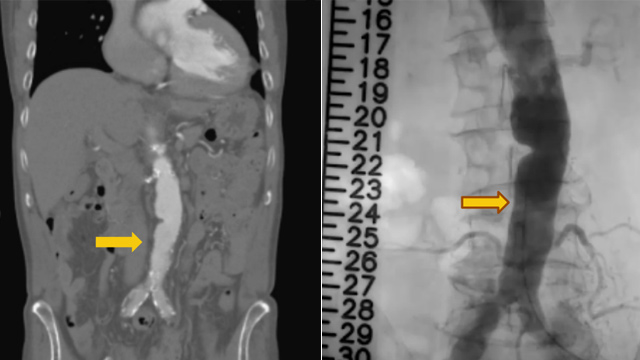
This session explores alternative access strategies for Transcatheter Aortic Valve Implantation (TAVI) when the transfemoral route is not feasible. It covers complex scenarios including transcaval TAVI complications, transaxillary approaches, management of extra-large annuli with peripheral artery disease, and innovative transcarotid valve-in-valve procedures.
Imaging and physiology-guided DCB strategy
20 May 2026 – From EuroPCR 2026
Delve into advanced imaging and physiology-guided drug-coated balloon (DCB) strategies for complex coronary lesions. This session presents integrated approaches combining morphology and physiology, OCT guidance, and real-world cases highlighting DCB use in multivessel disease and calcified lesions.
Imaging and physiology integration to guided PCI
20 May 2026 – From EuroPCR 2026
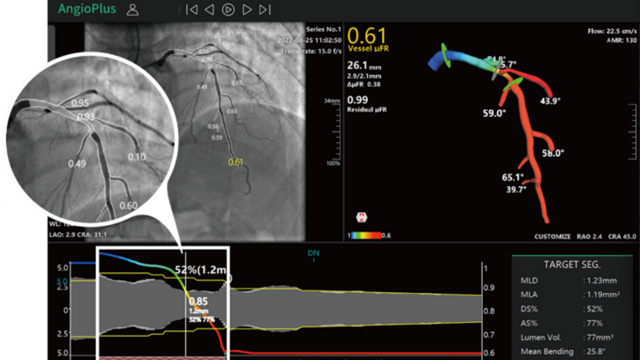
Discover the integration of imaging and physiological assessment in guiding percutaneous coronary intervention (PCI). This session highlights the use of multimodality diagnostics, including invasive and non-invasive techniques, to improve planning, strategy, and management of complex coronary lesions.
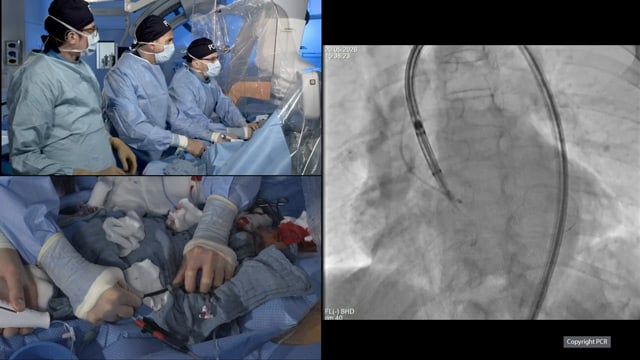
TAVI in aortic regurgitation with a dedicated valve - LIVE case
20 May 2026 – From EuroPCR 2026
An 80-year-old male with chronic kidney disease, a history of colon cancer (2013), paroxysmal AF, and LAD PCI 2 weeks earlier presented with symptomatic severe type III AR. He had normal LV function, but early LV dilation. The mechanism of AR was a combination of primary...
Secondary mitral regurgitation: not all patients are the same
20 May 2026 – From EuroPCR 2026
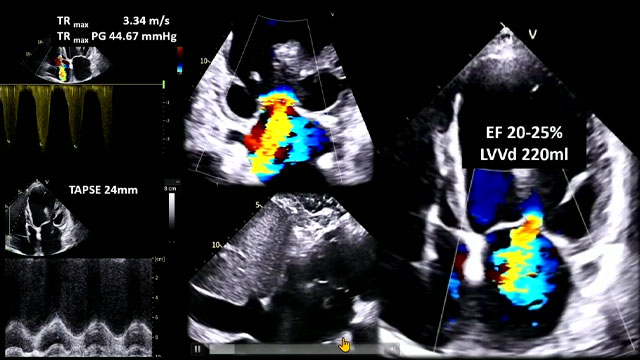
Examining secondary mitral regurgitation, this session differentiates patient phenotypes and discusses the application of updated guideline recommendations. It offers practical guidance on selecting the appropriate device tailored to individual patient characteristics, supported by detailed case studies.
Choosing the right strategy for isolated ostial left anterior descending artery or circumflex coronary lesions
20 May 2026 – From EuroPCR 2026
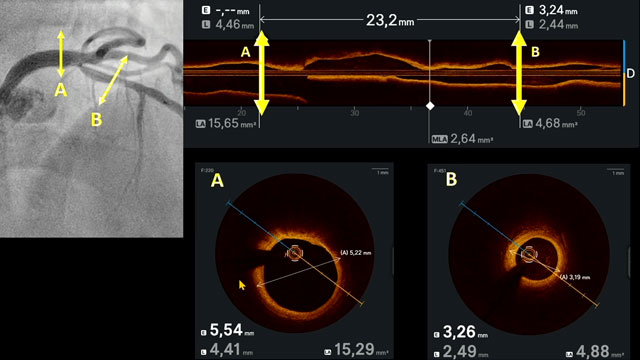
This session examines optimal strategies for managing isolated ostial lesions in the left anterior descending and circumflex arteries, comparing left main crossover, ostial stenting, and drug-coated balloon (DCB) approaches. It emphasizes integrating multimodality imaging for informed decision-making, illustrated through detailed case discussions.
New evidence for the use of DCB
20 May 2026 – From EuroPCR 2026
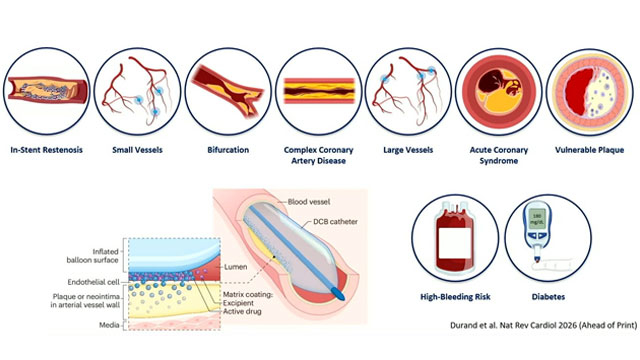
This session reviews emerging evidence supporting the use of drug-coated balloons (DCB) in complex PCI. It covers data from recent trials such as SELUTION De Novo, studies on vascular healing, restenosis patterns, long-term outcomes compared to DES, and optimal side branch treatment in bifurcation lesions.
Intracoronary imaging to guided DCB PCI
20 May 2026 – From EuroPCR 2026
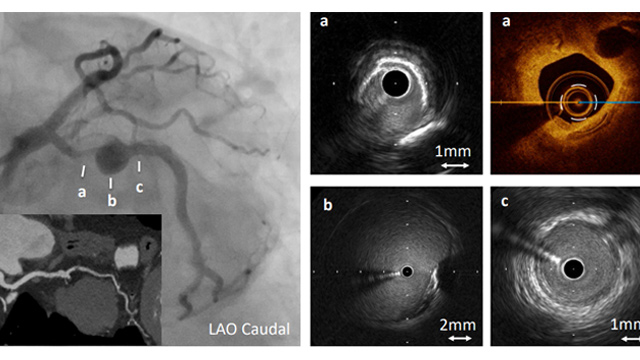
This session highlights the role of intracoronary imaging techniques such as OCT and IVUS in guiding drug-coated balloon (DCB) PCI. It explores novel imaging-guided algorithms for complex bifurcations, prediction of drug-eluting balloon failure, management of calcified nodules, re-entry into true lumen during CTO, and tackling aneurysms...
Best complications on calcified lesions
20 May 2026 – From EuroPCR 2026
Highlighting challenging cases in calcified coronary lesions, this session presents a series of complications including stuck wires, the Kokeshi phenomenon, and multiple complications within a single vessel. It provides practical insights into rescue techniques and navigating complex procedural challenges.
How to obtain a surgical-liked result in a patient with primary mitral regurgitation?
20 May 2026 – From EuroPCR 2026
This session delves into achieving surgical-like outcomes in patients with primary mitral regurgitation undergoing transcatheter edge-to-edge repair (TEER). It covers anatomical criteria for optimal patient selection, essential procedural steps including device choice and imaging guidance, and key factors contributing to durable success and patient improvement.
Typical chest pain: atypical angiogram
20 May 2026 – From EuroPCR 2026
This session addresses the management challenges posed by acute coronary syndromes when angiographic findings are ambiguous or atypical. It highlights the role of intravascular imaging in clarifying diagnoses and discusses recent insights from clinical cases and key studies such as DISCO and the latest NSTEMI EuroIntervention...
New tools for risk stratification in STEMI
20 May 2026 – From EuroPCR 2026
This session highlights novel tools and scores for risk stratification in ST-elevation myocardial infarction (STEMI) patients. It covers prognostic indices such as the index of microcirculatory resistance, the PREDICT-STEMI score, thrombus characteristics, sex differences in outcomes, renal impairment impacts, and benefits of complete revascularization strategies.

Combination of dedicated devices for optimal treatment of calcified lesions
20 May 2026 – From EuroPCR 2026
Focused on the optimal treatment of heavily calcified coronary lesions, this session presents a comprehensive overview of dedicated device combinations. It highlights strategies such as rotablation, rotatripsy, and approaches to managing protruding calcified nodules and undilatable lesions, emphasizing a stepwise approach to complex calcium modification in...

PCI in cardiogenic shock - Possibilities and limitations
20 May 2026 – From EuroPCR 2026
This session evaluates percutaneous coronary intervention (PCI) in the context of cardiogenic shock, discussing both possibilities and limitations. It features complex cases including Impella-supported rotablation in elderly patients, microaxial flow pump use, and challenging interventions in young patients with multivessel chronic total occlusions, providing insights into...
How to safely perform a retrograde CTO PCI: step-by-step guidance
20 May 2026 – From EuroPCR 2026
This session offers step-by-step guidance on safely performing retrograde chronic total occlusion (CTO) percutaneous coronary intervention (PCI). It covers the fundamentals of retrograde setup and collateral crossing, execution of a controlled reverse CART technique, and addresses common pitfalls with practical tips to improve procedural success and...
Imaging guided ultralow contrast PCI
20 May 2026 – From EuroPCR 2026
This session focuses on imaging-guided ultralow contrast PCI techniques designed to minimize contrast-induced nephropathy risk. It includes IVUS-guided strategies for distal left main bifurcation PCI, zero-contrast interventions in renal transplant patients, and precision stent placement without contrast use, emphasizing safety, precision, and frugality in contemporary PCI...
New evidence for coronary physiology in epicardial disease
20 May 2026 – From EuroPCR 2026
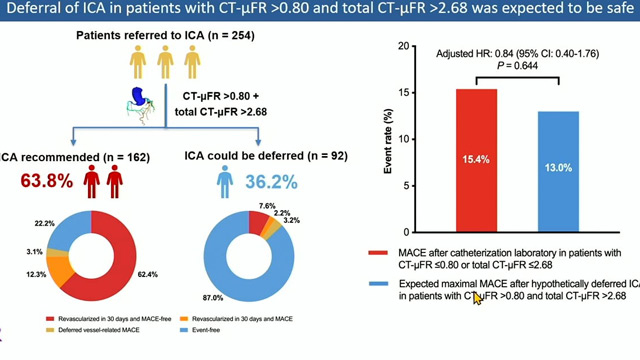
Explore new evidence in coronary physiology related to epicardial disease through analyses of landmark trials and registries. Topics include five-year follow-up data from DEFINE-FLAIR and iFR-SWEDEHEART, complete revascularization in elderly myocardial infarction patients, angiography-derived versus pressure wire assessments, prognostic implications of CT angiography-derived physiology, and the...
Mitral valve-in-valve, valve-in-ring, valve replacement: procedure challenges
20 May 2026 – From EuroPCR 2026
This session addresses procedural challenges in mitral valve interventions, including valve-in-valve, valve-in-ring, and valve replacement techniques. It covers lifetime management of patients with atrial fixated transcatheter mitral valve replacement (TMVR), approaches to recurrent mitral regurgitation, complex valve-in-valve cases, and hybrid strategies for valve-in-ring implantation, highlighting innovative...
Intracoronary imaging guidance in challenging PCI scenarios
20 May 2026 – From EuroPCR 2026
This session highlights the critical role of intracoronary imaging, particularly IVUS, in guiding complex percutaneous coronary interventions. It presents techniques such as IVUS-guided puncture of neo-ostia, stent implantation for ostial lesions, and innovative procedural methods like the Heart POTTER technique, underscoring the importance of precise imaging...
Beyond first implant: valve-in-valve, redo and leaflet modification
20 May 2026 – From EuroPCR 2026
This session explores advanced transcatheter aortic valve therapies beyond the first implant, focusing on valve-in-valve, redo procedures, and leaflet modification techniques. Topics include bioprosthetic valve fracture, long-term outcomes from the DURA-ViV registry, simplified workflows for leaflet modification in redo-TAVI, and intravascular ultrasound evaluation of valve expansion...