3644 results for «2641»
3644 results
Treatment for calcified coronary artery disease in the real world
19 May 2026 – From EuroPCR 2026
This session presents real-world experiences and evidence on treating calcified coronary artery disease. It includes meta-analyses comparing rotational atherectomy and balloon angioplasty, long-term outcomes of excimer laser atherectomy, and multicenter registry data on intravascular lithotripsy (IVL), particularly in diabetic and high-risk patients. The session also focuses...

TAVI complications: impact and improvement
20 May 2026 – From EuroPCR 2026
This session examines critical complications associated with TAVI and strategies to mitigate their impact. Topics include carbon-dioxide flushing to reduce brain injury, management of cardiac tamponade, AI-driven customization of TAVI in complex anatomies, and the influence of vascular complications on post-procedural quality of life.

INOCA/ANOCA: technical aspects
20 May 2026 – From EuroPCR 2026
This session covers technical aspects critical to the evaluation and management of ischemia with non-obstructive coronary arteries (INOCA) and angina with non-obstructive coronary arteries (ANOCA). Key topics include the impact of guide catheter shape, injection techniques for thermodilution measurements, advanced perfusion CMR diagnostics, and the physiological...
FFR and non-hyperaemic pressure ratios
20 May 2026 – From EuroPCR 2026
This session presents contemporary clinical applications of fractional flow reserve (FFR) and non-hyperaemic pressure ratios (NHPR), highlighting real-world impacts of physiology microcatheter-based indices, the interplay between epicardial stenosis and microvascular resistance, post-PCI hyperemia effects on iFR, and machine-learning driven outcome predictions.
Other right-sided and tricuspid valve interventions
20 May 2026 – From EuroPCR 2026
This session focuses on right-sided heart valve interventions, particularly targeting tricuspid valve disease. Topics include clinical outcomes in atrial functional tricuspid regurgitation, management in the context of left-sided valvular disease, treatment approaches for tricuspid valve endocarditis, and advances in transcatheter therapies and device placements.
Insights from real world TAVI practice
20 May 2026 – From EuroPCR 2026
This session presents comprehensive insights from real-world transcatheter aortic valve implantation (TAVI) practice, including sex differences in coronary assessment, the impact of general anesthesia on aortic valve gradients, early rehospitalisation rates, and the management of TAVI in patients with prior hip arthroplasty. Additionally, it explores multinational...
Continual refinement in LAA closure
20 May 2026 – From EuroPCR 2026
This session presents the latest advancements in left atrial appendage closure (LAAC). It covers new risk scoring systems, sex-specific outcome analyses, safety in elderly populations, and comparative data between LAMBRE and WATCHMAN devices from a high-volume center, highlighting continual refinement in LAAC strategies.
New frontiers in coronary disease treatment
21 May 2026 – From EuroPCR 2026
Examine recent advances in coronary disease treatment focusing on drug-eluting stents versus drug-coated balloon strategies. This session presents real-world data on lesion preparation, sex-specific outcomes, physiological disease patterns, and procedural factors influencing PCI success.
Pharmacology without borders, from coronary artherostenosis to radial artery
21 May 2026 – From EuroPCR 2026
This session delves into the expansive role of pharmacology in interventional cardiology, addressing topics ranging from coronary atherostenosis to radial artery management. Key discussions include the real-world efficacy and safety of intravenous cangrelor-assisted PCI in chronic coronary syndromes, comparative analysis of intra-arterial verapamil versus placebo for...
Focus on heart failure: from acute to chronic
21 May 2026 – From EuroPCR 2026
This comprehensive session delves into the spectrum of heart failure management, from acute presentations to chronic conditions. Key topics include the cardio-hepatic syndrome and right ventricular dysfunction in HFmrEF, prognostic implications of heart failure etiologies, and innovative approaches such as AI-assisted echocardiography for early detection of...
Strategies to enhance bifurcation PCI outcomes
21 May 2026 – From EuroPCR 2026
This session addresses strategies to optimize outcomes in coronary bifurcation PCI. It evaluates the impact of cutting and scoring balloons versus non-compliant balloons on stent expansion, predictors of target vessel revascularization using the POKI technique, and compares stent and non-stent approaches in side branch myocardial infarction...
Aortic stenosis: from diagnostic to treatment
21 May 2026 – From EuroPCR 2026
This session provides an in-depth review of contemporary management of aortic stenosis, covering diagnostic advancements, temporal trends, and treatment outcomes. It includes insights from the LAPLACE-TAVI registry focusing on low-risk patients, discusses the growing feasibility of day-case TAVI procedures, compares transcatheter and surgical valve replacements in...
Left main PCI, what is known and what is new
21 May 2026 – From EuroPCR 2026
This session examines both established knowledge and novel advances in left main PCI. Topics include the use of novel stents and laser atherectomy in calcified lesions, the prognostic impact of cardiac motion during bifurcation PCI, effects of left ventricular dysfunction, and sex-specific survival outcomes, as well...
Nurses and Allied Professionals Best Abstract and Clinical Case Awards and Closing Ceremony
24 May 2018 – From EuroPCR 2018
Consult this session to see best abstract and clinical case awards for nurses and allied professionals at EuroPCR 2018.

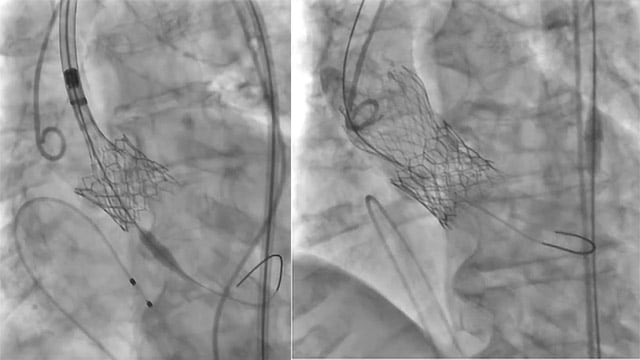
TAVI for bicuspid aortic stenosis patients - Recorded cases
05 Dec 2023 – From GulfPCR-GIM 2023
Discover two clinical cases of optimising TAVI procedure in bicuspid aortic valve patients, taking into account the current sizing options in such anatomy.
- An 84-year-old woman with a history of LAD PCI in 2020, presented a symptomatic severe aortic stenosis and grade 3 regurgitation with a preserved LV...
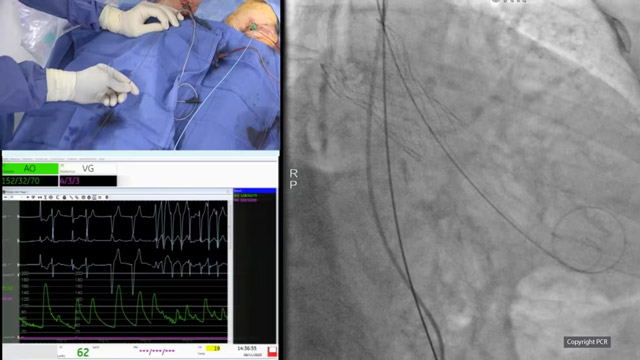
TAVI and access: alternating is wise
16 Jan 2024 – From GulfPCR-GIM 2023
Given that 10-20% of patients have restricted or even impossible femoral access, it is important, for both procedural and patient safety, that alternative access is sometimes considered. Learn what options are available, whether surgical or transcatheter, depending on the patient, and how to put these choices into...
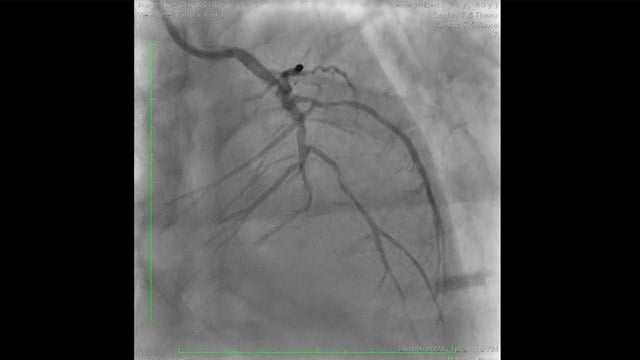
Newer generation self-expanding platform: technical optimisation for common clinical challenges
05 Dec 2023 – From GulfPCR-GIM 2023
The primary focus of this GulfPCR-GIM 2023 session revolves around pre-procedural planning considerations, valve selection, and managing complex anatomies using both traditional self-expanding valves and the Evolut FX system. Additionally, the session aims to explore the work-up protocol for patients grappling with severe AS and advanced...
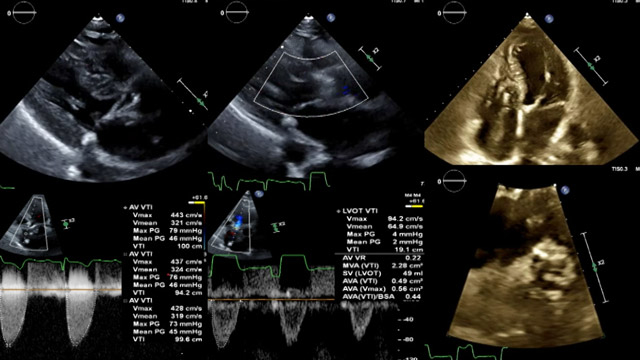
Essentials of lifetime management of TAVR patients using novel Myval THV
05 Dec 2023 – From GulfPCR-GIM 2023
Join this GulfPCR-GIM 2023 session to explore the Myval next-generation THV technology, uncovering its unique features, procedural advantages, and clinical benefits, from extensive patient data. Learn also about the CorAlign technique that ensures precise commissural and coronary alignment while preserving coronary access, and gain insights into...
Evidence gap and new indications
05 Dec 2023 – From GulfPCR-GIM 2023
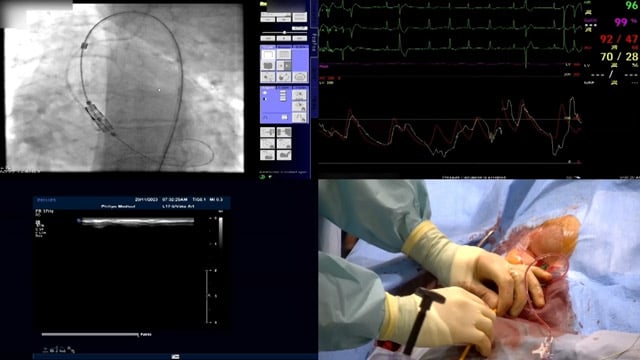
Follow discussions about a 74-year-old patient with NYHA III.IV dyspnea, DM, HTN, paroxismal AF and LVEF 20% to find out more about symptomatic moderate aortic stenosis, and about an 84-year-old patient with dyspnea NYHA III, HTN, no significant CAD, and follow-up for moderate aortic regurgitation, and...
Valve-in-valve: not as simple as it looks
05 Dec 2023 – From GulfPCR-GIM 2023
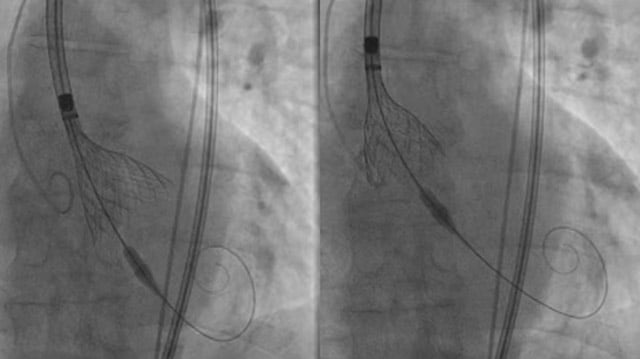
Thanks to this session, you will enhance your comprehension of anticipating, planning, and executing TAV-in-TAV procedures, and gain insights into preventing coronary obstruction during these interventions.