3650 results for «355»
3650 results
When the anterior leaflet gets in the way: mitral leaflet modification before TMVR
19 May 2026 – From EuroPCR 2026
This session addresses the intricacies of mitral leaflet modification techniques prior to transcatheter mitral valve replacement (TMVR). It features innovative approaches such as LAMPOON-assisted valve-in-ring replacement, balloon-assisted leaflet translocation, and strategies to overcome the challenges posed by mitral annular calcification.

PCR's Got Talent Round 1 - Session 2
19 May 2026 – From EuroPCR 2026
PCR's Got Talent Round 1 - Session 2 offers a diverse collection of studies addressing coronary microvascular dysfunction, atrial fibrillation management, TAVI outcomes, AI applications in imaging, mitral and tricuspid valve interventions, and in-stent restenosis treatment. The session culminates with deliberations and results announcements, reflecting cutting-edge...

How to face resistent hypertension: when pharmacological treatment is not an option
19 May 2026 – From EuroPCR 2026
Focused on resistant hypertension, this session explores interventional options when pharmacological treatments fall short. It discusses urgent intervention indications, complex cases involving renal artery occlusion, and the role of fractional flow reserve (FFR) in managing pan-vascular disease associated with hypertension.
FFR- and IVUS-guided PCI of a long and calcified LAD lesion - LIVE case
19 May 2026 – From EuroPCR 2026
A 71‑year‑old man with hypertension and dyslipidemia presented with CCS class II angina and three‑vessel coronary artery disease. Functional assessment included CT‑derived micro‑FFR, angiography‑based FFR, and stress myocardial scintigraphy. The only hemodynamically significant lesion was a long, calcified lesion of the LAD.
Lesion preparation was performed with...
TAVI procedural complications - Part 3: vascular complications, coronary issues and more
19 May 2026 – From EuroPCR 2026
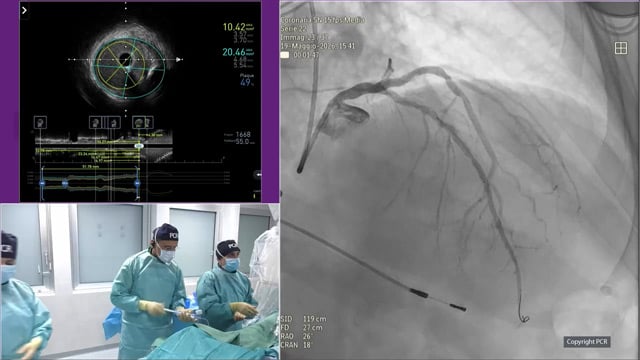
This session addresses critical procedural complications during TAVI, emphasizing vascular issues, coronary complications, and complex bailout scenarios. Through challenging case examples, it offers insights into the management and anticipation of such complications to optimize patient outcomes.
Identifying problems and solving complex anatomies during TAVI
19 May 2026 – From EuroPCR 2026
A comprehensive session on managing complex anatomies during Transcatheter Aortic Valve Implantation (TAVI), emphasizing risk markers for peri-operative complications and strategies to address difficult anatomical challenges. Real-world cases illustrate practical approaches and key learnings for handling intricate TAVI scenarios.
Drug-coated balloon (DCB) technology: A pioneer’s view of the historical evolution and future directions
08 Jan 2025
In this article, Bruno Scheller explores advances in local drug delivery, from drug-coated balloons to novel antiproliferative agents. These innovations aim to reduce restenosis, minimize permanent implants, and pave the way for patient-specific coronary artery disease treatments.

Author

BIOFLOW DAPT - Biodegradable-polymer or durable-polymer stents in patients at high bleeding risk: A randomized, open-label clinical trial
26 Aug 2023
Nicola Ryan reports on the BIOFLOW DAPT trial results presented during the ESC 2023 Congress in Amsterdam by Marco Valgimigli and published in Circulation.
BIOFLOW-DAPT is an open-label randomised trial comparing the safety and efficacy of a biodegradable-polymer sirolimus-eluting stent with a durable-polymer zotarolimus-eluting stent in high-bleeding risk patients...

Author

Top Interventional Trials presented at ACC.21
07 Jun 2021
Ali Nazmi Calik provides a summary and key take-aways and infographics of 9 major trials of interest to interventional cardiologists presented at ACC.21

Author
Future directions of drug-coated balloon angioplasty
06 Feb 2025
Fernando Alfonso and Javier Cuesta discuss the growing role of drug-coated balloons as an alternative to stents in percutaneous coronary interventions. Highlighting advantages like reduced in-stent restenosis, they emphasize the need for robust clinical studies to refine DCB use.

Author

Author