


447 results
Innovative strategies in STEMI management
22 May 2026 – From EuroPCR 2026
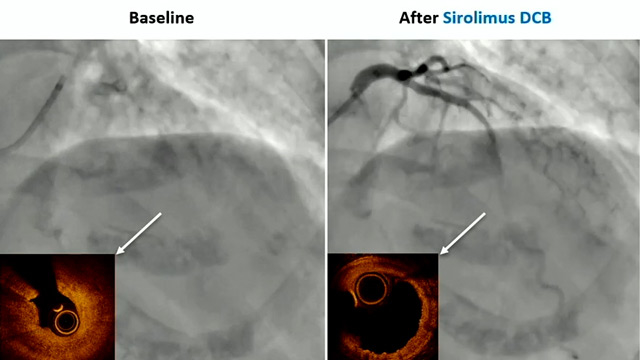
This session presents innovative strategies in STEMI management, including the treatment of acute saphenous vein graft occlusion, primary PCI via the left internal mammary artery, and a two-step lesion debulking approach. It also covers hybrid drug-coated balloon strategies in complex multivessel disease and the emerging role...

Ascending into the future with drug-coated balloons
21 May 2026 – From EuroPCR 2026
Step into the future of interventional cardiology with comprehensive insights into drug‑coated balloons (DCB). This session covers the new DCB ARC guidelines, previews findings from the impactful BASKET BALL randomised trial, and examines real-world evidence from the SCORE registry. It also addresses the optimisation of acute...
New insights into pharmacological treatment for STEMI
21 May 2026 – From EuroPCR 2026
This session presents the latest pharmacological advances in the treatment of ST-segment elevation myocardial infarction (STEMI). It covers safety data on ticagrelor monotherapy post-primary PCI, the impact of P2Y12 inhibitor pretreatment, effects of dapagliflozin on myocardial remodeling, and considerations for bleeding risk and vascular preparation strategies...

A series of complex real-word challenges STEMI treatment from very different countries
21 May 2026 – From EuroPCR 2026
This session showcases a series of complex STEMI treatment challenges from diverse international settings, highlighting difficult coronary anatomies and complicated procedures. It discusses nuanced clinical scenarios where artery recanalisation does not always equate to reperfusion, and presents stepwise approaches to managing multivessel disease, renal failure, and...
Complication management during STEMI intervention: Czech Republic - Greece and Iraq present their cases
21 May 2026 – From EuroPCR 2026
This session presents a critical analysis of procedural strategies in primary PCI for STEMI by exploring complex cases from the Czech Republic, Greece, and Iraq. It delves into mechanisms and management of major PCI complications and highlights the role of emerging novel technologies in primary PCI...
Routine primary PCI: what can go wrong?
21 May 2026 – From EuroPCR 2026
This session offers an in-depth examination of potential complications during routine primary PCI, focusing on prevention and management strategies. Key learning points include understanding no-reflow phenomena, managing STEMI in post-CABG patients, and handling thrombus burden effectively. Real-world cases illustrate decision-making processes and therapeutic approaches to optimize...
Risk and prognosis predictors in STEMI
21 May 2026 – From EuroPCR 2026
This session explores key risk and prognostic factors in ST-elevation myocardial infarction (STEMI), encompassing biomarker-based outcome prediction, the influence of low-density lipoprotein cholesterol on myocardial injury, and thrombotic risk in atrial fibrillation patients undergoing PCI. It further examines gender differences in young STEMI patients, the safety...
Primary PCI dilemmas: when imaging saves the day
21 May 2026 – From EuroPCR 2026
This session highlights the pivotal role of imaging in resolving dilemmas during primary percutaneous coronary intervention (PCI). It presents complex cases illustrating challenges such as coronary compression, thrombus burden in large vessels, and culprit lesion identification, including the use of high-definition intravascular ultrasound (HD-IVUS) to reclassify...
New evidence in coronary physiology for microvascular assessment
21 May 2026 – From EuroPCR 2026
This session highlights new evidence in coronary physiology related to microvascular assessment. Topics include endothelial dysfunction in angina with non-obstructive arteries, the prognostic value of microvascular resistance metrics, natural history studies, and trials aimed at standardizing management of microvascular dysfunction.
Bailout techniques for complications during primary PCI
21 May 2026 – From EuroPCR 2026
This session addresses bailout techniques during primary PCI complications. It covers a range of challenging scenarios such as coronary perforations and complex procedural issues, emphasizing rapid decision-making and effective treatment strategies to improve patient outcomes in high-stakes situations.