1482 results
Aortic stenosis: from diagnostic to treatment
21 May 2026 – From EuroPCR 2026
This session provides an in-depth review of contemporary management of aortic stenosis, covering diagnostic advancements, temporal trends, and treatment outcomes. It includes insights from the LAPLACE-TAVI registry focusing on low-risk patients, discusses the growing feasibility of day-case TAVI procedures, compares transcatheter and surgical valve replacements in...

ARTICA: Coronary revascularisation in patients undergoing TAVI - an individual patient data meta-analysis of 4 randomised trials
21 May 2026 – From EuroPCR 2026
At EuroPCR 2026, Martin Leon and Roberto Scarsini review ARTICA, a patient-level meta-analysis combining data from the ACTIVATION, NOTION-3, FAITAVI, and TCW randomised trials.
The analysis included 1,050 patients with severe aortic stenosis and concomitant coronary artery disease and compared three management strategies: medical therapy, angiography-guided PCI,...
Unconventional situations during cardiovascular interventions
20 May 2026 – From EuroPCR 2026
This session addresses unconventional and challenging scenarios encountered during cardiovascular interventions, focusing on managing complications effectively in the cathlab. Through detailed case presentations from Argentina, Chile, and Colombia, it explores innovative approaches to acute aortic valve regurgitation, TAVI complications in bicuspid anatomy, and diagnostic dilemmas in...
To rescue the unexpected complications during TAVI
20 May 2026 – From EuroPCR 2026
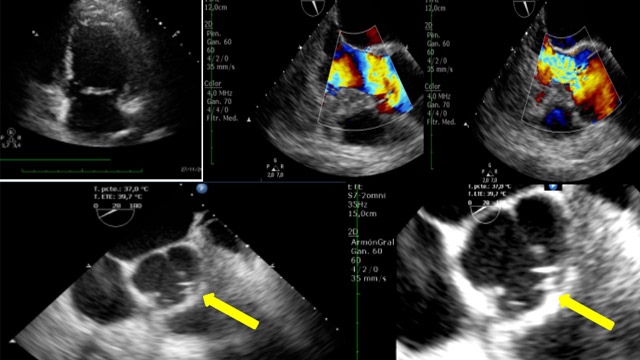
This session focuses on the recognition and management of unexpected complications during TAVI procedures. Through cases from Hong Kong, Kazakhstan, and Uzbekistan, it examines mechanisms underlying common and rare complications such as aortic sinus injury, acute valve dislocation, and left main collapse. Attendees gain practical insights...
TAVI in aortic regurgitation and large annulus
20 May 2026 – From EuroPCR 2026
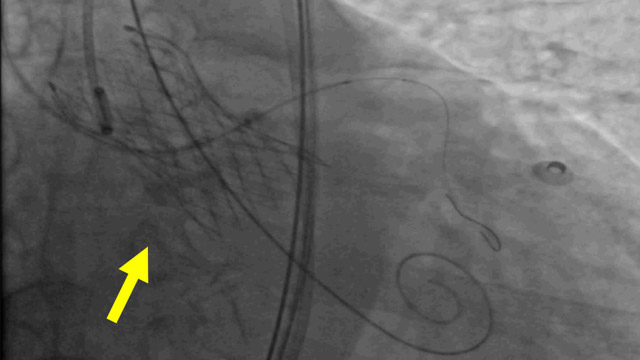
Focusing on TAVI in patients with aortic regurgitation and large annulus, this session reviews clinical outcomes and advancements including aneurysm progression slowing, device regurgitation assessment by cardiac MRI, one-year results with Ken-valve, novel retrievable self-expanding valves, staging classifications, and balloon-expandable valve performance.
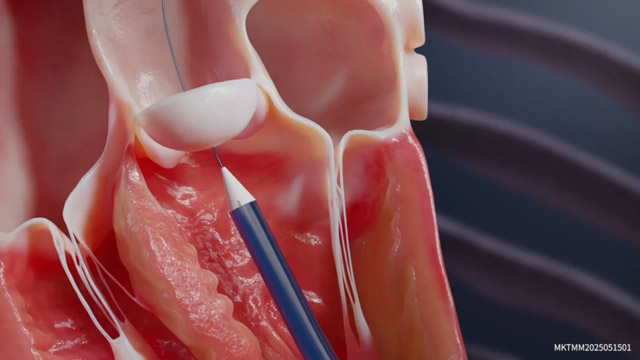
TAVI procedural complications - Part 4: vascular complications, coronary issues and more
20 May 2026 – From EuroPCR 2026
This session addresses a spectrum of procedural complications encountered in TAVI, focusing on vascular issues, coronary challenges, and device-related difficulties. Case presentations include partial prosthesis expansion, emergency thoracic aortic stenting, repeat balloon valvuloplasty, revascularization dilemmas, and complex valve-in-valve procedures. The discussion provides practical perspectives on managing...
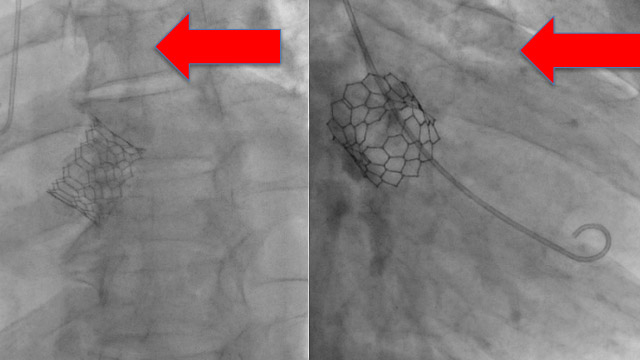
New TAVI platforms - Novel devices, early data
20 May 2026 – From EuroPCR 2026
Explore the latest developments in TAVI technology, featuring novel valve platforms and early clinical data. The session covers outcomes from new self-expandable and balloon-expandable valves, innovative single-operator techniques, redo TAVI approaches, and advances in CT sizing powered by deep learning.
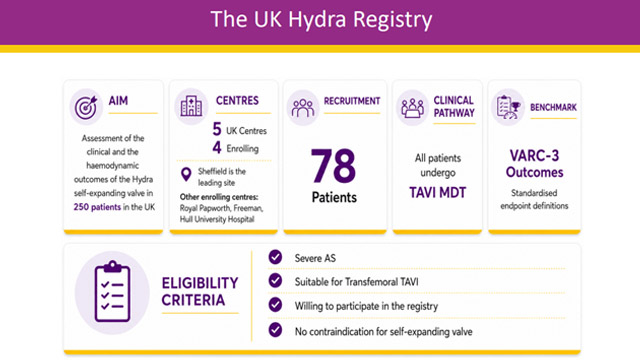
TAVI: new approach
20 May 2026 – From EuroPCR 2026
This session introduces new frontiers in transcatheter aortic valve implantation (TAVI), including artificial intelligence-enabled systems and minimalist, radiation-free approaches guided by echocardiography. It covers complex procedural techniques such as axillary access under TEE guidance, precision snaring, and managing challenging anatomies, emphasizing advancements in safety and efficacy...
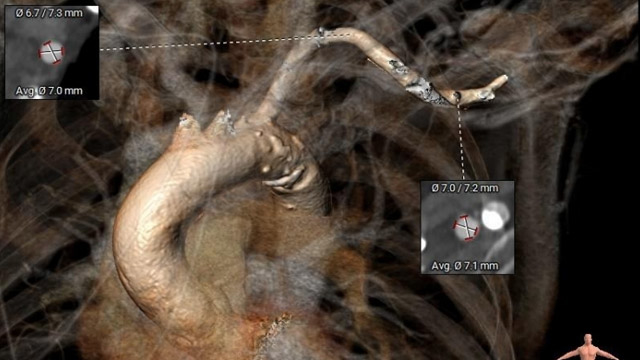
Insights from real world TAVI practice
20 May 2026 – From EuroPCR 2026
This session presents comprehensive insights from real-world transcatheter aortic valve implantation (TAVI) practice, including sex differences in coronary assessment, the impact of general anesthesia on aortic valve gradients, early rehospitalisation rates, and the management of TAVI in patients with prior hip arthroplasty. Additionally, it explores multinational...

Beyond the horizon - Future of structural heart innovations and PCI
20 May 2026 – From EuroPCR 2026
Structural heart and coronary interventions are expanding rapidly, with innovation increasingly focused on managing complex anatomies and diversifying treatment strategies.
The PRISM-PCI toolkit is introduced as a framework to support decision-making in complex PCI, alongside advances in transcatheter valve therapies spanning mitral, tricuspid and pulmonary interventions, as...
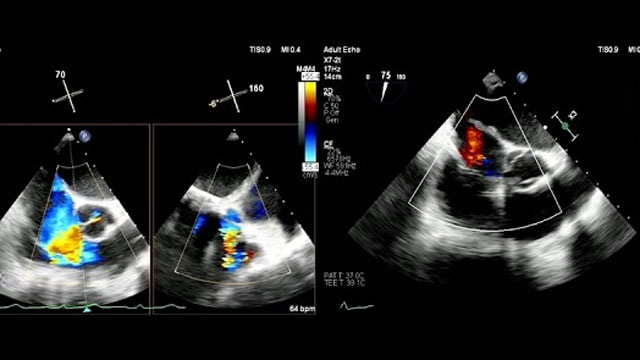
Lessons learned to pave the way for future-proof strategies in TAVI
20 May 2026 – From EuroPCR 2026
This EuroPCR 2026 session focuses on how current experience in transcatheter aortic valve implantation (TAVI) can be translated into more durable strategies for the future, particularly in patients with bicuspid aortic valve disease.
It provides a comprehensive overview of anatomical, clinical, and procedural considerations in this challenging...
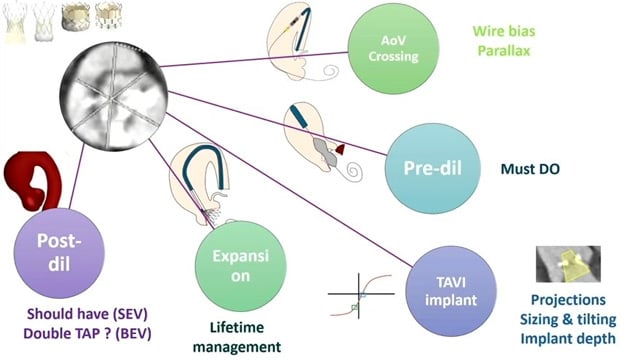
Mastering complex TAVI: achieving optimal outcomes with Evolut FX+
20 May 2026 – From EuroPCR 2026
This EuroPCR 2026 session focuses on advancing the management of complex transcatheter aortic valve implantation (TAVI) procedures using Evolut FX+ technology.
It highlights the benefits of supra-annular TAVI in patients with severe bicuspid aortic stenosis, supported by a review of available clinical evidence.
Through a series of case-based...
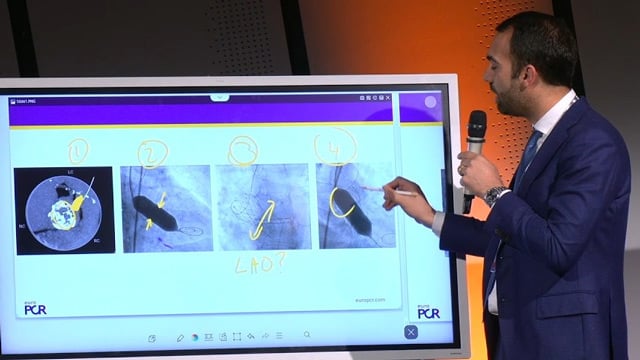
Is durability still a topic of concern for TAVI patients? What are the remaining challenges that we need to overcome?
20 May 2026 – From EuroPCR 2026
Examine the clinical relevance of TAVI valve durability and its impact on long-term patient management in aortic stenosis. Review key factors influencing valve performance over time, with a focus on procedural and anatomical determinants of optimal outcomes.
Current concepts and techniques aimed at achieving ideal valve expansion...
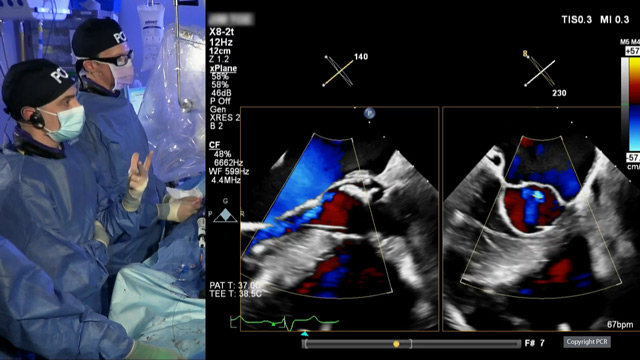
Expanding the horizon - Trials addressing unchartered territories in coronary and structural heart
20 May 2026 – From EuroPCR 2026
New clinical evidence is pushing coronary and structural heart therapy into areas that were previously uncertain or inconsistently defined, with multiple landmark trials now shaping future practice.
Among the studies discussed in this EuroPCR 2026 session, are SORT OUT XII, START YOUNG, BISCUSPID, LANDMARK 2 and RESTORE...
Beyond first implant: valve-in-valve, redo and leaflet modification
20 May 2026 – From EuroPCR 2026
This session explores advanced transcatheter aortic valve therapies beyond the first implant, focusing on valve-in-valve, redo procedures, and leaflet modification techniques. Topics include bioprosthetic valve fracture, long-term outcomes from the DURA-ViV registry, simplified workflows for leaflet modification in redo-TAVI, and intravascular ultrasound evaluation of valve expansion...
TAVI complications: the nurses and allied professionals' perspective
20 May 2026 – From EuroPCR 2026
This session highlights the critical role nurses and allied professionals (NAPs) play during TAVI complications. Through detailed clinical cases, it emphasizes their contributions in managing adverse events and explores the significance of structured debriefing to enhance team performance and patient outcomes.
TAVI procedural complications - Part 6: paravalvular leak, basilica and more
20 May 2026 – From EuroPCR 2026
Delve into complex TAVI procedural complications including paravalvular leak and challenges such as BASILICA technique failures, aortic dissection, valve infolding, and valve dislocation. This session presents real-world cases illustrating troubleshooting strategies and innovative interventions like TAVI-in-TAVI procedures to address these critical scenarios.
TAVI complications: impact and improvement
20 May 2026 – From EuroPCR 2026
This session examines critical complications associated with TAVI and strategies to mitigate their impact. Topics include carbon-dioxide flushing to reduce brain injury, management of cardiac tamponade, AI-driven customization of TAVI in complex anatomies, and the influence of vascular complications on post-procedural quality of life.
Structural heart devices: what's new and how it reaches your cathlab
20 May 2026 – From EuroPCR 2026
Discover the latest innovations in structural heart devices, spanning new TAVR platforms, mitral and tricuspid valve technologies, leaflet modification, and closure devices. Gain insight into the comprehensive innovation pathway from concept and prototyping to regulatory approval and clinical adoption, with perspectives from physician-innovators on drivers of...
New devices for structural interventions
20 May 2026 – From EuroPCR 2026
Explore the latest advancements in structural interventions with a focus on novel devices and their early clinical outcomes. This session reviews cutting-edge technologies including balloon-expandable TAVI, percutaneous mechanical aspiration for infective endocarditis, and emerging transcatheter tricuspid valve replacement systems, alongside multicenter evaluations of TEER devices in...