634 results
Interventions in shock
17 Nov 2025 – From PCR London Valves 2025
This session addresses critical interventions in cardiogenic shock, highlighting innovative approaches such as combined valve procedures, management of acute functional mitral regurgitation in STEMI, and advanced transcatheter edge-to-edge repair techniques in refractory heart failure. It offers a comprehensive exploration of strategies to navigate complex hemodynamic instability...
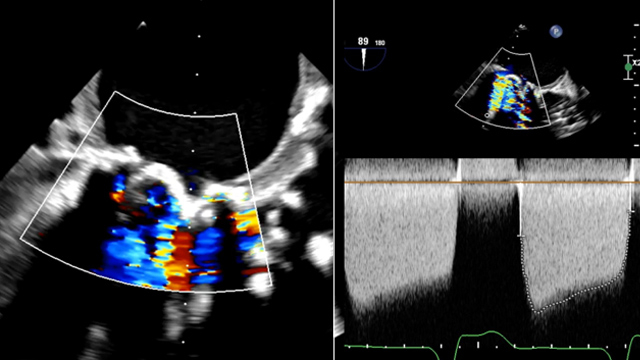
Challenging mitral TEER: Barlow's disease, fibro-elastic deficiency & abnormal valve morphology
17 Nov 2025 – From PCR London Valves 2025
This session examines the feasibility and technical considerations of mitral transcatheter edge-to-edge repair (TEER) in complex anatomical and pathological scenarios. Topics include applications in Barlow's disease, fibro-elastic deficiency, congenital heart anomalies, Anderson-Fabry disease, and post-cardiac transplantation, providing valuable insights into expanding TEER indications and overcoming anatomical...
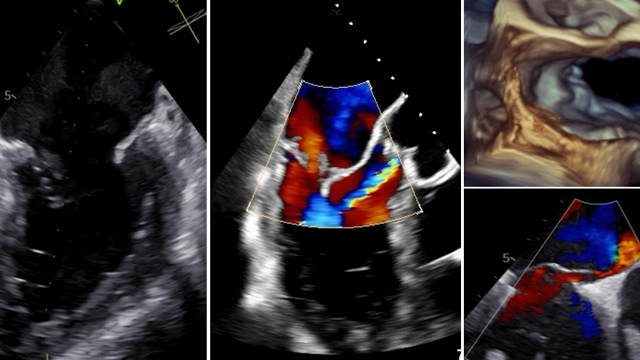
Cardiogenic shock: transcatheter solutions
17 Nov 2025 – From PCR London Valves 2025
This session focuses on transcatheter solutions for cardiogenic shock, highlighting rescue therapies such as mitral clip intervention in hypertrophic obstructive cardiomyopathy, valve-in-valve TAVI during CPR, and sequential mechanical circulatory support. It presents complex clinical cases illustrating stepwise approaches combining mechanical support and percutaneous valve repair to...

Transcatheter mitral valve-in-valve: transcatheter rescue, balloon migration & more
17 Nov 2025 – From PCR London Valves 2025
This session addresses transcatheter mitral valve-in-valve and valve-in-ring interventions in complex clinical contexts. It includes cases of rescue procedures in valvular dysfunction, ECMO-assisted mitral valve-in-ring implantation in severe left ventricular dysfunction, and innovative approaches to mitral ring anatomy challenges, offering practical insights and procedural tips for...
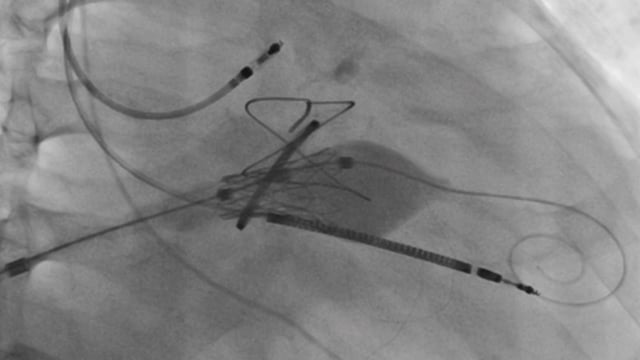
Percutaneous mitral balloon commissurotomy in unusual scenarios
17 Nov 2025 – From PCR London Valves 2025
This session examines percutaneous mitral balloon commissurotomy applied in unusual and challenging scenarios. It covers advanced techniques such as wire-guided Inoue balloon valvuloplasty post annuloplasty, strategies for severe mitral calcification, and innovative simplifications of established methods, emphasizing the ongoing relevance of this procedure in complex mitral...
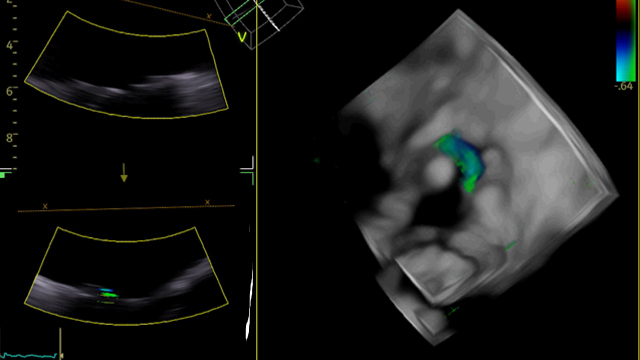
Mitral paravalvular leak closure: procedural planning and step-by-step performance
17 Nov 2025 – From PCR London Valves 2025
This session provides an expert overview of mitral paravalvular leak closure, emphasizing critical clinical and anatomical selection criteria. It covers essential pre-procedural imaging and planning strategies, complemented by an educational recorded case and a review of immediate and long-term procedural outcomes.
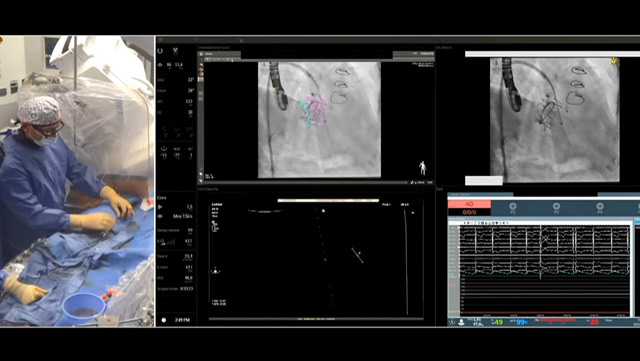
What are the key considerations for transcatheter mitral paravalvular leak management?
18 Nov 2025 – From PCR London Valves 2025
Nina Wunderlich and Patrick Calvert discuss mitral paravalvular leaks, which are relatively common. Percutaneous closure is now the default approach, and imaging is central to success: detailed pre-procedural assessment, 3D TOE during the procedure, and careful planning of transseptal puncture.
This interview was filmed at PCR London...
TAVI for aortic regurgitation in high surgical risk: outcomes in 700 patients from ALIGN-AR
12 Feb 2026 – From PCR London Valves 2025
Christopher Allen and Raj Makkar sit down to review the ALIGN-AR trial and its implications for treating native aortic regurgitation.
ALIGN-AR was a pivotal, single-arm, multicenter investigational study designed to evaluate a dedicated transcatheter solution in patients with moderate-to-severe native AR who were considered high risk for...
Is iatrogenic atrial septum defect closure a necessary procedure?
19 Nov 2025 – From PCR London Valves 2025
Philipp Lurz and Saibal Kar discuss iatrogenic atrial septal defects from transseptal procedures. Small ones usually close on their own, while large defects causing significant shunting need closure to prevent right heart overload. Some moderate defects may be beneficial by decompressing the left atrium, so closure...

What are the key considerations when managing combined mitral and tricuspid regurgitation?
17 Feb 2026 – From PCR London Valves 2025
Fabien Praz and Neil Fam talk about the management of patients with combined mitral and tricuspid regurgitation, who are often elderly with heart failure and multiple comorbidities. Careful assessment—including echocardiography, hemodynamics, and sometimes CT—is crucial to identify the dominant lesion. Surgery is preferred if feasible, but...