58 results for «1160»
58 results
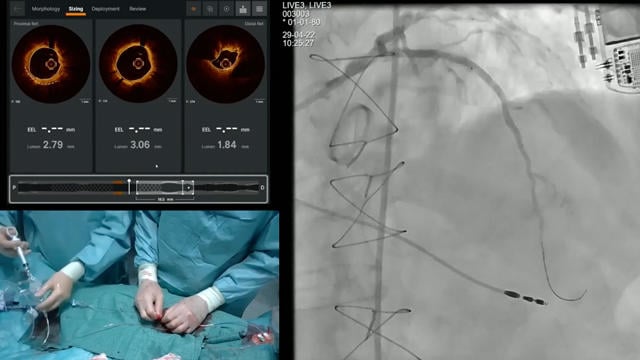
Provisional stenting for a distal left main stenosis - LIVE Case
Recommended by PCR
10 Dec 2025 – From GulfPCR-GIM 2025
A 66-year-old male with preserved LV function, type II diabetes, and hypertension, presented with CCS and anterior ischemia, with a normal ECG. Photon-counting CT revealed a significant calcified stenosis of the distal left main and proximal LAD, confirmed by coronary angiography.
A stent was implanted in the...
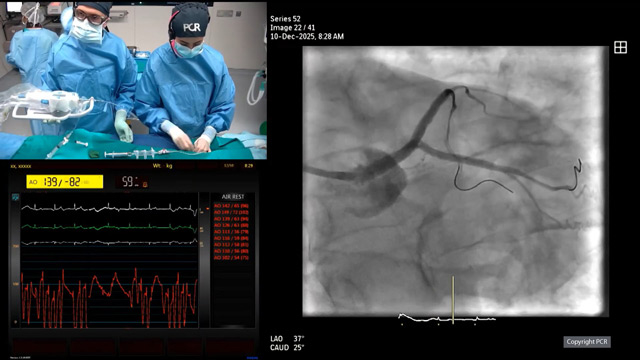
Transcatheter tricuspid valve replacement - LIVE case
Recommended by PCR
15 May 2024 – From EuroPCR 2024
An 82-year-old male with a history of STEMI in 2013, stroke in 2018, cancer, and permanent AF, presented with acute heart failure with predominant right-side failure. Severe tricuspid regurgitation was identified.
The operators implanted an Evoque valve percutaneously under TEE guidance and general anaesthesia via the venous...
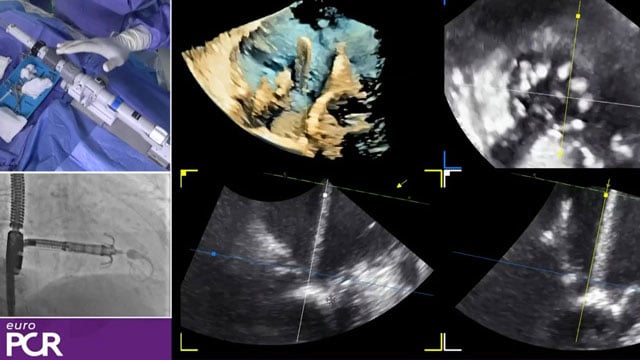
Imaging-guided left main PCI - LIVE case
Recommended by PCR
17 May 2024 – From EuroPCR 2024
A 53-year-old male with a history of advanced malignancy (lung adenoma) and mid LAD PCI last year, along with multiple risk factors (hypertension, dyslipidemia, diabetes, and smoking), presented with angina and a positive stress test and CT. The angiography and CT showed significant left main stenosis...
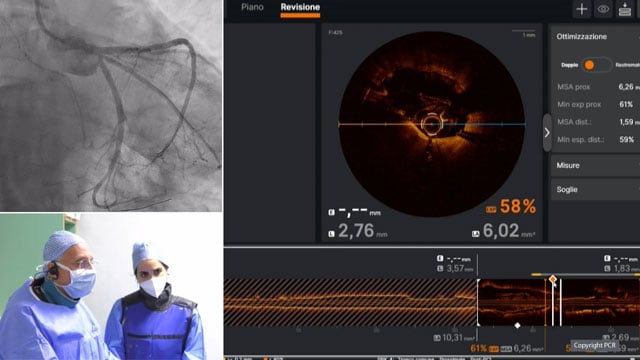
Advanced mitral TEER - LIVE case
Recommended by PCR
24 Nov 2024 – From PCR London Valves 2024
Join us for a LIVE case followed by a recorded case highlighting advanced treatments for severe secondary mitral regurgitation:
- A 75-year-old man with permanent AF, a history of CABG, and symptomatic severe secondary MR (atrial and ischemic causes) with low LV function (45%) underwent mitral repair with...
Transcatheter options for degenerated surgical aortic valves - LIVE case
Recommended by PCR
08 Feb 2025 – From PCR Tokyo Valves 2025
A 77-year-old male with a history of SAVR in 2011 (Magna Ease 23) and moderate chronic kidney disease, with preservedLV function, presented with symptomatic severe aortic regurgitation and stenosis, associated with severe MR.
A Sapien 3 Ultra Resilia 23 valve was implanted under local anesthesia, with hemodynamic...
Transcatheter management of failed THV - LIVE case
Recommended by PCR
09 Feb 2025 – From PCR Tokyo Valves 2025
An 84-year-old woman with diabetes mellitus, frailty (5/6), preserved LV function, and aortic stenosis previously treated with CoreValve 26 mm in 2016, presented with symptomatic degenerative stenosis of the valve.
A Sapien 3 (23 mm) was implanted without predilatation but with post-dilatation under general anaesthesia, using cerebral...
Coronary access and revascularisation in patients undergoing TAVI: from work-up to lifetime management
Recommended by PCR
15 Feb 2026 – From PCR Tokyo Valves 2026
This session delves into the comprehensive management of ischemic heart disease in patients undergoing transcatheter aortic valve implantation (TAVI). It highlights the critical importance of maintaining coronary access post-TAVI and explores how various valve designs affect coronary accessibility, particularly in cases involving valve-in-valve (TAV-in-TAV) procedures, guiding...
How to perform DK-Crush for left main bifurcation stenting
Recommended by PCR
22 May 2025 – From EuroPCR 2025
Including: A clinical case performed live in Poznan, Poland, showing conventional guidance with angiography and intravascular imaging
Modern technology: machine learning, AI and 3D (multiple simulation techniques)
A series of 3 episodes

Low contrast complex PCI in a severely calcified lesion: the right tools and techniques
18 May 2022 – From EUROPCR 2022
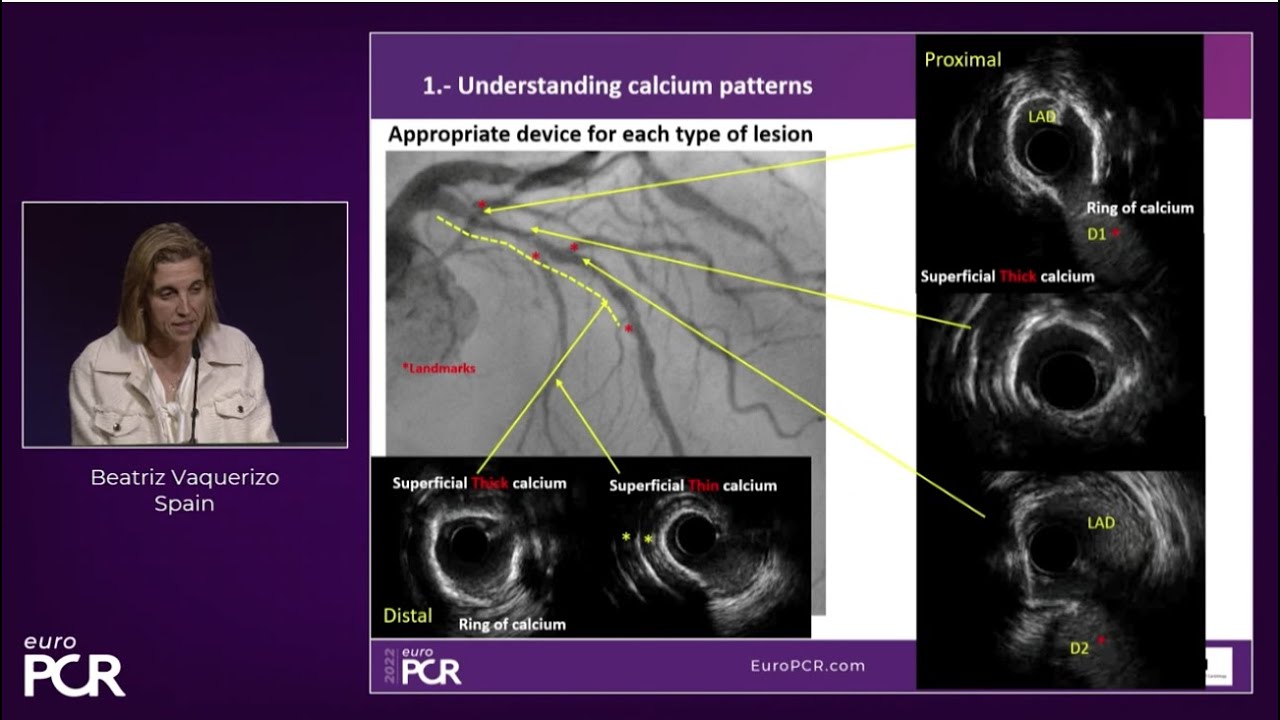
In this session, you will learn how to perform an IVUS-guided low contrast PCI in patients with chronic kidney disease. Discover how to safely and effectively overcome wiring challenges in calcified tortuous coronaries and learn about the proper atherectomy device selection in challenging anatomies.
Revascularisation in patients with depressed left ventricular ejection fraction
18 May 2023 – From EuroPCR 2023
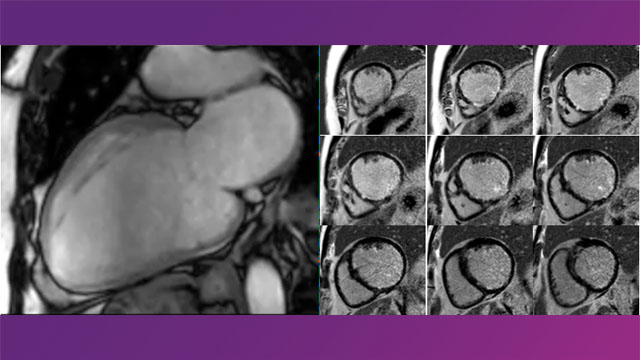
In these slides, delve into recent evidence and identify potential beneficiaries for revascularisation, while exploring safety strategies for PCI in cases of reduced left ventricular ejection fraction.
How to select plaque preparation technique in severely calcified lesions
19 May 2023 – From EuroPCR 2023
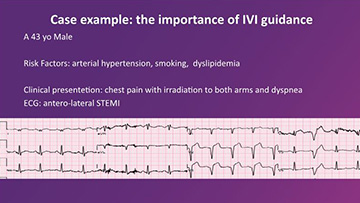
Interested in revisiting the session on plaque preparation techniques? Review these slides that recap the essential points, including a notable case involving a 43-year-old male that underscores the significance of intravascular imaging (IVI) guidance.
Complex coronary artery disease: can stents and DCB be complementary?
16 May 2023 – From EuroPCR 2023
DES and DCB, can these two technologies be complementary for the treatment of the same patient? What are the advantages and how to proceed? You will know everything by watching this presentation based on concrete cases.
Tailored device choice and implant technique to optimise TAVI procedural outcomes
17 May 2023 – From EuroPCR 2023
Discover the key factors to consider in selecting the optimal valve and implant technique for transcatheter aortic valve implantation (TAVI) to achieve optimal procedural outcomes. Gain insights into the impact of device choice and implantation technique on coronary access following TAVI and learn valuable strategies for...
Innovations in device-based treatment for hypertension
17 May 2023 – From EuroPCR 2023
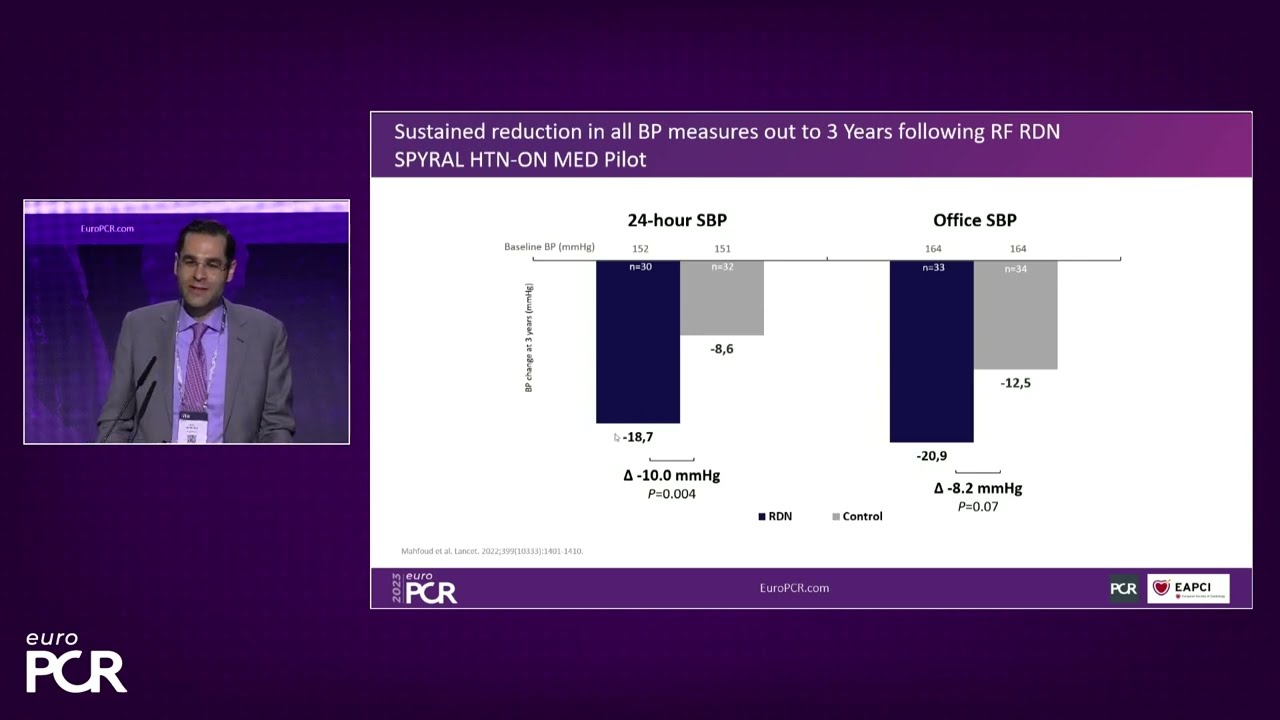
Join this session to explore the latest innovations in device-based treatment for hypertension. Gain a comprehensive understanding of the evidence supporting the efficacy, durability, and safety of radiofrequency renal denervation, learn from renowned experts about the renal denervation procedure and receive valuable insights on patient selection...
Breaking the calcium ceiling in bifurcation stenoses with contemporary PCI
18 May 2023 – From EuroPCR 2023
Watch the case of a 73-year-old man, active smoker, with HTN, dyslipidaemia and a history of severe polyvascular disease, who presented with CCS III angina in the last two months, and find out in this session how he was treated LIVE.

Advances in renal denervation: from patient selection to procedure
17 May 2022 – From EuroPCR 2022
For this EuroPCR 2022 session, Felix Mahfoud is joined by David Kandzari, Rasha Al-Lamee, Flavio Ribichini, and Andrew Sharp to talk about renal denervation: hear real-life experiences and get the latest preclinical and clinical data on the long-term safety and efficacy of the radiofrequency renal denervation...
DCB and the possibility of a clean vessel
17 May 2022 – From EuroPCR 2022
This EuroPCR 2022 session aims to show, based on real-life cases, that even complex coronary disease can be treated without the need for permanent coronary stents. Learn how to prepare the vessel, deliver the therapy, and assess immediate outcomes after "DCB-alone" PCI, discuss de novo, small vessels, and...
Conquer calcium with intravascular lithotripsy (IVL): cases and clinical data
18 May 2022 – From EuroPCR 2022
This EuroPCR 2022 session mainly focuses on the DISRUPT CAD studies: hear discussion on the latest DISRUPT CAD clinical evidence supporting the use of IVL across different calcium morphologies, appraise the most recent one-year OCT-pooled analysis of the DISRUPT CAD III and IV studies, and learn about the differences...
Transfemoral TAVI access using intravascular lithotripsy in patients with challenging peripheral vascular disease
28 Nov 2022 – From PCR London Valves 2022
Watch this session to appreciate why it is better to tackle difficult transfemoral access rather than considering alternative access strategies and understand how intravascular lithotripsy mitigates procedural risk.

How to deal with calcified lesions
17 May 2022 – From EuroPCR 2022
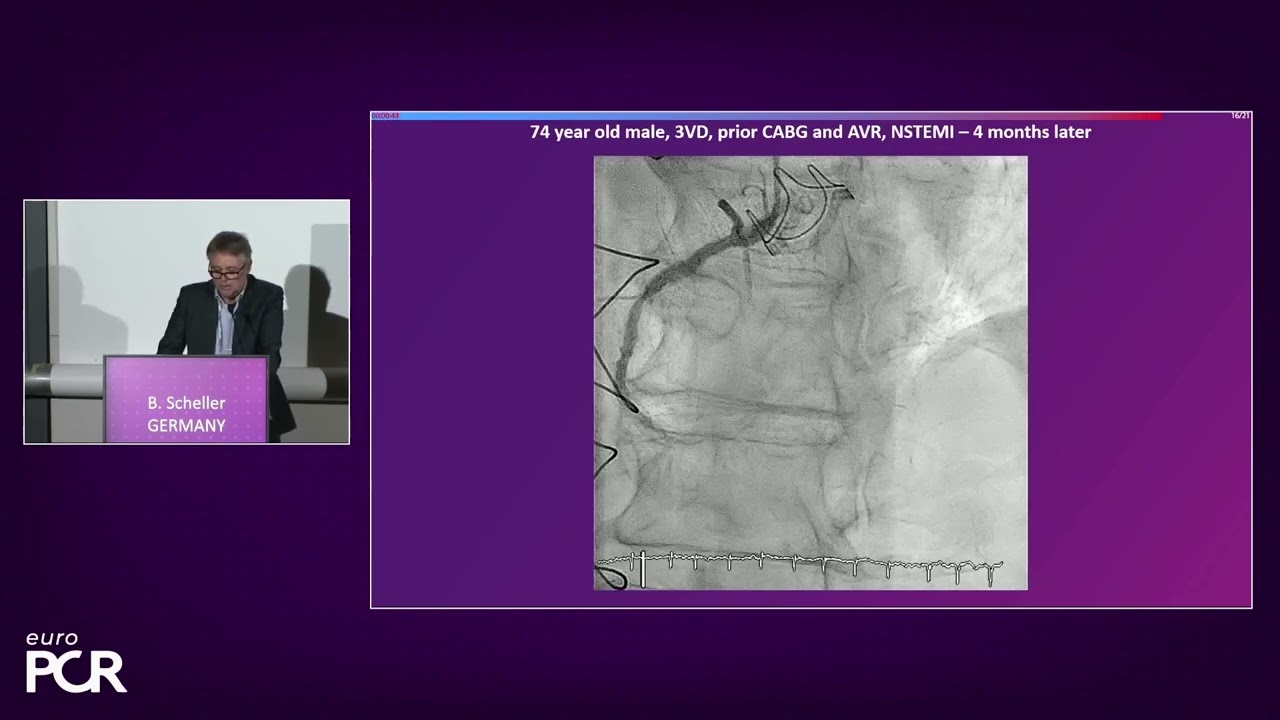
View the recorded case of a 76-year-old former smoker male patient with hypertension and dyslipidemia and a history of distal RCA and mid-LAD PCI in 2003, CABG and AVR in 2007, and pacemaker implantation for total AV Block, referred to the cathlab for CCS III, and...