3654 results for «415»
3654 results
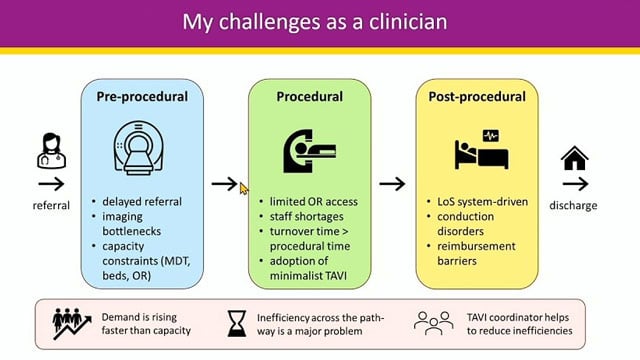
From referral to discharge: European consensus on the TAVI care pathway
19 May 2026 – From EuroPCR 2026
Across Europe, TAVI programmes are under increasing pressure from rising demand, capacity limits and referral barriers. This EuroPCR 2026 session presents the European consensus on the TAVI care pathway and explores how data-driven, standardised approaches can optimise the patient journey from referral to discharge.
Bringing together clinicians,...
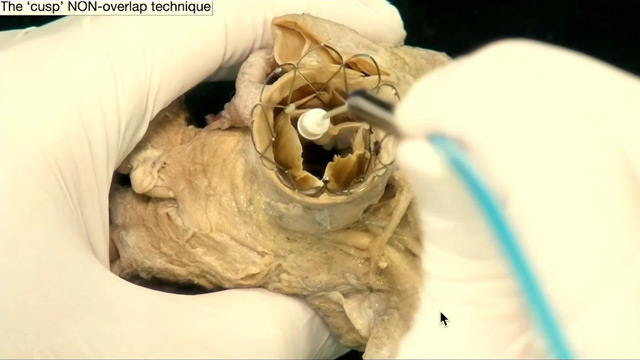
The continuum of valvular heart disease: a lifetime management approach
21 May 2026 – From EuroPCR 2026
This session offers a comprehensive perspective on valvular heart disease through the lens of lifetime management, highlighting the need for strategic planning across aortic, mitral, and tricuspid interventions, illustrating how treating one valve can influence the progression and management of others. Gain insights into optimal timing...
DCB in contemporary PCI: evidence, technique and physiology-guided decision-making
19 May 2026 – From EuroPCR 2026
This EuroPCR 2026 session explores the evolving role of drug-coated balloons (DCB) in contemporary PCI, highlighting how growing clinical evidence, refined procedural strategies and physiology-guided tools are reshaping everyday practice.
The discussion reviews the latest data supporting DCB use, including long-term outcomes from major registries and trials...
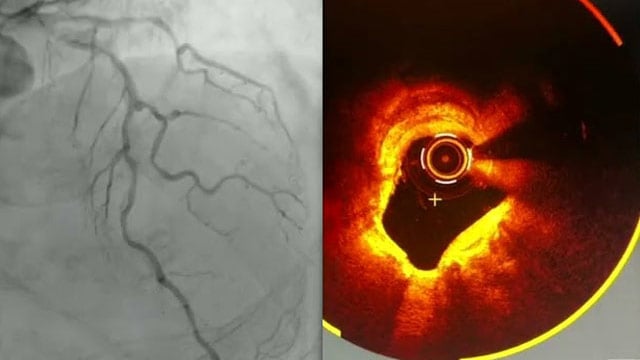
Navigating high-thrombus burden in ACS: precision aspiration thrombectomy with CAT RX
21 May 2026 – From EuroPCR 2026
This session explores the challenges of managing high thrombus burden in patients with acute coronary syndromes (ACS), with a focus on precision aspiration thrombectomy using the CAT RX device. Through case-based examples, it provides practical insights into procedural techniques and examines the role of CAT RX...
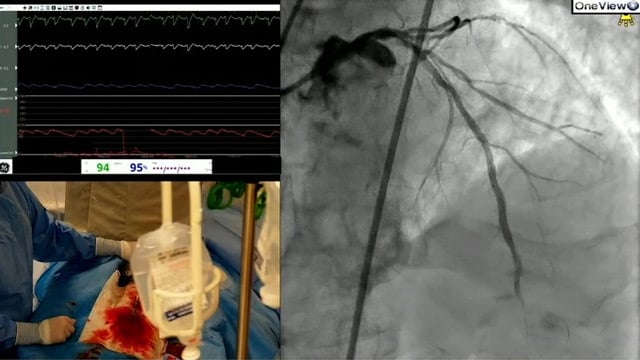
Evolving bifurcation treatment practices: DCB, angio-based FFR and side branch optimisation
19 May 2026 – From EuroPCR 2026
This EuroPCR 2026 session explores the evolving landscape of bifurcation PCI, focusing on drug-coated balloon (DCB) strategies, angio-based fractional flow reserve (FFR) and side branch optimisation. It highlights how new evidence and physiology-guided tools are reshaping decision-making in this complex lesion subset.
Discussions include insights from the...
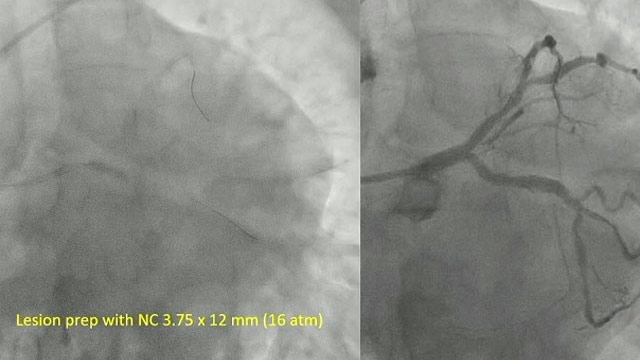
Artificial intelligence-driven precision therapy for TAVI: progress and practice in China
19 May 2026 – From EuroPCR 2026
This EuroPCR 2026 session explores the integration of artificial intelligence into precision therapy for TAVI in China, highlighting its growing role in procedural planning, optimisation and outcome prediction.
Through case-based discussion, it shows how AI-enabled tools can simulate valve deployment and visualise post-TAVR results, supporting more precise...
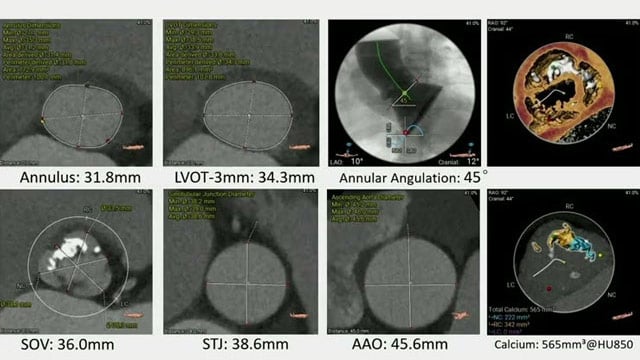
When less is better - Differentiated therapies to safely achieve TR 0-1+
19 May 2026 – From EuroPCR 2026
Therapeutic goals in tricuspid regurgitation are evolving, with increasing emphasis on achieving near-complete elimination of regurgitation (TR 0–1+) through differentiated transcatheter strategies.
This EuroPCR 2026 session explores how transcatheter edge-to-edge repair (TEER) and transcatheter tricuspid valve replacement (TTVR) can be used in a complementary way to reach...
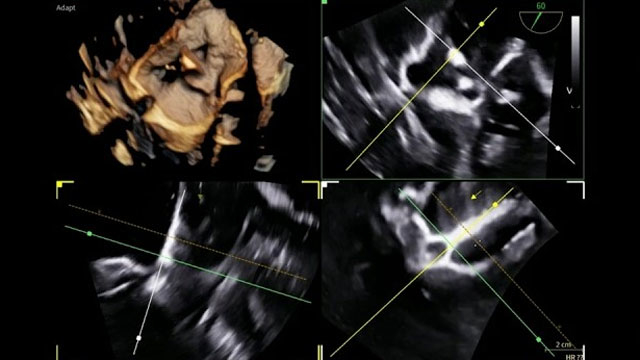
Real world practice inspiring new evidence generation in structural heart
21 May 2026 – From EuroPCR 2026
This LIVE case session showcases real-world clinical practice driving new evidence in structural heart interventions, with a focus on TAVI. It features expert insights into pre-procedural imaging and sizing, treatment strategies, procedural techniques, and post-procedural management. The session also introduces the novel Myval Octapro+ transcatheter heart...
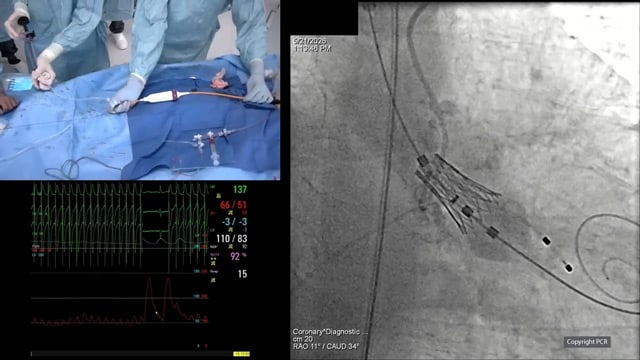
The microcirculation: the next frontier in coronary practice
18 May 2026 – From EuroPCR 2026
Delve into the complexities of coronary microcirculation and its clinical implications. This session highlighted advanced diagnostic techniques such as bolus and continuous thermodilution, the interpretation of microvascular resistance reserve, and practical guidance on establishing a high-impact ANOCA clinic to manage microvascular angina and coronary dysfunction.

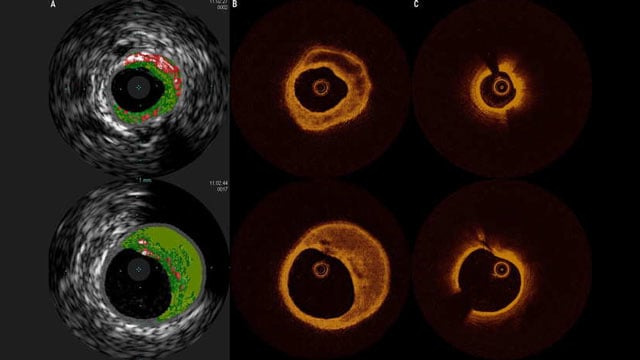
Artificially synthesized optical coherence tomography images based on intravascular ultrasound-virtual histology examination of diseased coronary artery
05 May 2021
Intravascular imaging is a cornerstone of invasive management of coronary disease, requiring specialized training to interpret either IVUS or OCT. AI can facilitate interpretation by non-specialists in real time.
Long-term beta-blocker treatment after acute myocardial infarction and preserved left ventricular ejection fraction: The REDUCE-AMI Trial
07 Apr 2024
REDUCE-AMI is a multicentre, registry-based, prospective open-label parallel-group randomised clinical trial evaluating the benefit of beta-blocker treatment in patients with acute MI and an ejection fraction >50% treated with a contemporary reperfusion strategy.
Nicola Ryan and Ali Nazmi Calik provide their take on the results which were presented...

Author

Author

Transcatheter aortic valve replacement in small aortic annuli: Results from the FRANCE-TAVI registry
17 Sep 2022
Mirvat Alasnag provides her take on the outcomes of small annuli sub-study from the FRANCE-TAVI Registry which included 1,195 patients. This trial was presented by Walid Ben-Ali at TCT 2022.

Author
ENVISAGE-TAVI AF: edoxaban vs. vitamin K antagonists after TAVI in patients with atrial fibrillation
31 Aug 2021
Following the Hot Line session of the ESC Congress 2021 presented by George Dangas (New-York, USA), Daniele Giacoppo offers us a condensed version of this study.

Author
BRIGHT-4 – Bivalirudin plus a high-dose infusion versus heparin monotherapy in patients with ST-segment elevation myocardial infarction undergoing primary percutaneous coronary intervention: a randomised trial
07 Nov 2022
Nicola Ryan provides her take on the BRIGHT-4 study, which was presented during AHA 2022 in Chicago, & simultaneously published in the Lancet.
This study was a randomised control trial designed to assess if bivalirudin plus a high dose infusion for 2-4 hours post PPCI was superior to unfractionated...
Author