3628 results for «2»
3628 results
Integrating the newest valve guidelines into daily clinical reality
12 Sep 2025 – From PCR Rio Valves 2025
Integrate the 2025 EACTS valve guidelines into your clinical practice with a focus on valvular heart disease management tailored to Latin American realities. This session reviews the most relevant updates on aortic stenosis management and transcatheter approaches for mitral and tricuspid valves.
Watch the interview with Fabien...
TAVI - Take the first step considering life time management
12 Sep 2025 – From PCR Rio Valves 2025
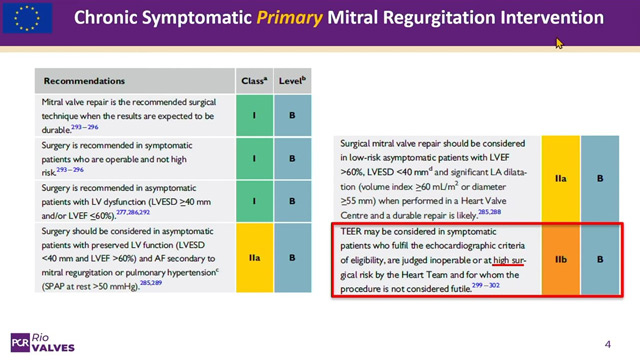
Understand the critical importance of lifetime management in TAVI, emphasizing how the initial procedure impacts long-term results. This session discusses implantation depth, commissural alignment, and their roles beyond coronary access, illustrated through a low-risk young patient case and current durability data.
Step-by-step TAVI in bicuspid aortic stenosis - LIVE case
29 Sep 2025 – From PCR Gulf Valves 2025
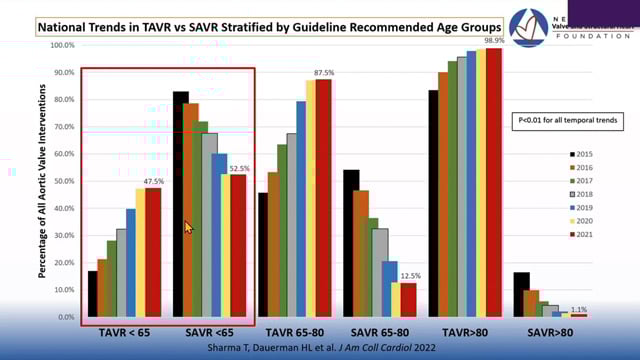
A 67-year-old woman with a history of atrial fibrillation and normal LV function presented with symptomatic paradoxical aortic valve stenosis. A 23 mm Sapien Resilia valve was implanted following predilatation with a 15 mm semi-compliant balloon.
LIVE Educational Case from Prince Sultan Cardiac Center - Riyadh, Saudi...
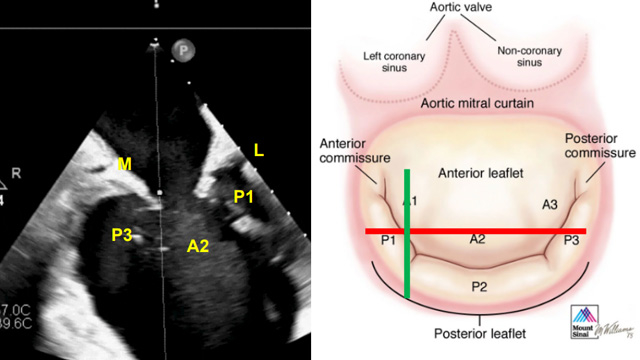
Mitral valve TEER echocardiography
29 Sep 2025 – From PCR Gulf Valves 2025
Gain essential knowledge in mitral valve TEER echocardiography through this comprehensive session focused on key echocardiographic views, image optimization for screening, criteria for suitability, and intraprocedural guidance. Enhance your skills with practical hands-on components aimed at improving procedural outcomes.
Tricuspid transcatheter therapies: the game changer
29 Sep 2025 – From PCR Gulf Valves 2025
Explore the evolving landscape of tricuspid transcatheter therapies in this comprehensive session reviewing tricuspid regurgitation etiology, anatomy, and current treatment options. Learn about various transcatheter tricuspid valve intervention devices, their strengths and limitations, and the critical diagnostic and intraprocedural imaging requirements to optimize patient selection and...
Mitral valve-in-valves: echocardiography and CT scan
29 Sep 2025 – From PCR Gulf Valves 2025
This session provides in-depth knowledge on imaging planning for mitral valve-in-valve procedures, focusing on echocardiography and CT scan assessment. Learn the critical role of intraprocedural imaging guidance to ensure procedural success and patient safety during mitral valve-in-valve interventions.
Redefining standards: TAVI in the era of lifetime management, beyond high-risk patients
29 Sep 2025 – From PCR Gulf Valves 2025
Discover a selection of cases showcasing the key features of the Navitor Valve System and its clinical applications. This session explores auxiliary access, the use of Navitor in alternative access and complex PCI, its performance in challenging peripheral anatomies, and innovative outcomes with the Vantage 30D...
Just CINCH - Indirect annuloplasty for secondary mitral regurgitation in heart failure patients
16 Nov 2025 – From PCR London Valves 2025
This session provides a detailed review of indirect annuloplasty as an interventional treatment for secondary mitral regurgitation in heart failure patients, with a focus on the landmark EMPOWER trial. Learn about patient selection optimisation, procedural considerations involving the coronary sinus and left circumflex artery, and future...
LAA closure is evolving: are you ready?
17 Nov 2025 – From PCR London Valves 2025
This session addresses the evolving landscape of left atrial appendage (LAA) closure in stroke prevention for atrial fibrillation patients. It reviews unmet clinical needs, evaluates the latest evidence and guideline recommendations, and identifies patient populations that benefit most from LAA closure, with discussions on balancing efficacy...
Mastering complex TAVI: overcoming key clinical challenges and achieving optimal outcomes with the Evolut FX+
17 Nov 2025 – From PCR London Valves 2025
This session offers an in-depth review of complex TAVI cases, focusing on overcoming clinical challenges and achieving optimal outcomes with the Evolut FX+ device. Participants will learn about recent advances in TAVI indications for younger and asymptomatic patients, strategies for managing TAV in surgical aortic valve...
A new era for aortic regurgitation: how new guidelines and dedicated devices for AR will redefine treatment
18 Nov 2025 – From PCR London Valves 2025
This session examines the evolving treatment landscape for aortic regurgitation (AR) in light of new ESC guidelines and dedicated devices such as the JenaValve Trilogy System. It provides an in-depth look at refined diagnosis, optimized treatment strategies, and presents real-world data and clinical cases that highlight...
Mastering mitral and tricuspid TEER: clinical strategies in patients with complex anatomy
17 Nov 2025 – From PCR London Valves 2025
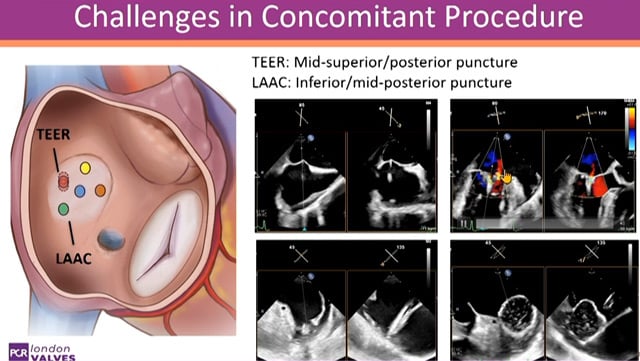
Find out more about advanced mitral and tricuspid TEER techniques for patients with challenging anatomy. This PCR London Valves 2025 session highlights real-world approaches from the Asia Pacific region, including consensus recommendations from the Asian Pacific Society of Cardiology, strategies for simultaneous mitral TEER and left...
Advancing structural heart with 3D ICE and device guidance
17 Nov 2025 – From PCR London Valves 2025
This PCR London Valves 2025 session explores how 3D TEE, 3D intracardiac echocardiography (ICE), and DeviceGuide technology sharpen procedural accuracy, strengthen operator confidence, and streamline decision-making in real time.
You’ll see how clearly defined team roles enhance both safety and efficiency, and how thoughtful workflow integration can reduce...
Meet with Myval THV series with real-world case-based learning
17 Nov 2025 – From PCR London Valves 2025
Discover the latest insights from the Myval THV series in this session from PCR London Valves 2025. Through real-world, case-based learning, the session explores lifetime management strategies for TAVI patients, the clinical relevance of intermediate and extra-large valve sizing, and the impact of foreshortening on accurate...
Mitral regurgitation: from guidelines to clinical practice
16 Nov 2025 – From PCR London Valves 2025
This LIVE case symposium brings mitral regurgitation guidelines into real clinical practice. Through step-by-step patient demonstrations and insightful discussion, the session explores how recommendations guide decision-making in ventricular and atrial secondary MR, how the heart team tailors therapy to individual anatomy and comorbidities, and how device iterations...
Align for the future with next gen Myval transcatheter heart valve series
16 Nov 2025 – From PCR London Valves 2025
Discover how the latest Myval transcatheter heart valve (THV) innovations are shaping TAVI outcomes. This PCR London Valves 2025 session highlights the clinical evidence behind the next-gen Myval THV series, best practices for implantation, and upcoming innovations set to improve patient care. Learn step-by-step techniques for deploying Myval...
Cardiovalve hits the TARGET: advancing transcatheter valve replacement
18 Nov 2025 – From PCR London Valves 2025
This session highlights the features and procedural steps of the next-generation Cardiovalve systems for tricuspid and mitral valve replacement. It reviews interim results from the TARGET study, emphasizing echocardiographic findings and reverse remodeling effects, and discusses best practices for patient selection and the learning pathway to...
Myval THV series - Optimise patient outcomes with novel design, data and daily clinical practice
17 Nov 2025 – From PCR London Valves 2025
Discover the essential takeaways from the Myval THV series for improving TAVI outcomes. Learn from high-volume operators how pre-procedural planning, imaging, and sizing rationale guide optimal patient management. See step-by-step implantation of the next-gen Myval Octapro+, including the OctaAlign technique, and understand how precise deployment and...
Open design, confident delivery - How a novel LAA closure device provides predictable outcomes in complex anatomical settings
16 Nov 2025 – From PCR London Valves 2025
This session highlights a novel left atrial appendage (LAA) closure device featuring an open-cage design that delivers predictable clinical and procedural outcomes. It discusses the device's advantages in managing complex anatomical variations and presents implantation techniques across diverse anatomies to improve safety and efficacy.
Planning a lifetime of care in younger patients with Evolut FX+: from index valve to future options
17 Nov 2025 – From PCR London Valves 2025
Watch this PCR London Valves 2025 session to take a deep look at the latest evidence in low-risk aortic stenosis, the durability of contemporary valves, and how anatomy — especially in women and patients with small annuli — shapes long-term strategy.
From index TAVI with Evolut FX+...