3629 results for «586»
3629 results
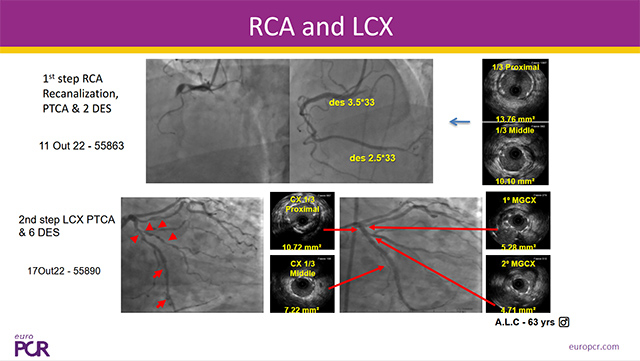
Intracoronary imaging for complex PCI: a must!
21 May 2025 – From EuroPCR 2025
Recognize the indispensable role of intracoronary imaging in managing complex PCI cases. This session explores the evolution of multivessel NSTEMI treatment using DES, BRS, DCB, and imaging, challenges with recurrent in-stent restenosis across multiple stent layers, innovative imaging solutions for complex lesions, and diagnostic approaches to...
Academic Research Consortium on LAA closure
21 May 2025 – From EuroPCR 2025
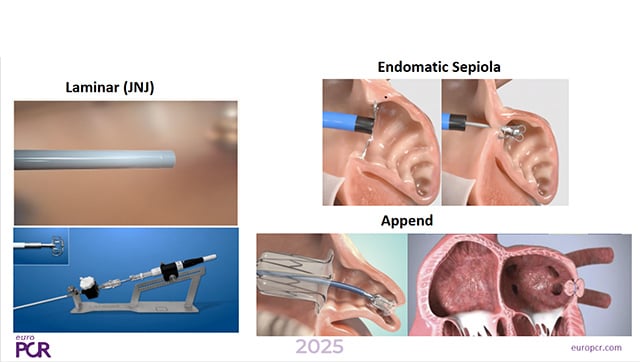
Gain comprehensive understanding of the Academic Research Consortium's achievements in left atrial appendage (LAA) closure. Learn how standardized endpoints are streamlined for randomized controlled trials and how collaborative efforts homogenize definitions to advance clinical research.
Management of stent-related complications
21 May 2025 – From EuroPCR 2025
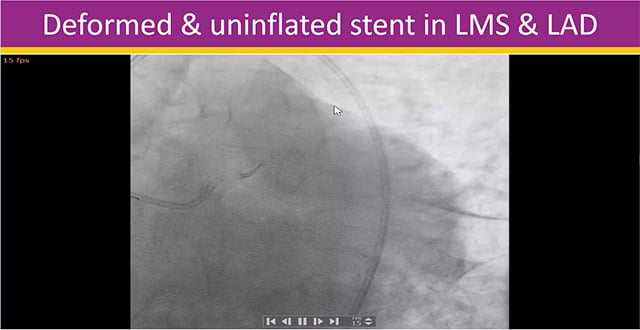
This session addresses the management of stent-related complications through a series of dramatic clinical cases. Learn methodical approaches to routine and crisis scenarios including primary PCI complications, failure to stent, and unexpected challenges encountered during interventions, highlighting practical bailout techniques and decision-making frameworks.
Primary PCI for STEMI – Optimising outcomes
21 May 2025 – From EuroPCR 2025
Optimize primary PCI outcomes for STEMI patients by integrating state-of-the-art techniques and coronary physiology insights. The session includes case discussions highlighting treatment strategies and key learnings to enhance clinical practice.
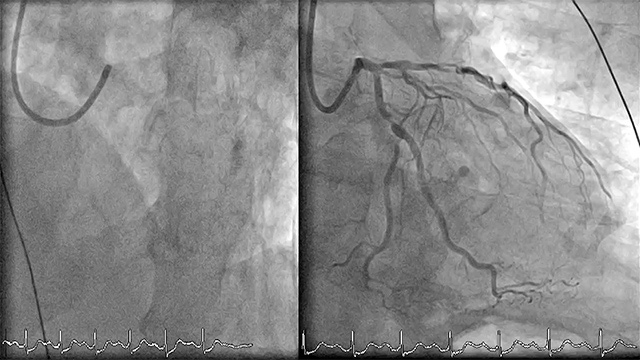
DES and bioadaptator technologies in contemporary practice
21 May 2025 – From EuroPCR 2025
Delve into contemporary practice with this session on drug-eluting stents (DES) and bioadaptator technologies. Gain insights from international studies on complex PCI outcomes, comparative data from randomized trials, and real-world experiences focusing on high bleeding risk patients and elderly cohorts treated with ultrathin strut and new-generation...
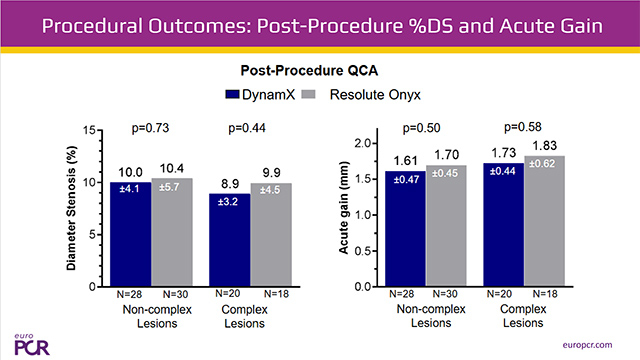
Management of high-risk left main lesion
21 May 2025 – From EuroPCR 2025
Focus on managing high-risk left main coronary lesions with this session featuring complex cases such as thrombotic lesions, calcified distal left main PCI with orbital atherectomy and IVUS guidance, and advanced stenting techniques. Learn practical approaches for challenging anatomical and clinical scenarios to optimize patient outcomes.

Management of non-culprit lesions in patients with ACS and multivessel disease
21 May 2025 – From EuroPCR 2025
This session addresses the optimal management of non-culprit lesions (NCL) in patients with acute coronary syndrome (ACS) and multivessel disease. Learn about angiography, imaging, and FFR-guided strategies, timing considerations for PCI in high-risk NSTEMI patients, and patient selection for early staged PCI post-STEMI through detailed case...
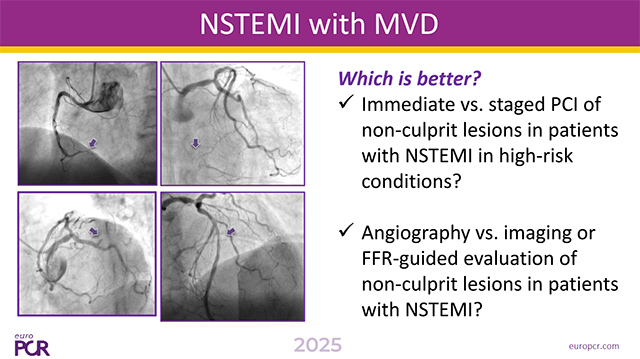
Did danger shock change my practice?
21 May 2025 – From EuroPCR 2025
Reflect on how contemporary management of cardiogenic shock has evolved through this session. Review collaborative strategies, challenging clinical cases involving STEMI, multivessel disease, refractory shock, spontaneous coronary artery dissection, and the critical role of intracoronary imaging in guiding interventional decisions.
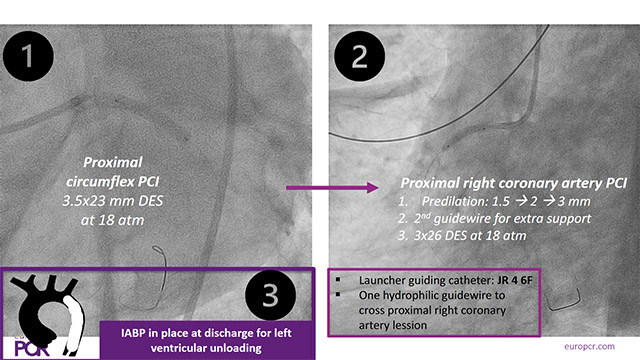
CTO, modern challenges and solutions
21 May 2025 – From EuroPCR 2025
Address modern challenges in chronic total occlusion (CTO) interventions with this session focusing on the latest technologies and techniques. Learn key procedural strategies and best practices through detailed case studies, and understand how evolving technology is shaping the future of CTO revascularization.
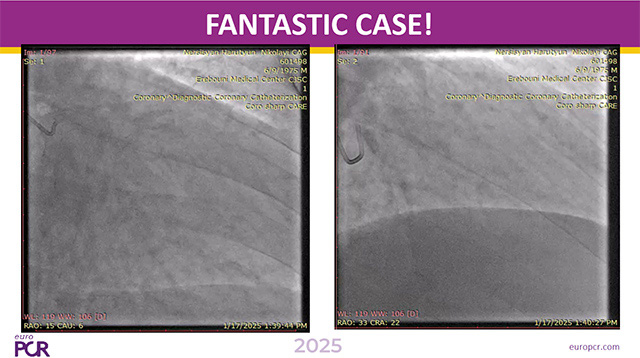
Strategies in treating double CTO scenarios
21 May 2025 – From EuroPCR 2025
Navigate complex double chronic total occlusion (CTO) scenarios with this session that emphasizes thorough lesion qualification and innovative techniques. Learn strategies including management of ambiguous proximal caps, sequential vessel revascularization, and advanced tools like snaring and deflection to optimize procedural success.
New evidence in the PFO closure
21 May 2025 – From EuroPCR 2025
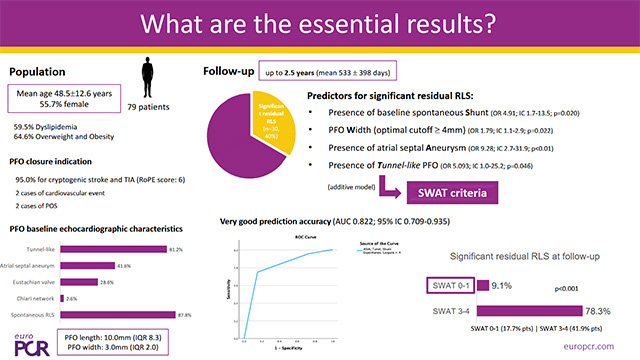
Gain new insights into patent foramen ovale (PFO) closure with this session exploring age-related outcomes, risk of atrial arrhythmia, and patient selection improvements. Review various imaging approaches for assessing residual shunts and compare guidance techniques including TEE, fluoroscopy, and intracardiac echo from recent clinical registries.
TAVI for aortic regurgitation: off-label use
21 May 2025 – From EuroPCR 2025
Explore the complexities and off-label challenges of transcatheter aortic valve implantation (TAVI) in patients with severe pure aortic regurgitation. This session highlights the bold strategies, complication management, and innovative use of the Octacor valve in this demanding clinical scenario, providing valuable insights into navigating a difficult...
Getting started with a renal denervation programme
20 May 2025 – From EuroPCR 2025
Begin your renal denervation program with this comprehensive session focusing on the importance of a multidisciplinary hypertension team, procedural techniques with current devices, and expected clinical outcomes across patient subgroups. Practical case examples illustrate effective team-based hypertension management and procedural execution.
Hotline TAVI 2: outcomes with new and established devices
21 May 2025 – From EuroPCR 2025
Review outcomes of new and established TAVI devices through pooled analyses and multicenter studies. Topics include comparisons of balloon-expandable valves, intra- versus supra-annular self-expanding valves, and insights from the ACURATE IDE and ACURATE prime studies.
How to select appropriate cardiovascular intervention for a patient with tricuspid regurgitation?
21 May 2025 – From EuroPCR 2025
Learn how to select appropriate cardiovascular interventions for tricuspid regurgitation patients by considering comorbidities, anatomical factors influencing procedural success, and imaging criteria for device selection. The session includes patient vignettes to illustrate decision-making pathways.
TAVI and beyond: tackling coronary challenges
19 Nov 2023 – From PCR London Valves 2023
Consult this session to gain a comprehensive understanding of the crucial role of coronary access post-TAVI, and the impact of TAV design and implantation technique on coronary access. Gain some insights into the intricacies of coronary accessibility from extensive bench test work and the impact of TAV design in...
A problem and a solution: aortic regurgitation and the Trilogy TAVI valve
19 Nov 2023 – From PCR London Valves 2023
Consult this session if you want to understand the challenges of imaging for aortic regurgitation and how it can lead to underdiagnosis. Discover the data from the ALIGN-AR trial studying TAVI in aortic regurgitation patients, and learn about the Trilogy valve and the future of TAVI...
Valve performance and durability - Main considerations in selecting the right TAVI valve
20 Nov 2023 – From PCR London Valves 2023
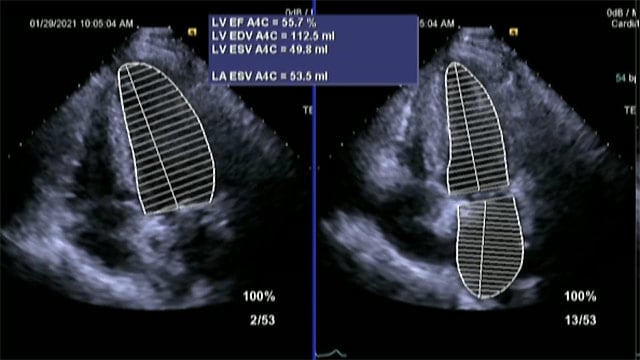
In this session with LIVE case, participants discuss the critical role of valve selection in influencing patient outcomes. The focus includes understanding the latest clinical outcomes of supra-annular TAVI and SAVR, exploring their practical implications. The session also highlights the contribution of novel technology Evolut FX, in...
The EVOQUE and PASCAL Precision systems in action: simulation- and case-based learning
20 Nov 2023 – From PCR London Valves 2023
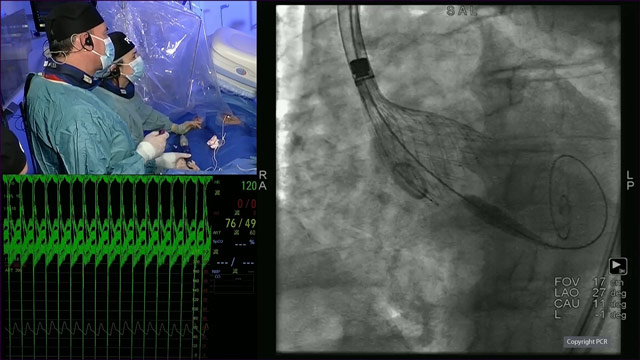
This session explores the features of the PASCAL Precision and the EVOQUE tricuspid replacement systems through simulators and case presentations, while a panel of experts discuss the technology, witnessing live demonstrations of treating mitral and tricuspid regurgitation patients.
Is only fixing functional mitral regurgitation in heart failure patients enough?
20 Nov 2023 – From PCR London Valves 2023
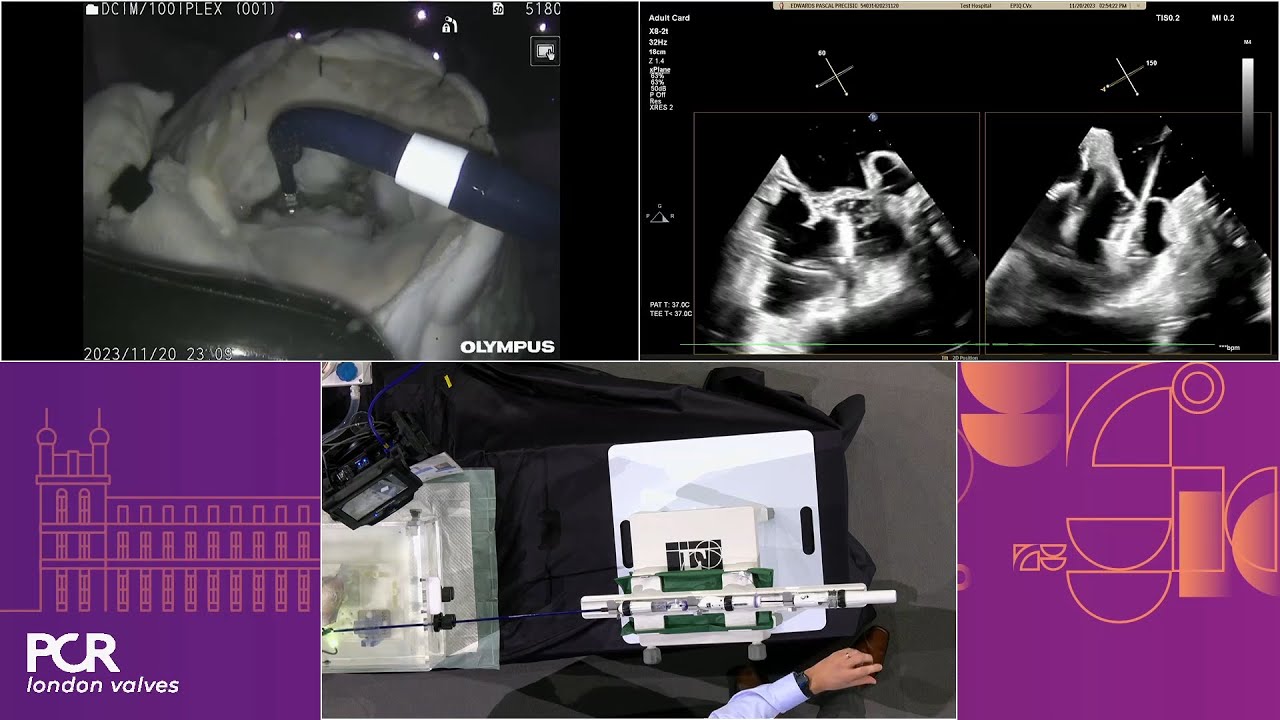
This session offers insights into combo therapy involving Carillon for patients with functional mitral regurgitation. It covers details of the EMPOWER trial, a double-blinded, sham-controlled study, and explores the potential benefits of early treatment for patients with functional mitral regurgitation.