3645 results for «2618»
3645 results
New data in DCB outcomes
20 May 2026 – From EuroPCR 2026
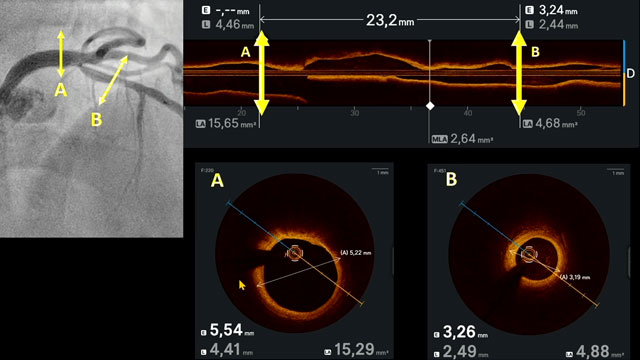
Explore emerging evidence on drug-coated balloon (DCB) outcomes, featuring intravascular lithotripsy combined with DCB in calcified small vessels, OCT-guided PCI registries, predictors of angiographic success post-sirolimus-coated balloon angioplasty, and clinical impact in multivessel coronary artery disease management.
TTVR: novel techniques and new horizons
20 May 2026 – From EuroPCR 2026
Explore novel techniques and emerging technologies in transcatheter tricuspid valve replacement (TTVR). This session showcases innovative devices and approaches, early clinical experiences, and strategies to address challenges such as pacemaker leads and failed tricuspid TEER procedures.

New frontiers - The evolving role of nurses and allied professionals
20 May 2026 – From EuroPCR 2026
This session explores the evolving role of nurses and allied professionals in interventional cardiology, addressing challenges in role definitions, collaborative responsibilities with physicians, and strategies for professional recognition and safety enhancement within the cath lab environment.

Mitral valve-in-valve, valve-in-ring, valve-in-mac: the good, the bad and the ugly
20 May 2026 – From EuroPCR 2026
This session delves into the complexities of mitral valve interventions, focusing on valve-in-valve, valve-in-ring, and valve-in-mitral annular calcification (MAC) procedures. It addresses troubleshooting in high-risk valve-in-MAC cases, urgent transcatheter mitral valve implantation supported by microaxial flow pumps, challenges in delivering balloon expandable valves transeptally, and innovative...
Redo TAVI challenges
20 May 2026 – From EuroPCR 2026
Focused on the complexities of redo transcatheter aortic valve implantation (TAVI), this session covers innovative techniques such as jailed-balloon to prevent sinus sequestration, CT-guided emergency valve-in-valve procedures, alternative access routes, and strategies to manage coronary occlusion risks during multiple valve interventions.
Prognostics elements on multivessel disease and coronary artery disease
20 May 2026 – From EuroPCR 2026
This session examines key prognostic elements in multivessel and coronary artery disease, featuring studies on mechanical circulatory support across LDL-C levels, biomarkers impacting periprocedural myocardial infarction, autologous cell therapy outcomes for refractory angina, and novel risk stratification indices. It also addresses prognosis in cancer patients and...
Complex distal LM PCI challenges (trifurcations and more)
20 May 2026 – From EuroPCR 2026
Focusing on the intricacies of complex distal left main PCI, this session covers challenging trifurcation lesions and emergency interventions. It includes IVUS-guided approaches for trifurcation PCI, management of calcified left main trifurcations, and multidisciplinary team rescue strategies for unstable left main bifurcation disease.
Images that speak for themselves
20 May 2026 – From EuroPCR 2026
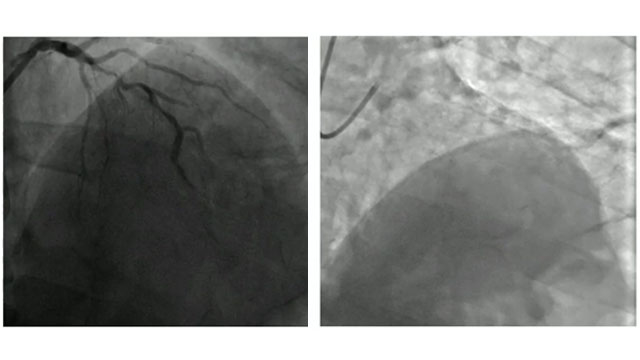
This visually-driven session presents compelling clinical cases where imaging played a decisive role. Cases include unexpected challenges following transcatheter tricuspid valve replacement, severe hypertension in a young athlete, atypical coronary artery anatomy, critical moments of cardiac arrest, and unique coronary artery findings resembling a spider web.
Innovations in structural interventions
20 May 2026 – From EuroPCR 2026
Highlighting the forefront of structural heart interventions, this session presents innovations including novel devices and technologies from industry leaders. It features advancements such as a new transseptal left atrial fixation device designed to expand the suitability of transcatheter mitral valve replacement (TMVR).
TAVI in aortic regurgitation with a dedicated valve - LIVE case
20 May 2026 – From EuroPCR 2026
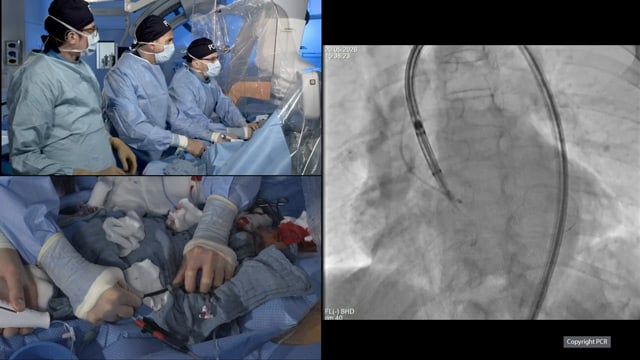
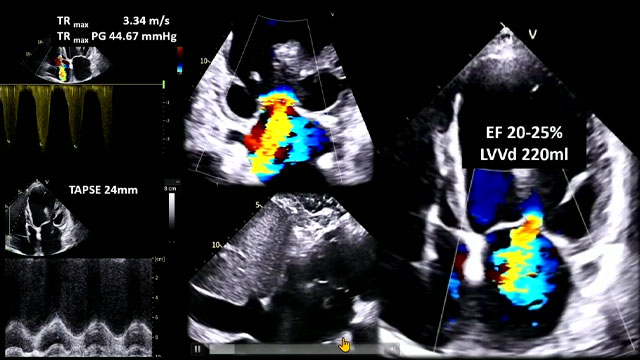
An 80-year-old male with chronic kidney disease, a history of colon cancer (2013), paroxysmal AF, and LAD PCI 2 weeks earlier presented with symptomatic severe type III AR. He had normal LV function, but early LV dilation. The mechanism of AR was a combination of primary...
Management of rare clinical scenarios in the cathlab
20 May 2026 – From EuroPCR 2026
This session addresses the management of rare and complex clinical scenarios encountered in the catheterization laboratory. Cases include dyspnea in coronary artery bypass graft patients, aortocoronary dissection management, complications during coronary sinus reducer implantation, coronary artery aneurysms related to IgG4 vasculitis, ibuprofen-induced Kounis syndrome, and challenging...
Secondary mitral regurgitation: not all patients are the same
20 May 2026 – From EuroPCR 2026
Examining secondary mitral regurgitation, this session differentiates patient phenotypes and discusses the application of updated guideline recommendations. It offers practical guidance on selecting the appropriate device tailored to individual patient characteristics, supported by detailed case studies.
Combination of dedicated devices for optimal treatment of calcified lesions
20 May 2026 – From EuroPCR 2026
Focused on the optimal treatment of heavily calcified coronary lesions, this session presents a comprehensive overview of dedicated device combinations. It highlights strategies such as rotablation, rotatripsy, and approaches to managing protruding calcified nodules and undilatable lesions, emphasizing a stepwise approach to complex calcium modification in...
Imaging to the rescue in LAA closure
20 May 2026 – From EuroPCR 2026
This session highlights the pivotal role of advanced imaging modalities in left atrial appendage (LAA) closure. Topics include novel risk assessment workflows for air embolism, evaluation protocols using cardiac CT and 3D TEE, reproducibility of anatomical classifications, and long-term follow-up outcomes with various imaging techniques.
PCI in cardiogenic shock - Possibilities and limitations
20 May 2026 – From EuroPCR 2026
This session evaluates percutaneous coronary intervention (PCI) in the context of cardiogenic shock, discussing both possibilities and limitations. It features complex cases including Impella-supported rotablation in elderly patients, microaxial flow pump use, and challenging interventions in young patients with multivessel chronic total occlusions, providing insights into...
Imaging guided ultralow contrast PCI
20 May 2026 – From EuroPCR 2026
This session focuses on imaging-guided ultralow contrast PCI techniques designed to minimize contrast-induced nephropathy risk. It includes IVUS-guided strategies for distal left main bifurcation PCI, zero-contrast interventions in renal transplant patients, and precision stent placement without contrast use, emphasizing safety, precision, and frugality in contemporary PCI...
Navigating the complexity of high bleeding risk
20 May 2026 – From EuroPCR 2026
Focusing on patients with high bleeding risk undergoing PCI, this session presents contemporary evidence on prevalence, procedural strategies with different stent types, antiplatelet therapy considerations including diabetic and sex-specific outcomes, and novel technologies such as sirolimus-coated balloons and machine learning models for restenosis prediction.
Mitral valve-in-valve, valve-in-ring, valve replacement: procedure challenges
20 May 2026 – From EuroPCR 2026
This session addresses procedural challenges in mitral valve interventions, including valve-in-valve, valve-in-ring, and valve replacement techniques. It covers lifetime management of patients with atrial fixated transcatheter mitral valve replacement (TMVR), approaches to recurrent mitral regurgitation, complex valve-in-valve cases, and hybrid strategies for valve-in-ring implantation, highlighting innovative...
Intracoronary imaging guidance in challenging PCI scenarios
20 May 2026 – From EuroPCR 2026
This session highlights the critical role of intracoronary imaging, particularly IVUS, in guiding complex percutaneous coronary interventions. It presents techniques such as IVUS-guided puncture of neo-ostia, stent implantation for ostial lesions, and innovative procedural methods like the Heart POTTER technique, underscoring the importance of precise imaging...
Choosing the right strategy for isolated ostial left anterior descending artery or circumflex coronary lesions
20 May 2026 – From EuroPCR 2026
This session examines optimal strategies for managing isolated ostial lesions in the left anterior descending and circumflex arteries, comparing left main crossover, ostial stenting, and drug-coated balloon (DCB) approaches. It emphasizes integrating multimodality imaging for informed decision-making, illustrated through detailed case discussions.