3644 results for «2644»
3644 results
Clinical and technical factors for decision-making in treatment of left main coronary artery disease
22 May 2025 – From EuroPCR 2025
Delve into decision-making factors in treating left main coronary artery disease, particularly in challenging scenarios. This session discusses the application of new SOLACI guidelines, critical strategy reflections, and real-world cases illustrating optimal left main PCI approaches.
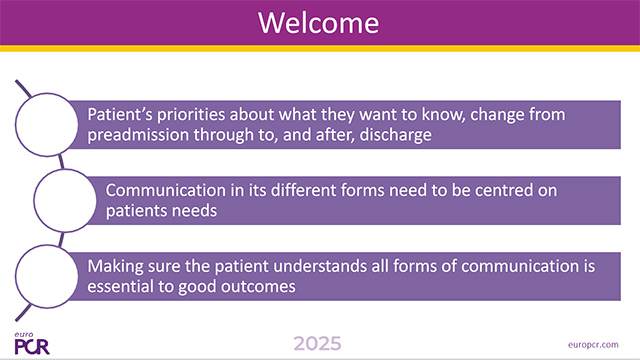
Building bridges, not barriers: transforming communication with patients
22 May 2025 – From EuroPCR 2025
Enhance your communication skills with patients undergoing interventional cardiology procedures. This session emphasizes verbal and non-verbal techniques to inform and support patients, simplifying complex procedural explanations, and strengthening your role as the critical link between patients and the healthcare team for improved outcomes.
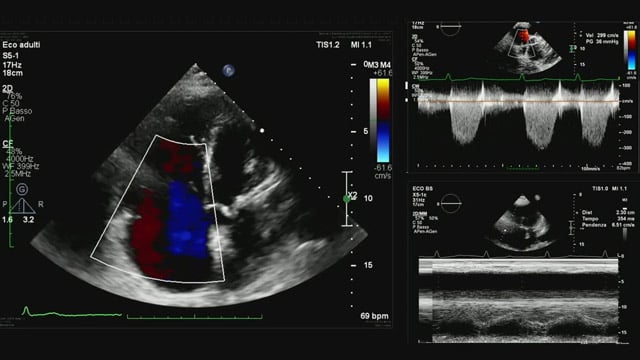
Assessment and management of patients with multivalvular disease involving the tricuspid valve
22 May 2025 – From EuroPCR 2025
Gain expertise on managing multivalvular disease involving the tricuspid valve by understanding diagnostic challenges, intervention indications, and associated pathophysiological factors. This session includes complex case studies focusing on combined valvular lesions and guideline limitations.
Outcome prediction using artificial intelligence and meta-analysis
22 May 2025 – From EuroPCR 2025
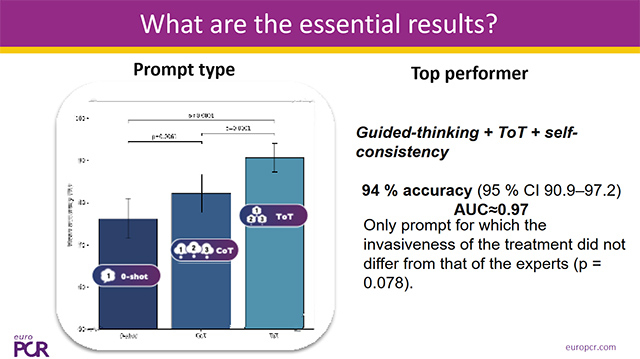
This session presents outcome prediction advancements through artificial intelligence and meta-analysis in cardiology. Topics include AI-guided aortic stenosis risk stratification, predictors of periprocedural stroke after TAVI, patient-specific computer simulations for bicuspid TAVI, and enhancements in large language model accuracy using Heart Team simulation.
Role of coronary physiology in acute coronary syndrome patients
22 May 2025 – From EuroPCR 2025
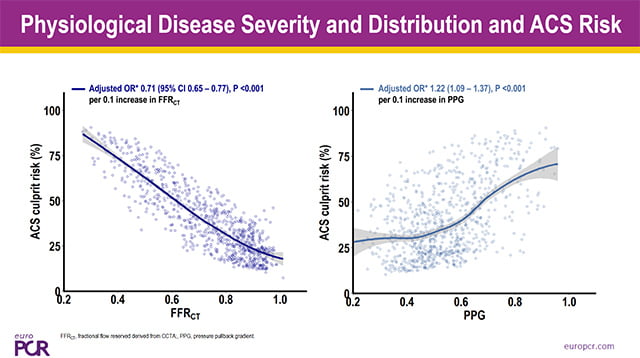
Examine the role of coronary physiology in acute coronary syndrome patients, including plaque characteristics related to ACS risk, prognostic value of AngioIMR in STEMI, functional significance of lumen and plaque features, diagnostic accuracy of quantitative flow ratio, and the impact of adenosine administration routes on FFR...
Imaging makes it clear!
22 May 2025 – From EuroPCR 2025
Explore the critical role of intravascular imaging in interventional cardiology through real-world cases. This session highlights the value of intravascular ultrasound (IVUS) in avoiding unnecessary stenting in STEMI patients, the application of optical coherence tomography (OCT) in complex scenarios, and the management of calcified lesions with...
Innovation to address unmet clinical needs in transcatheter valve therapies
22 May 2025 – From EuroPCR 2025
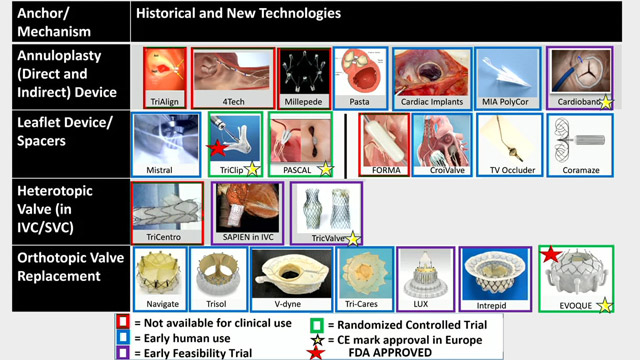
Discover innovations addressing unmet clinical needs in transcatheter valve therapies. This session shares case-based experiences including young aortic stenosis patients, mitral regurgitation with annular calcification, and severe tricuspid regurgitation with right ventricular dysfunction, alongside the latest advances in TAVI, TMVR, and tricuspid interventions.
Patients with degenerated aortic bioprothesis - Every case is different
22 May 2025 – From EuroPCR 2025
Delve into the nuanced management of patients with degenerated aortic bioprostheses, emphasizing that no two cases are alike. This session provides expert insights into selecting optimal valve-in-valve TAVI approaches tailored to individual anatomy and clinical context. Learn practical strategies to overcome complex challenges such as coronary...
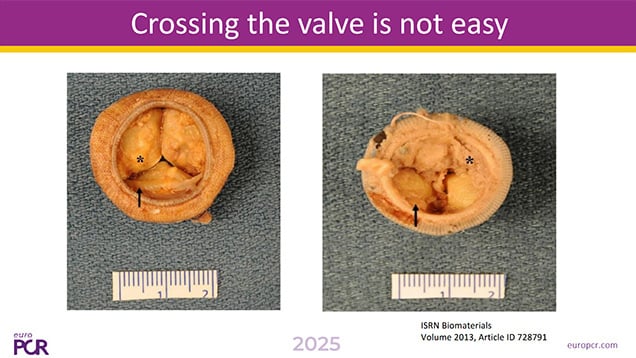
New frontier in renal denervation: data, devices and developments
22 May 2025 – From EuroPCR 2025
Advance your understanding of renal denervation with the latest data, innovative devices, and emerging developments. This session reviews the 12-month results of the REDUCED 1 trial evaluating the TIVUS system, explores safety and efficacy of novel renal stimulation techniques, and presents outcomes from registries including patients...
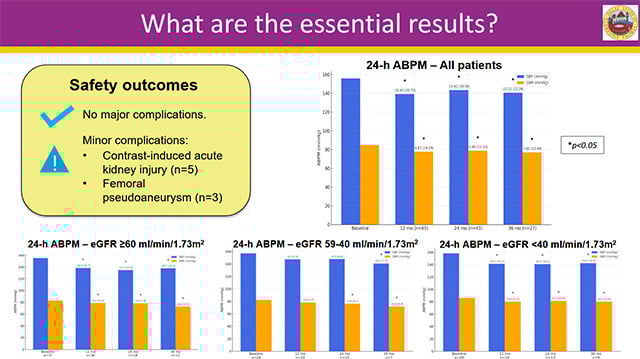
Advancing knowledge and innovations in peripheral interventions
22 May 2025 – From EuroPCR 2025
Expand your expertise in peripheral interventions with a focus on recent innovations and clinical insights. This session covers pre-clinical results of a novel Hybrid Drug-Eluting Stent for below-the-knee arteries, the prognostic impact of proteinuria in LEAD patients with chronic kidney disease, beta-blocker therapy effects post-frozen elephant...
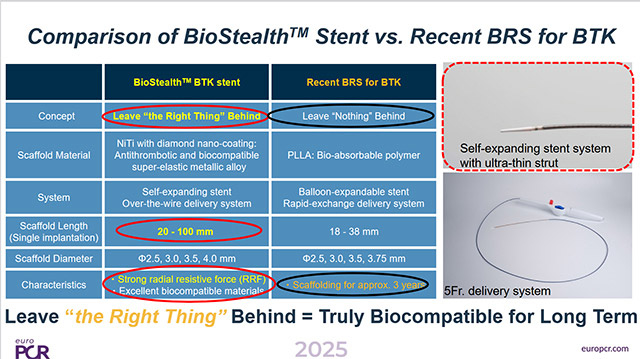
LAA closure in challenging scenarios
22 May 2025 – From EuroPCR 2025
This session addresses the complexities of left atrial appendage (LAA) closure in challenging anatomical and clinical scenarios. Learn from compelling cases including management of incomplete surgical LAA ligation, closure of large and complex peridevice leaks, and navigating difficult anatomy in elderly patients. Emphasizing innovative techniques and...
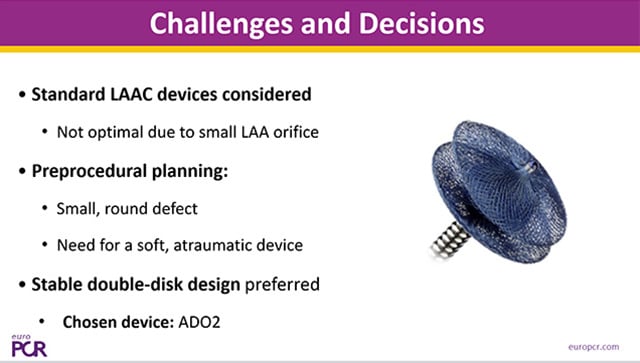
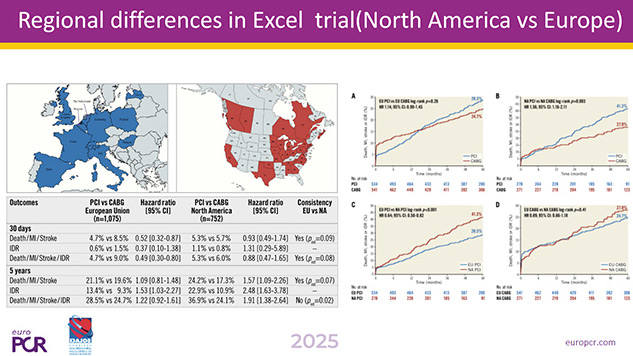
Anatomy, physiology and clinical judgment: insights from contemporary strategies to guide PCI
22 May 2025 – From EuroPCR 2025
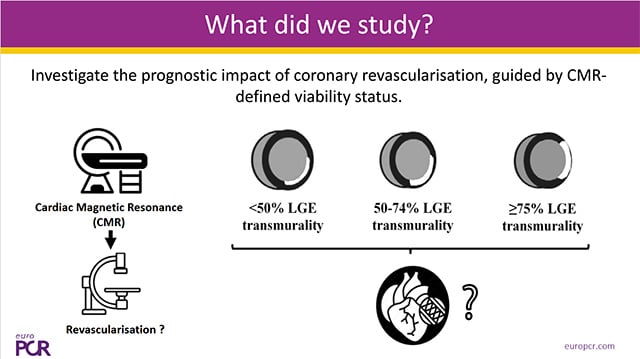
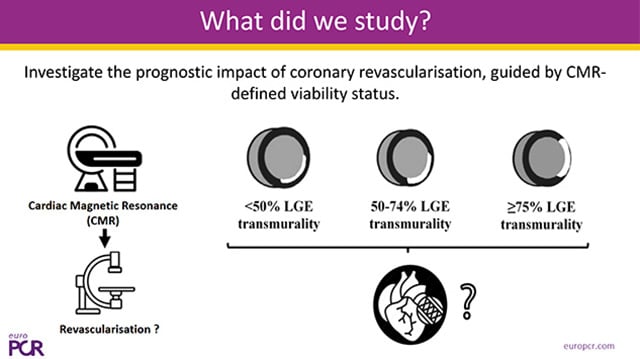
Discover contemporary strategies integrating anatomy, physiology, and clinical judgment to guide percutaneous coronary intervention (PCI). This session explores the impact of stress cardiovascular magnetic resonance in primary prevention, viability-guided PCI, and physiology-based decision-making including quantitative flow ratio (QFR). Learn about identifying patients at risk for major...
DCB in STEMI : why, when and how ?
22 May 2025 – From EuroPCR 2025
Explore the evolving role of drug-coated balloons (DCB) in the management of STEMI patients. This session covers practical approaches including primary PCI with DEB, unconventional solutions in urgent scenarios, and personalized treatment strategies especially in very young patients. Learn how DCB technology intersects with complex lesion...
Acute complications during distal left main PCI - Part 1
22 May 2025 – From EuroPCR 2025
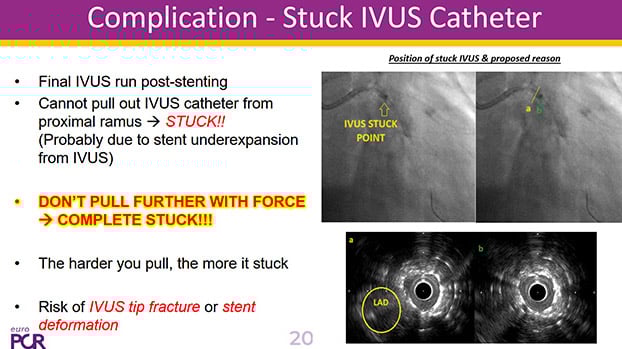
Navigate the challenges of acute complications during distal left main PCI with expert guidance. This session discusses troubleshooting techniques for stuck IVUS catheters, stepwise ostial LAD stenting, OCT applications when crush and kiss techniques fail, management of lost stents in heavily calcified bifurcations, and responses to...
Coronary complications: perforation and dissection
22 May 2025 – From EuroPCR 2025
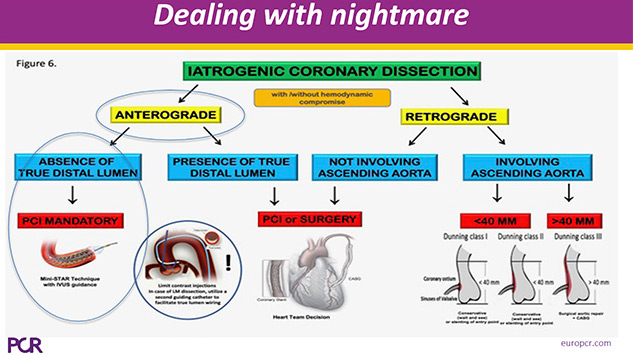
Examine the unpredictable nature of coronary complications such as perforation and dissection during PCI. This session presents real-world cases illustrating sequential complications, their management challenges, and strategies to simplify complex scenarios. Understand how to anticipate, recognize, and effectively respond to these critical incidents to improve procedural...
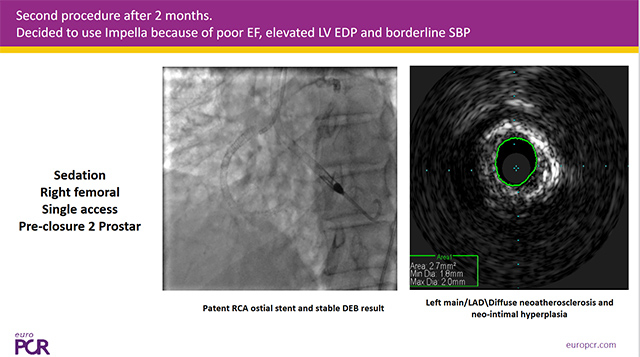
LV support for very high risk PCI of calficied lesions
22 May 2025 – From EuroPCR 2025
Discover the role of left ventricular (LV) support in performing very high-risk PCI on heavily calcified lesions. This session highlights techniques for navigating complex calcified coronary anatomies using Impella support, strategies for metal casing reshaping, and management of acute MI and cardiac arrest scenarios. Explore alternative...
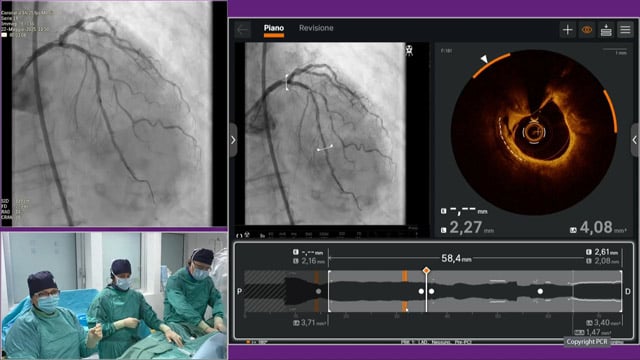
PCI for complex calcific coronary artery disease - LIVE Case
22 May 2025 – From EuroPCR 2025
An 87-year-old female patient, at high bleeding risk and with preserved LV function, presented 2 months ago with an inferior STEMI and multivessel disease. She initially underwent RCA PCI followed by staged LCx PCI. She was now referred for PCI of a long, heavily calcified lesion...
Antiplatelet strategies for patients undergoing PCI
22 May 2025 – From EuroPCR 2025
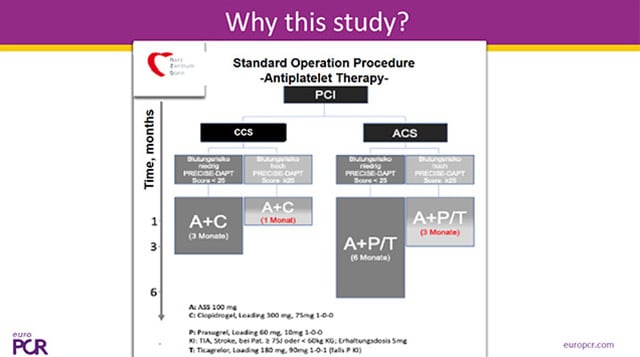
Delve into this comprehensive session focusing on antiplatelet strategies for patients undergoing PCI. Explore evidence and clinical insights on ticagrelor monotherapy post-AMI stenting, shortened dual antiplatelet therapy (DAPT) durations, the role of CYP2C19 genotyping in stent thrombosis risk, the effectiveness of dual antithrombotic therapy in atrial...
TAVI in bicuspid: all you need to know
22 May 2025 – From EuroPCR 2025
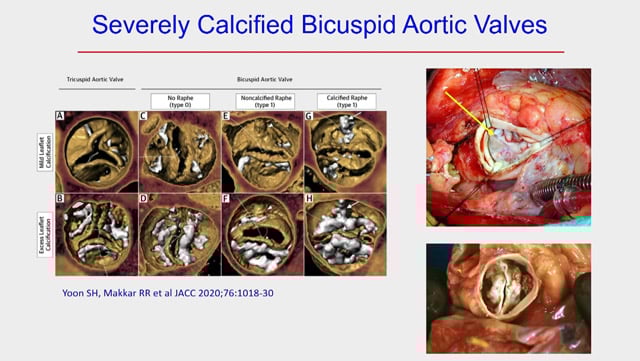
Understand the unique anatomical and clinical challenges of transcatheter aortic valve implantation (TAVI) in bicuspid aortic valves. This session covers bicuspid valve epidemiology, indications for surgery and TAVI, and detailed discussion on sizing and deployment fundamentals specific to bicuspid anatomy to optimize procedural success.
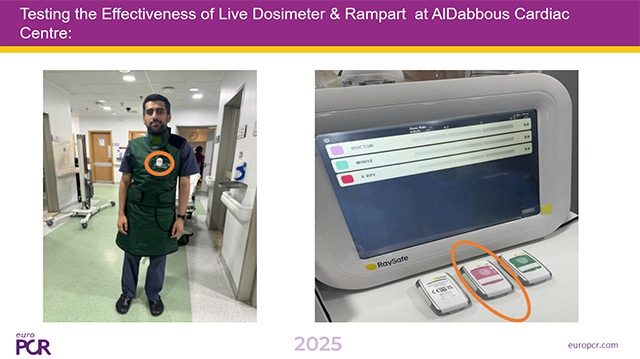
Radiation protection: the good and the bad
22 May 2025 – From EuroPCR 2025
This session provides essential guidance on radiation protection in the cath lab. Learn practical steps to minimize radiation exposure for yourself and your team, manage the ergonomic challenges of protective gear, and develop skills to foster a culture of radiation safety within your workplace. Understand the...