3652 results for «231»
3652 results
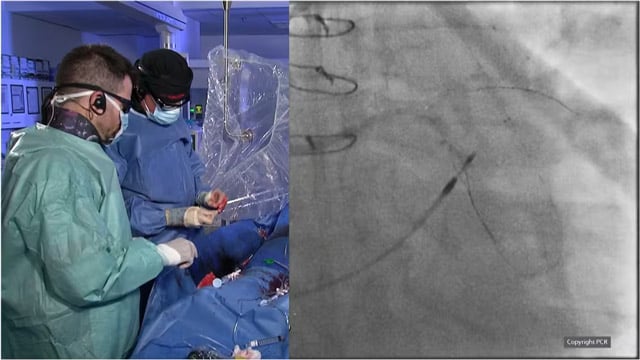
Calcified bifurcation lesion - LIVE case
22 Sep 2023 – From AICT-AsiaPCR 2023
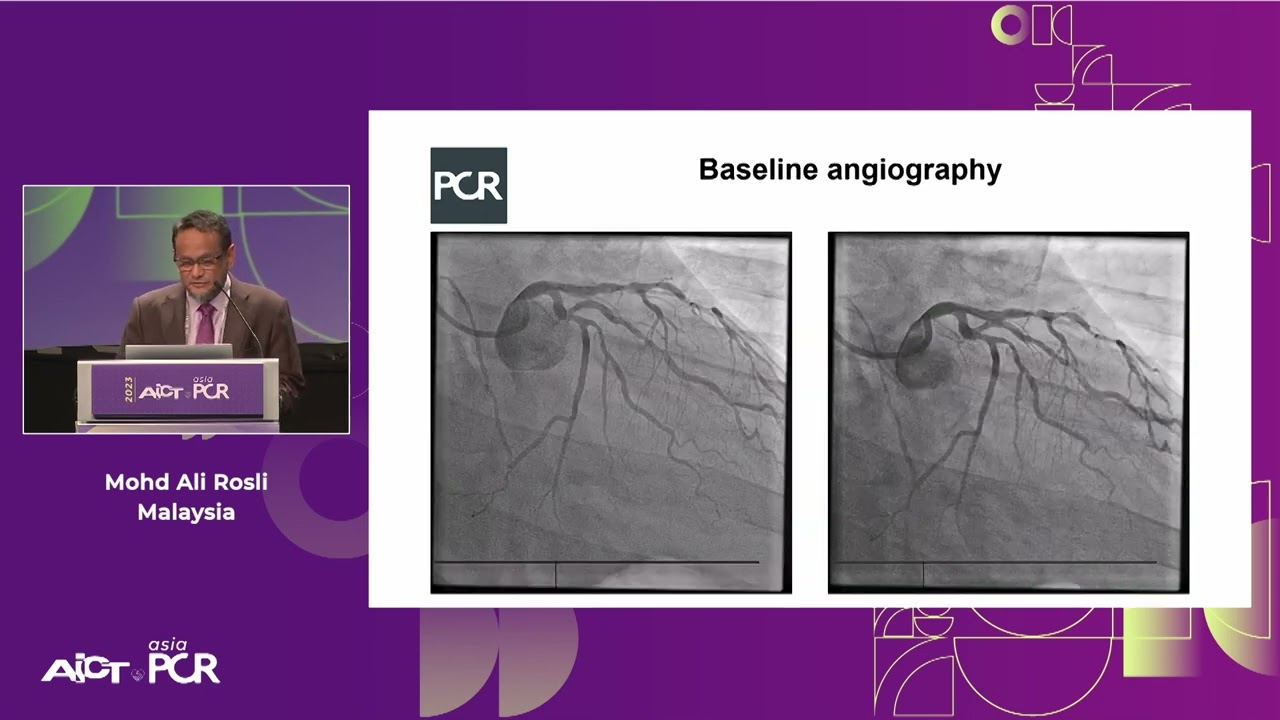
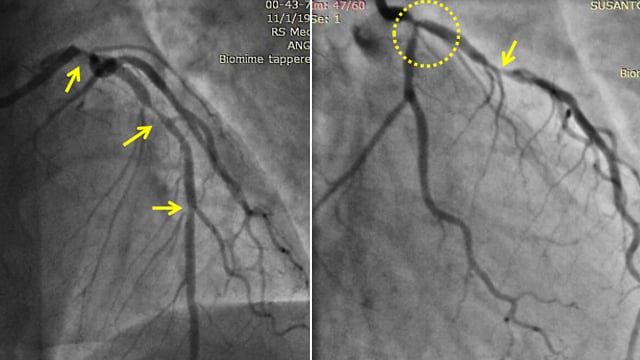
A 59-year-old female patient with type 2 DM, dyslipidaemia, hypothyroidism and impaired LV function (39%) presented with multivessel disease. RCA PCI was performed 3 days ago.
The prox and mid LAD showed a severe calcified lesion including the diagonal. The lesion was prepared using a 1.25 Rotaglide™ ('single-person'...
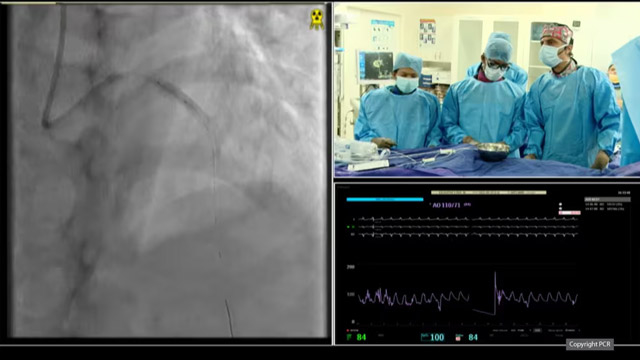
Complex CTO - LIVE case
22 Sep 2023 – From AICT-AsiaPCR 2023
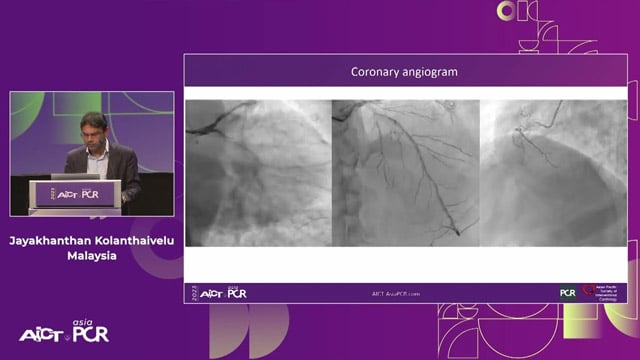
View the case of an 82-year-old man with history of CABG in 2003 (LIMA LAD, VG RCA, VG CX), PCIs on VG RCA in 2021, PCIs VG-CX in 2022, PPM in 2023 with preserved LV function, and follow the retrograde approach of calcified CX CTO using...
AICT-AsiaPCR 2023 Awards Ceremony
22 Sep 2023 – From AICT-AsiaPCR 2023
With a record number of abstracts and clinical cases submitted this year, the winners of these AICT-AsiaPCR 2023 awards have done an excellent job, as the selection process was extremely rigorous. Find out more about the finalists, their reactions and the works that led them to...
AICT-AsiaPCR 2023 Closing Ceremony
22 Sep 2023 – From AICT-AsiaPCR 2023
As AICT-AsiaPCR 2023 draws to a close, it's time to say thank you to the 950 participants and all those who helped make the conference a success, both on stage and behind the scenes.
Revolutionising coronary calcium treatment: unleashing the potential of intravascular lithotripsy
21 Sep 2023 – From AICT-AsiaPCR 2023
Over the last five years, we have learned that there is a new tool for treating calcium, the greatest enemy of interventional cardiology, which can take various forms: intravascular lithotripsy. In this session, look at how to master this technique in different scenarios, from eccentric calcified...
A hybrid approach in complex PCI: can DES and DCB be complementary?
21 Sep 2023 – From AICT-AsiaPCR 2023
Watch this case-based session to follow discussion about how to choose between DES & DCB, how both can be complementary in diffuse disease as well as in complex PCI, and how physiology and imaging can help guiding PCI, and follow a patient's treatment live.
Leave nothing behind: DCB-only PCI strategy - How DCB evidence has changed today's practice?
22 Sep 2023 – From AICT-AsiaPCR 2023
This session offers an opportunity to stay informed about the recent developments in the International DCB Consensus Group, gain insights into the latest clinical data and real-world experiences related to drug-coated balloon (DCB)-only PCI, understand the safety aspects of DCB in managing complex PCI cases, and...
Next-gen complex interventional techniques and solutions
21 Sep 2023 – From AICT-AsiaPCR 2023
Join us in this session where experts delve into advanced techniques for complex interventions: discover tips for PCI without metallic stents, explore novel tools for bifurcation and complex lesions, and learn from clinical experiences in managing long diffused lesions.
PCR Tokyo Valves 2026: Your travel guide featuring upcoming exclusive booking services and special deals.

Percutaneous or surgical management of post-infarction ventricular septal defects: The United Kingdom National Registry
17 Sep 2022
Elad Asher provides his take on the UK National Registry which was presented at the TCT congress 2022 by Joel Peter Giblett on behalf of the UK PIVSD investigators.

Author

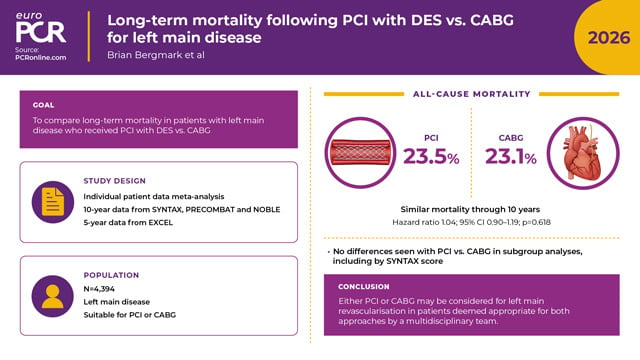
EuroPCR 2026 – Long-term mortality following revascularisation for left main disease
20 May 2026
Paris, France, 19−22 May 2026. The EuroPCR Course Directors have selected 3 major late-breaking trials that will be presented for the first time during EuroPCR 2026 and are set to impact practice worldwide. Among them is a meta-analysis of long-term data from 4 randomised trials investigating...
OPTIMUM: Outcomes of Percutaneous RevascularizaTIon for Management of SUrgically Ineligible Patients with Multivessel or Left Main Coronary Artery Disease
04 Nov 2021
Mirvat Alasnag reviews the OPTIMUM trial, presented by David E. Kandzari, which reports outcomes in a subset of patients who are increasingly seen in modern day catheterization laboratories. It is noteworthy that 1 in 5 patients with left main or multivessel disease are considered surgically ineligible.

Author