3652 results for «351»
3652 results
Technical decision-making for CTO PCI strategy
22 May 2026 – From EuroPCR 2026
This session focuses on technical decision-making for chronic total occlusion PCI strategy. It presents diverse approaches to right coronary CTOs, complex management involving double rendezvous techniques, subintimal strategies, and innovative single-injection methods, demonstrating the evolving frontiers in CTO intervention.

Challenges for TAVI in bicuspid
22 May 2026 – From EuroPCR 2026
This session addresses the unique challenges encountered during transcatheter aortic valve implantation (TAVI) in patients with bicuspid aortic valves. It covers procedural nuances for type 0 bicuspid valves, risks associated with anomalous coronary anatomy, and complex anatomical considerations such as large annulus and tortuous aorta, culminating...

Challenging PCI on bifurcation lesions
22 May 2026 – From EuroPCR 2026
Addressing the complexities of PCI in bifurcation lesions, this session highlights novel techniques such as the TAP and modified mini-crush methods, alongside strategies for managing challenging coronary anatomy. Validation of novel approaches like POT-side DCB-POT for left main bifurcations is also featured.
Asymptomatic high-risk patients: can CT coronary angiography improve our practice?
21 May 2026 – From EuroPCR 2026
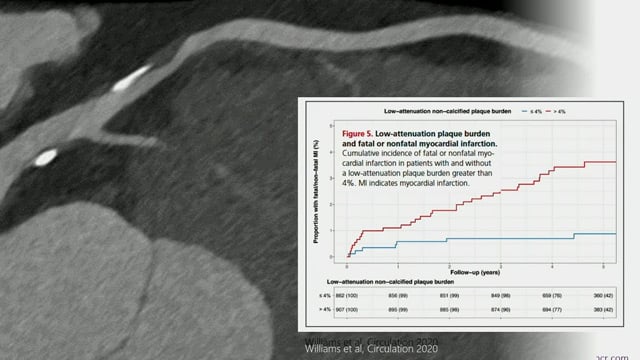
This session examines the role of cardiac computed tomography (CT) coronary angiography in improving clinical practice for asymptomatic high-risk patients. It discusses detection of vulnerable plaque features, the importance of inflammation and physiology in risk assessment, and explores individualized treatment pathways including PCI, medical therapy, or...
When a primary PCI goes wrong
19 May 2026 – From EuroPCR 2026
This session investigates complications encountered during primary percutaneous coronary interventions (PCI). It covers management of no-reflow phenomena, innovative guide extension catheter aspiration techniques for thrombus-rich STEMI, challenges when balloon crossing fails, vein graft PCI pitfalls, and complex concurrent ischemic events involving myocardial infarction and limb ischemia....
Aortic stenosis: from diagnostic to treatment
21 May 2026 – From EuroPCR 2026
This session provides an in-depth review of contemporary management of aortic stenosis, covering diagnostic advancements, temporal trends, and treatment outcomes. It includes insights from the LAPLACE-TAVI registry focusing on low-risk patients, discusses the growing feasibility of day-case TAVI procedures, compares transcatheter and surgical valve replacements in...
How should I treat my CTO? Adapting to local conditions
22 May 2026 – From EuroPCR 2026
This session delves into managing chronic total occlusions (CTO) under resource-limited conditions, highlighting the essential CTO toolbox and strategic procedural planning. It emphasizes that an antegrade-first approach, often with dual arterial access, can achieve high success in many CTO cases, illustrated through complex real-world cases from...
Complex PCI - Best cases from PCR Global Interventional Academy - Part 2
21 May 2026 – From EuroPCR 2026
This session showcases best cases from the PCR Global Interventional Academy focusing on complex PCI scenarios. It addresses challenges such as managing ostial left anterior descending artery lesions, strategies for branch protection, implications of coronary involvement during TAVI, and future directions in complex coronary interventions. The...
COVID-19: safety and efficacy of the mRNA-1273 SARSCoV-2 vaccine (Moderna) against SARS-CoV-2
22 Jan 2021
Examination of the study methodology and results according to the PICOT principle, SWOT analysis and real-world applicability

Three-dimensional optical coherence tomography-guided double kissing crush stenting
14 Dec 2020
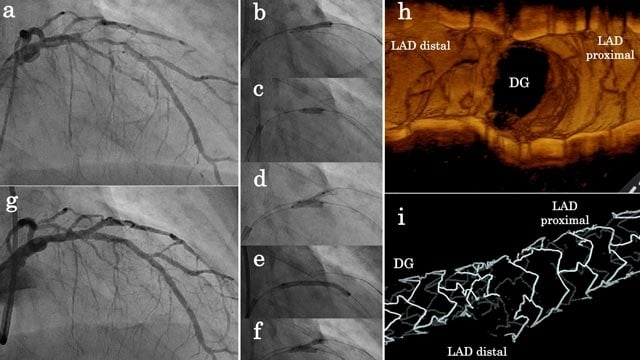
The authors present a case of percutaneous coronary intervention for bifurcation lesion in a 73-year-old man suffering from effort angina, in which they successfully performed double kissing crush stenting using optical coherence tomography.
TRIGISTRY: Benefit of isolated surgical valve repair or replacement for functional tricuspid regurgitation and long-term outcomes stratified by the TRI-SCORE
31 Aug 2024
Alex Sticchi provides his take on the TRIGISTRY study presented by Julien Dreyfus at the ESC Congress 2024 in London.
Simultaneous publication in European Heart Journal, ehae578

Author
Evidence base: A description of the key, so far published, studies in the space of drug coated balloons
23 Jan 2025
Authored by Hector Garcia-Garcia and Jorge Sanz-Sanchez, this article examines pivotal randomized clinical trials on drug-coated balloons in coronary artery disease. It highlights their role in managing in-stent restenosis, de novo small vessel lesions, and large vessel lesions while exploring future directions through ongoing trials.

Author

Author