


3631 results for «558»
3631 results
The metal-free strategy: shaping the new era of hybrid vessel restoration with DCB and BRS
19 May 2026 – From EuroPCR 2026
This EuroPCR 2026 session explores the emerging metal-free strategy in coronary intervention, combining drug-coated balloons (DCB) and bioresorbable scaffolds (BRS) to support a “leave-nothing-behind” approach to vessel restoration.
It focuses on lesion preparation, scaffold sizing and deployment, and the integration of hybrid therapies to optimise procedural outcomes....
Rethinking stentless PCI strategy - Improving outcomes with Bioadaptor
19 May 2026 – From EuroPCR 2026
This EuroPCR 2026 session explores contemporary PCI strategies through the concept of stentless intervention using the Bioadaptor device in complex coronary disease.
It highlights the bioadaptive design features of Bioadaptor and reviews the supporting clinical evidence, with a focus on how this technology may influence procedural outcomes.
The...
Disrupting the aorta and valves: the next transcatheter wave
18 May 2026 – From EuroPCR 2026
Delve into the next wave of transcatheter interventions disrupting the aorta and valves. This session covers pioneering minimally invasive ascending aortic repair, novel polymeric aortic valve implants, and innovative devices for tricuspid repair and leaflet replacement.

How to become a CHAMPION in LAA closure
19 May 2026 – From EuroPCR 2026
This session reviews the latest CHAMPION AF trial data and its implications for left atrial appendage (LAA) closure in patients with atrial fibrillation.
It explores how emerging evidence may influence clinical practice and patient selection, and how LAA closure could evolve across different atrial fibrillation populations.
A recorded...
The Physiology Course - Introduction
18 May 2026 – From EuroPCR 2026
The Physiology Course introduction welcomes participants and provides an overview of the importance of coronary physiology, outlining the program designed in collaboration with EuroPCR.

Management of a patient with complex multivessel disease involving bifurcations
19 May 2026 – From EuroPCR 2026
Complex multivessel coronary disease involving bifurcations requires careful procedural planning, imaging guidance and tailored stent strategies.
This EuroPCR 2026 session combines live educational case with insights from the NAGOMI COMPLEX study to explore contemporary approaches to complex PCI. A key focus is placed on the role of...
Landmark interventional randomised controlled trial data and practice guidelines to transform pulmonary embolism care
19 May 2026 – From EuroPCR 2026
This EuroPCR 2026 session presents landmark randomised controlled trial data shaping interventional treatment of pulmonary embolism, with a focus on translating evidence into clinical practice.
It reviews the HI-PEITHO trial and its implications in intermediate-risk acute PE, where ultrasound-assisted catheter-directed thrombolysis (USCDT) reduced the composite endpoint of...
The physiological mindset: foundations every modern operator must own
18 May 2026 – From EuroPCR 2026
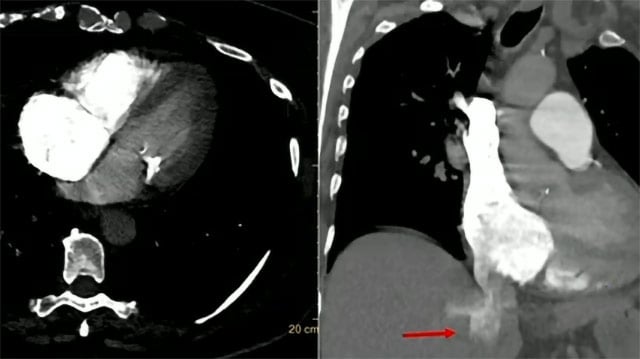
This session delves into the fundamental principles governing coronary blood flow regulation, emphasizing coronary autoregulation and the influence of epicardial haemodynamics on vascular morphology. Participants deepen their understanding of coronary physiology beyond formulas, exploring the intersection of physiology and atherosclerosis.
Early evidence from a next generation coronary sinus reducer for the treatment of coronary microvascular dysfunction
20 May 2026 – From EuroPCR 2026
This EuroPCR 2026 session presents early clinical experience with a next-generation self-expanding nitinol coronary sinus reducer for patients with coronary microvascular dysfunction. It reviews practical aspects of device implantation and discusses initial findings from the SERRA I feasibility study, providing insight into this emerging therapeutic approach....
Physiology in the real world: how to measure, when to trust it, what to do?
18 May 2026 – From EuroPCR 2026
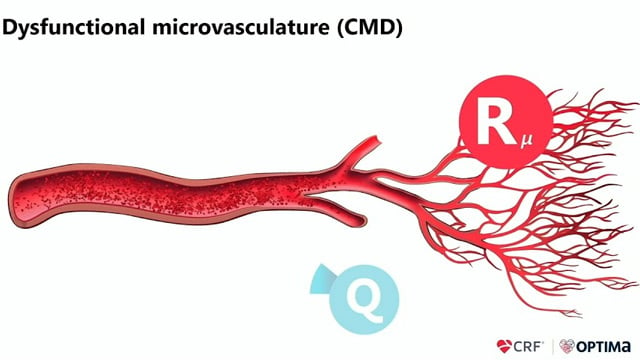
This session provides comprehensive insights into coronary physiology assessment tools, emphasizing techniques for reliable haemodynamic measurements and exploring clinical considerations surrounding coronary spasms and myocardial bridges.
Breaking the calcium challenge: the power of Hertz with LithiX intravascular lithotripsy
20 May 2026 – From EuroPCR 2026
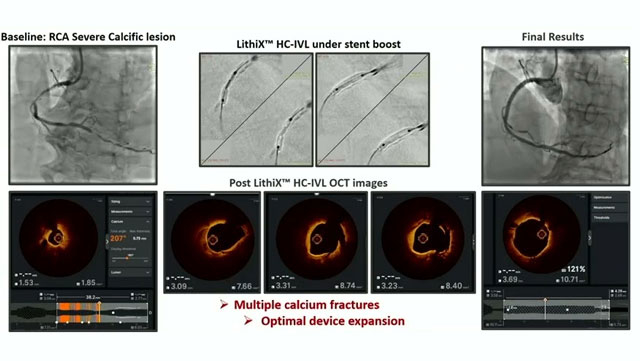
Calcified coronary lesions remain a major challenge in PCI, particularly when lesion rigidity limits device delivery and optimal stent expansion.
This EuroPCR 2026 session focuses on contemporary calcium modification strategies and the role of the Hertz contact intravascular lithotripsy (HC-IVL) system in simplifying treatment of complex calcified...
High definition IVUS-guided treatment strategies in calcified stenoses
20 May 2026 – From EuroPCR 2026
Severely calcified coronary stenoses remain one of the most challenging subsets in contemporary PCI, requiring precise lesion assessment and tailored treatment strategies.
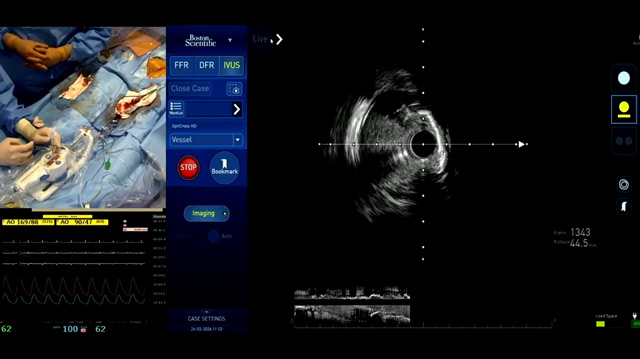
This EuroPCR 2026 session focuses on how high-definition intravascular ultrasound (IVUS) is changing the way these lesions are approached in daily practice.
HD-IVUS enables detailed detection...
TAVI for degenerated surgical aortic bioprotheses: procedural challenges
19 May 2026 – From EuroPCR 2026
This session addresses the procedural challenges inherent in transcatheter aortic valve implantation (TAVI) for degenerated surgical aortic bioprostheses. It covers high-risk valve-in-valve implantation cases as last-resort therapies, management of drifting bioprostheses, and interventions in failed small non-fracturable valves threatening coronary arteries. Techniques such as BASILICA and...
From left to right: different perspectives on heart failure management
19 May 2026 – From EuroPCR 2026
Exploring diverse perspectives on heart failure management, this session presents a range of complex clinical cases. Topics include facilitated treatment of post-myocardial infarction interventricular septal defects, left ventricular perforation following Impella placement, diagnostic challenges in shock scenarios, the implications of severe right ventricular dysfunction on left...
Beyond the angiogram: contemporary management of STEMI
19 May 2026 – From EuroPCR 2026
This session provides an in-depth review of complex STEMI cases from diverse clinical settings, emphasizing optimisation of primary PCI strategies, complication management, and individualised antithrombotic therapy. Real-world cases from Albania, Macedonia, and Slovakia illustrate diagnostic challenges and therapeutic decision-making to improve patient outcomes.
Value of imaging for treatment of calcified lesions
19 May 2026 – From EuroPCR 2026
This session highlights the critical value of imaging in the treatment of calcified coronary lesions. It reviews techniques for lesion modification, including innovative balloon-based strategies and multimodality approaches for balloon-uncrossable calcified left main bifurcations. The session also discusses the tactical cracking of calcified plaques and strategies...
Imaging-driven decision making in PCI for calcified lesions
19 May 2026 – From EuroPCR 2026
Focus on imaging-guided decision making in PCI for heavily calcified coronary lesions. This session includes case studies illustrating advanced techniques to navigate and treat challenging calcific anatomies, emphasizing the role of imaging modalities and atherectomy devices to optimize procedural success in complex settings such as left...
How should I treat a patient with a calcified mitral anatomy?
19 May 2026 – From EuroPCR 2026
This session explores the management of patients with calcified mitral anatomy, from advanced imaging assessment to intervention planning. It evaluates the suitability of mitral annular calcification for transcatheter edge-to-edge repair (TEER) and discusses alternative therapeutic options for patients ineligible for TEER.
TAVI procedural complications - Part 2: devices issues, access-related complications and more
19 May 2026 – From EuroPCR 2026
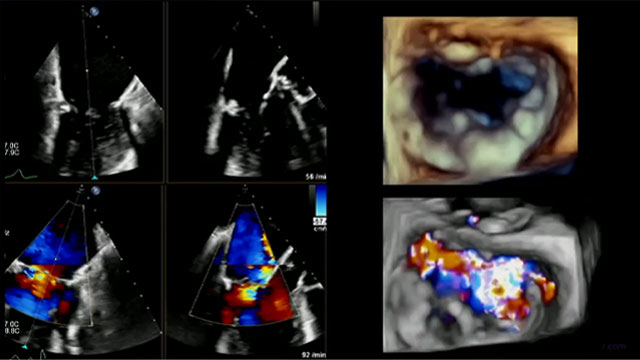
Delve into procedural challenges encountered during TAVI, focusing on device-related issues, access complications, and bailout strategies. This session reviews real-world cases such as balloon retention, valve expansion failure, TAV-in-TAV interventions, and transcaval access lessons, providing critical insights to manage and mitigate procedural complications effectively.
Angiography-based physiology in clinical practice
19 May 2026 – From EuroPCR 2026
Investigate the clinical application of angiography-based physiology in coronary artery disease management. This session covers quantitative flow ratio (QFR) guided PCI strategies, risk stratification in chronic coronary syndrome, and prognostic value of angiography-derived indices, offering a wire-free diagnostic approach supported by recent trial data.