


3638 results for «2030»
3638 results
Management of calcified lesions in challenging scenarios
20 May 2026 – From EuroPCR 2026
This session presents complex cases involving calcified coronary lesions in challenging clinical scenarios including STEMI, bifurcation lesions, tortuosity, and concurrent TAVI procedures. It demonstrates integrative strategies such as rota-lithotripsy and addresses decision-making processes in managing calcification beyond the coronaries to optimize patient outcomes.

Antithrombotic therapy after TAVI: optimal agents, regimens, and patient selection
20 May 2026 – From EuroPCR 2026
This session critically evaluates antithrombotic therapy following TAVI, addressing optimal agents and regimens tailored to patients with and without atrial fibrillation. It also reviews clinical presentations and management of valve thrombosis post-TAVI, using guideline-based approaches and real-world cases to individualize patient care.
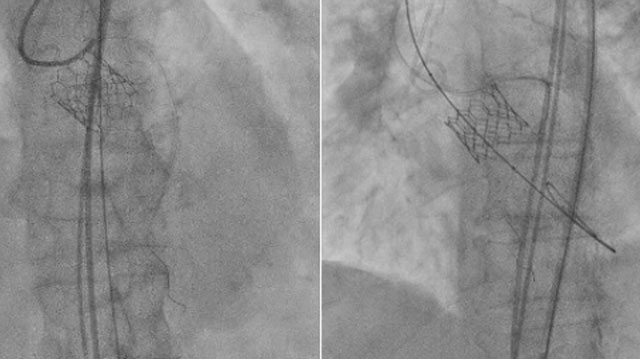
TAVI: new approach
20 May 2026 – From EuroPCR 2026
This session introduces new frontiers in transcatheter aortic valve implantation (TAVI), including artificial intelligence-enabled systems and minimalist, radiation-free approaches guided by echocardiography. It covers complex procedural techniques such as axillary access under TEE guidance, precision snaring, and managing challenging anatomies, emphasizing advancements in safety and efficacy...

Optimal timing of aspirin discontinuation: when early is too early?
20 May 2026 – From EuroPCR 2026
This session critically evaluates the optimal timing for aspirin discontinuation after PCI, discussing outcomes of aspirin-free strategies initiated within one month versus three months post-procedure. It considers differential effects of DAPT duration based on ACS presentation and bleeding risk, supported by meta-analyses and real-world data to...
Unusual complexities, uncommon complications and innovative solutions
20 May 2026 – From EuroPCR 2026
This session showcases innovative solutions to unusual complexities and rare complications in interventional cardiology. Through detailed case presentations, it examines ambiguous CTO management, giant coronary aneurysm complications post-PCI, and unforeseen issues arising from coronary atherectomy for calcified nodules.
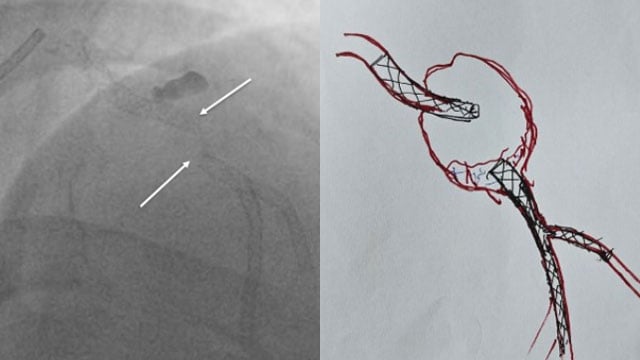
Bifurcation PCI with complications - Part 1
20 May 2026 – From EuroPCR 2026
This session addresses complications encountered during bifurcation PCI through real-world cases involving stent dislodgement, entrapped guidewires, failed wiring techniques, and fractured devices. It highlights technical rescue maneuvers, the role of intravascular imaging, and long-term challenges encountered in managing complex bifurcation lesions to improve procedural success and...
Other valvular and structural interventions
20 May 2026 – From EuroPCR 2026
Covering a spectrum of valvular and structural heart interventions, this session discusses systemic aortic valve TEER in complex congenital cases, compares TAVI and surgical AVR outcomes via meta-analysis, highlights radiation protection advances in complex endovascular repair, and presents combined mitral and tricuspid TEER techniques, novel ultrasound...
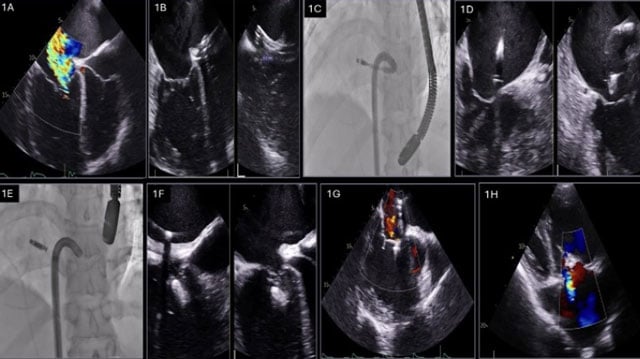
Dangers of dissection: the role of ICI
20 May 2026 – From EuroPCR 2026
This session explores the critical role of intracoronary imaging (ICI) in diagnosing and managing coronary artery dissections. Cases include fenestration techniques, stent migration challenges, polytrauma patient management, route selection dilemmas, and intricate procedural navigation to achieve successful outcomes.
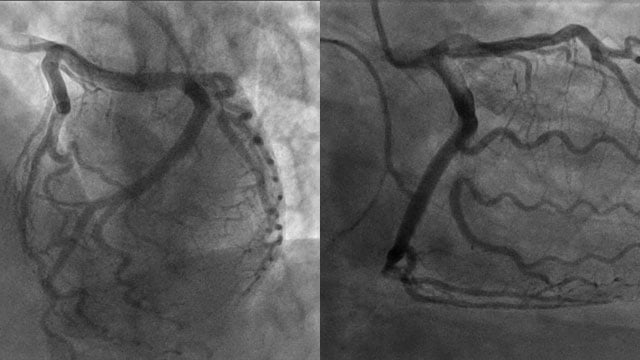
Intracoronary imaging evaluation of stent implantation
20 May 2026 – From EuroPCR 2026
Focusing on intracoronary imaging evaluation of stent implantation, this session presents serial OCT data on plaque characteristics and neoatherosclerosis post-STEMI, the clinical impact of stent malapposition in ACS, long-term apposition dynamics, factors influencing stent expansion in calcified lesions by NIRS-IVUS, and OCT insights into coronary artery...
Cardiogenic shock: identifying the cause and tailoring the treatment
20 May 2026 – From EuroPCR 2026
This session focuses on the critical evaluation and management of cardiogenic shock by identifying its underlying causes and tailoring treatment accordingly. It presents complex cases including free wall rupture bail-out strategies, management dilemmas in inferior STEMI complicated by incomplete ventricular rupture, multifactorial culprit lesions, refractory hypotension...
Prevention and management of PCI complications
20 May 2026 – From EuroPCR 2026
This session addresses the prevention and management strategies for complications arising during percutaneous coronary intervention (PCI). It presents real-world cases including management of entrapped guidewires, thrombosed aneurysms, catheter kinking, stent retrieval challenges, and complex retrieval scenarios, offering valuable insights into effective complication resolution techniques.
Intracoronary imaging to guided DCB PCI
20 May 2026 – From EuroPCR 2026
This session highlights the role of intracoronary imaging techniques such as OCT and IVUS in guiding drug-coated balloon (DCB) PCI. It explores novel imaging-guided algorithms for complex bifurcations, prediction of drug-eluting balloon failure, management of calcified nodules, re-entry into true lumen during CTO, and tackling aneurysms...
Stent it or leave it : SCAD dilemmas
20 May 2026 – From EuroPCR 2026
This session explores the complex dilemmas in managing spontaneous coronary artery dissection (SCAD), focusing on decision-making between conservative treatment and intervention. It presents diverse clinical cases highlighting varying presentations including STEMI, young patients, and drug-induced complications, offering critical perspectives on tailored treatment strategies.
Bifurcation PCI with complications - Part 2
20 May 2026 – From EuroPCR 2026
This session addresses the challenges and complications encountered during bifurcation PCI. Topics include managing the hairpin hazard, advanced techniques for coronary guidewire entrapment, dual device failure in complex interventions, strategies for trifurcation lesions, and the implications of tissue entrapment in malapposed stents within the left main...
Multi-device approach to calcified lesions
20 May 2026 – From EuroPCR 2026
Explore a multi-device strategy for tackling complex calcified coronary lesions in this session. It includes case studies on left main trifurcation stenting, resistant calcified nodules treated with orbital atherectomy, severe restenosis, and critical calcifications in challenging anatomies, showcasing advanced techniques for plaque modification and lesion management.
TAVI for aortic regurgitation
20 May 2026 – From EuroPCR 2026
This session highlights innovative transcatheter aortic valve implantation (TAVI) approaches for treating aortic regurgitation, focusing on off-label uses and complex cases. It features high-risk patient interventions, including nonagenarian patients, and strategies to manage severe non-calcific native valve regurgitation with balloon-expandable valves.
Complex distal LM PCI challenges (trifurcations and more)
20 May 2026 – From EuroPCR 2026
Focusing on the intricacies of complex distal left main PCI, this session covers challenging trifurcation lesions and emergency interventions. It includes IVUS-guided approaches for trifurcation PCI, management of calcified left main trifurcations, and multidisciplinary team rescue strategies for unstable left main bifurcation disease.
Images that speak for themselves
20 May 2026 – From EuroPCR 2026
This visually-driven session presents compelling clinical cases where imaging played a decisive role. Cases include unexpected challenges following transcatheter tricuspid valve replacement, severe hypertension in a young athlete, atypical coronary artery anatomy, critical moments of cardiac arrest, and unique coronary artery findings resembling a spider web.
Transcatheter rescue in cardiogenic shock
20 May 2026 – From EuroPCR 2026
This session presents cutting-edge transcatheter rescue interventions in cardiogenic shock scenarios. It covers emergent valve-in-valve procedures, hybrid approaches for valvular heart disease with heart failure, management of ventricular septal rupture post-myocardial infarction, and percutaneous closure techniques for high-risk patients, emphasizing lifesaving interventional strategies.
Innovations in structural interventions
20 May 2026 – From EuroPCR 2026
Highlighting the forefront of structural heart interventions, this session presents innovations including novel devices and technologies from industry leaders. It features advancements such as a new transseptal left atrial fixation device designed to expand the suitability of transcatheter mitral valve replacement (TMVR).