3638 results for «2030»
3638 results
Simplify the complex with Shockwave C2 Aero - Next-generation coronary intravascular lithotripsy that delivers
21 May 2026 – From EuroPCR 2026
This EuroPCR 2026 session highlights the role of the next-generation Shockwave C2 Aero coronary intravascular lithotripsy system in the treatment of complex calcified coronary artery disease. Supported by real-world clinical experience and recent evidence, the discussion focuses on procedural safety, lesion preparation, and treatment consistency in...
Left main and complex bifurcation stenting
21 May 2026 – From EuroPCR 2026
This focused session explores optimal strategies for treating left main and complex bifurcation coronary lesions, a setting that remains both anatomically and technically demanding.
It highlights the role of intracoronary imaging in refining procedural planning and optimising stenting strategy and technique. The discussion also reviews the mechanical...
The right therapy for right heart failure and tricuspid regurgitation: fixing my patient congestion, not just a valve
21 May 2026 – From EuroPCR 2026
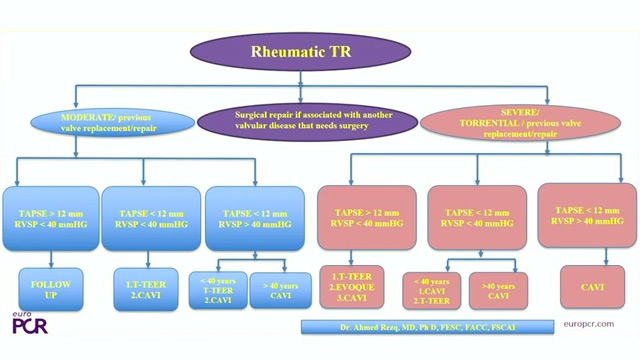
This EuroPCR 2026 session shifts the focus in tricuspid regurgitation from anatomy alone to the broader context of right heart failure and systemic congestion. It highlights the limitations of purely leaflet-based strategies, particularly in advanced disease and in the presence of severe right ventricular dysfunction.
The discussion...
Aortic regurgitation in 2026
21 May 2026 – From EuroPCR 2026
Get a comprehensive overview of contemporary management strategies for aortic regurgitation, a condition that remains frequently underdiagnosed and undertreated despite significant advances in transcatheter therapies thanks to this EuroPCR 2026 session.
The programme reviews current diagnostic and treatment pathways, including guideline-based management and the role of surgical...
LDL-C management: should it begin in the cathlab?
21 May 2026 – From EuroPCR 2026
This EuroPCR 2026 session examines the evolving role of LDL cholesterol management in patients undergoing percutaneous coronary intervention (PCI), with a focus on the potential benefits of initiating intensive lipid-lowering strategies early in the patient pathway.
The discussion reviews emerging evidence on PCSK9 inhibition in elective PCI...
Active unloading with Impella heart pumps in elective and emergent patients
21 May 2026 – From EuroPCR 2026
This session presents the latest evidence on the use of microaxial Impella heart pumps in both elective high-risk and emergent cardiogenic shock patients. It highlights the importance of organised systems of care in improving survival outcomes and explores current data and expert consensus on mechanical circulatory...
Ascending into the future with drug-coated balloons
21 May 2026 – From EuroPCR 2026
Step into the future of interventional cardiology with comprehensive insights into drug‑coated balloons (DCB). This session covers the new DCB ARC guidelines, previews findings from the impactful BASKET BALL randomised trial, and examines real-world evidence from the SCORE registry. It also addresses the optimisation of acute...
IVUS and NIRS imaging: a pathway to improve outcomes in stable and acute coronary syndromes
19 May 2026 – From EuroPCR 2026
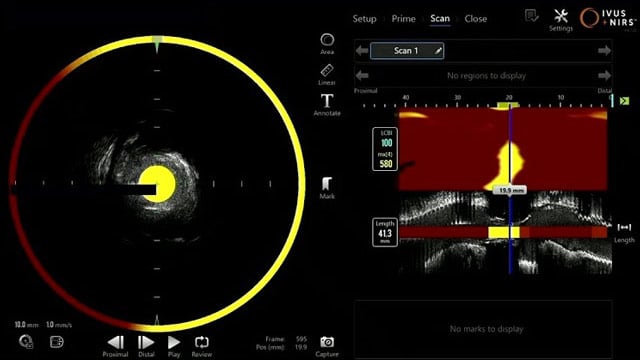
IVUS-guided PCI is well established in complex coronary interventions, but combining it with near-infrared spectroscopy (NIRS) is opening a new dimension by linking vessel geometry with plaque biology.
This EuroPCR 2026session explores how IVUS-NIRS imaging improves PCI planning and risk stratification in both stable and acute coronary...
CathWorks FFRangio: from clinical data to advanced patient care
21 May 2026 – From EuroPCR 2026
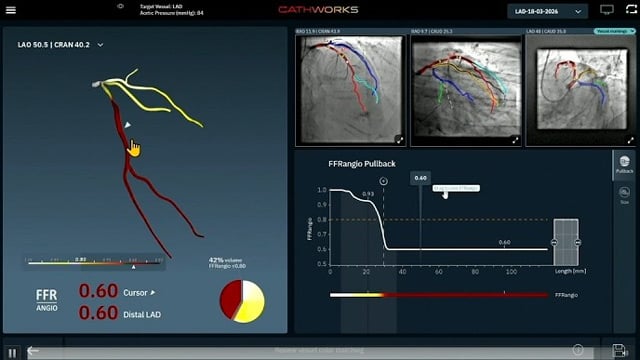
Explore the clinical value of the CathWorks FFRangio system through the lens of the ALL-RISE randomised controlled trial and its implications for daily practice. By reviewing the trial’s primary and secondary endpoints, examine how FFRangio may influence diagnostic assessment, treatment planning, and clinical decision-making in patients...
PCRonline @ ESC Congress 2021: the interventional cardiology perspective!
21 Jul 2021
Make sure you stay up to date with what's new and hot in interventional cardiology at this year's #ESCCongress!

egnite, Inc. Expands into Cardiovascular Disease Supported by New Data on the State of Care for Patients with Atrial Fibrillation.
17 May 2022

The PRE18FFIR trial: Coronary Plaque Activity to Predict Recurrent Events
01 Sep 2022
Alex Sticchi provides his take on the PRE18FFIR trial: Prediction of recurrent events with 18F-Sodium Fluoride to identify ruptured and high-risk coronary artery plaques in patients with myocardial infarction.

Author

FDA approves LimFlow system in patients with chronic limb-threatening ischemia and no suitable endovascular or surgical revascularization options
15 Sep 2023

Performing BASILICA: a step-by-step guide to prevent coronary obstruction during TAVI
05 Aug 2025

Author

Author
PCR Global Interventional Academy
20 May 2026
This one-of-a-kind academy offers independent, cutting-edge training pathways for ambitious interventionalists who have been in practice for a few years and are looking to grow - both personally and professionally. Two recurrent high-level one-year tracks on coronary interventions and TAVI are already underway, with further opportunities forecast for...

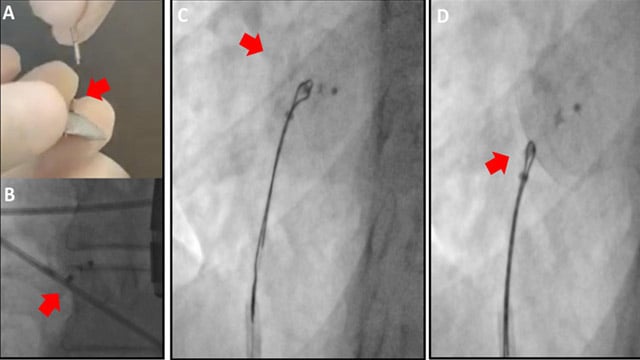
How to choose a snare and how to create a snare in complex PCI scenarios
19 Dec 2023
Complex percutaneous coronary intervention (PCI) procedures are dramatically increasing in daily practice. Calcified coronary artery lesions and hostile cardiac anatomy may increase the risk of device dislodgment and/or malposition. In such situations, the use of a snare catheter is pivotal to retrieve and/or reposition the device.

Author
Author

Author

Author
Biocardia receives FDA breakthrough device designation for CardiAMP Cell Therapy System for heart failure
03 Feb 2022
How to choose a snare and create a snare to enhance device trackability in structural interventions
19 Dec 2023
Transcatheter structural procedures are dramatically increasing in daily practice. Approaching hostile cardiac anatomy may increase the risk of device dislodgment and/or malposition. In such situations, the use of a snare catheter is pivotal to enhance device trackability.
Author
Author
Author
Author