


3656 results for «387»
3656 results
New tools for risk stratification in STEMI
20 May 2026 – From EuroPCR 2026
This session highlights novel tools and scores for risk stratification in ST-elevation myocardial infarction (STEMI) patients. It covers prognostic indices such as the index of microcirculatory resistance, the PREDICT-STEMI score, thrombus characteristics, sex differences in outcomes, renal impairment impacts, and benefits of complete revascularization strategies.

Complications in coronary interventions
20 May 2026 – From EuroPCR 2026
This session reviews uncommon and challenging complications encountered during coronary interventions. Cases include brachial arteriovenous fistula following radial access, retained guidewires, coronary sinus perforation during device implantation, and complex atherectomy procedures, emphasizing preparedness and management strategies.

Reliability and application of angio-based physiology in daily work
20 May 2026 – From EuroPCR 2026
This session evaluates the reliability and clinical application of angiography-based physiological assessments in daily practice. Topics include comparisons of angiography-derived microvascular resistance and flow metrics with invasive methods, reproducibility of quantitative flow ratio (QFR), and its correlation with symptom burden and other imaging modalities.
Challenges during PCI on bifurcation
20 May 2026 – From EuroPCR 2026
This session addresses the complexities of percutaneous coronary intervention (PCI) in bifurcation lesions. It discusses decision-making strategies, techniques to avoid implanting permanent devices, the use of IVUS-guided laser atherectomy for restenosis, and approaches to challenging double bifurcation lesions including drug-coated balloon therapy.
Optimal use of dedicated device for calcified lesions
20 May 2026 – From EuroPCR 2026
This session delves into the optimal utilization of dedicated devices for managing complex coronary calcification. Explore decision-making strategies involving orbital atherectomy and cutting balloon techniques, as well as advanced approaches like contact intravascular lithotripsy for stented calcified nodules. Additional focus is given to ablative and modifying...
PFO closure - Progression in practice
20 May 2026 – From EuroPCR 2026
This session presents progressive insights into patent foramen ovale (PFO) closure, comparing outcomes across age groups and evaluating residual shunting via transcranial Doppler. It highlights tailored antiplatelet therapy durations from the PROLONG registry, long-term safety and efficacy data, morphological variations of the fossa ovalis, and the...
Stay calm and carry on: bailout techniques for calcified lesions
20 May 2026 – From EuroPCR 2026
Focused on bailout techniques for calcified lesions, this session addresses challenging scenarios such as deformed stents, post-CABG angioplasty complications, and balloon uncrossable lesions in tortuous anatomy. It provides practical approaches to manage complex calcium-related complications that may arise unexpectedly during intervention, ensuring preparedness for difficult procedural...
How to safely perform a retrograde CTO PCI: step-by-step guidance
20 May 2026 – From EuroPCR 2026
This session offers step-by-step guidance on safely performing retrograde chronic total occlusion (CTO) percutaneous coronary intervention (PCI). It covers the fundamentals of retrograde setup and collateral crossing, execution of a controlled reverse CART technique, and addresses common pitfalls with practical tips to improve procedural success and...
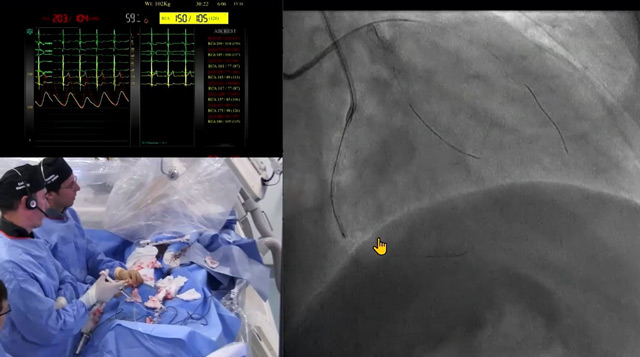
New evidence for coronary physiology in epicardial disease
20 May 2026 – From EuroPCR 2026
Explore new evidence in coronary physiology related to epicardial disease through analyses of landmark trials and registries. Topics include five-year follow-up data from DEFINE-FLAIR and iFR-SWEDEHEART, complete revascularization in elderly myocardial infarction patients, angiography-derived versus pressure wire assessments, prognostic implications of CT angiography-derived physiology, and the...
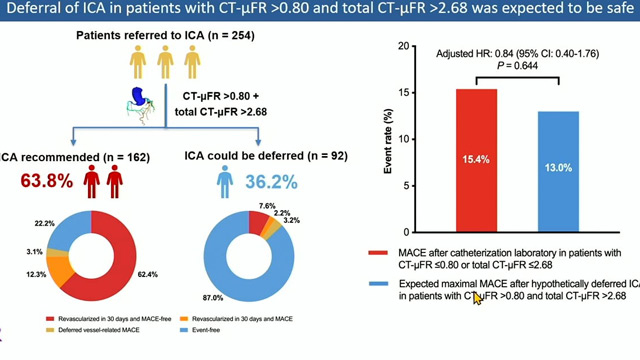
Mitral paravalvular leak closure: case-bases strategies
20 May 2026 – From EuroPCR 2026
This session presents case-based strategies for mitral paravalvular leak closure, highlighting complex percutaneous approaches including multivalvular failure management, apical access techniques, and transatrial direct surgical valve-in-MAC procedures. It features challenging clinical scenarios demonstrating innovative solutions for hemolytic leaks and complex paravalvular defects.
Monotherapy vs. DAPT: striking the balance between ischemia and bleeding
20 May 2026 – From EuroPCR 2026
This session examines the balance between ischemic and bleeding risks by comparing monotherapy regimens and dual antiplatelet therapy (DAPT) following PCI. Key topics include clopidogrel versus aspirin monotherapy, aspirin discontinuation timing after ACS, and the impact of P2Y12 adherence on clinical outcomes in high-risk and oral...
Lost, crushed, fractured: stent complications in real life
20 May 2026 – From EuroPCR 2026
This session addresses real-world challenges of stent complications including loss, crushing, and fracture during PCI. Through case-based discussions, it explores complex scenarios such as stent dislodgement, embolisation, and management strategies when initial plans evolve into complicated realities.
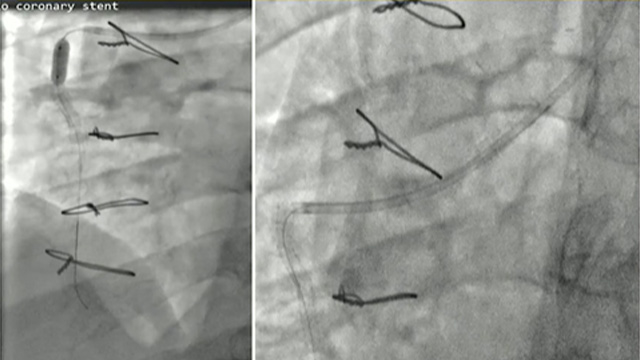
Safe management of assisted PCI : what can go wrong
20 May 2026 – From EuroPCR 2026
Explore the complexities and potential complications associated with assisted PCI in this session. Topics include challenges such as microaxial pump kinks, technical aspects of IMPELLA device deployment, and the management of high-risk PCI cases including patients with prior TAVI, highlighting strategies to mitigate risks during protected...
All you need to know about interventional therapies for pulmonary embolism
20 May 2026 – From EuroPCR 2026
Focused on interventional therapies for pulmonary embolism, this session guides on establishing and sustaining Pulmonary Embolism Response Teams (PERT), refining patient selection for intervention, choosing appropriate technologies, and identifying intraprocedural markers indicating successful treatment outcomes.
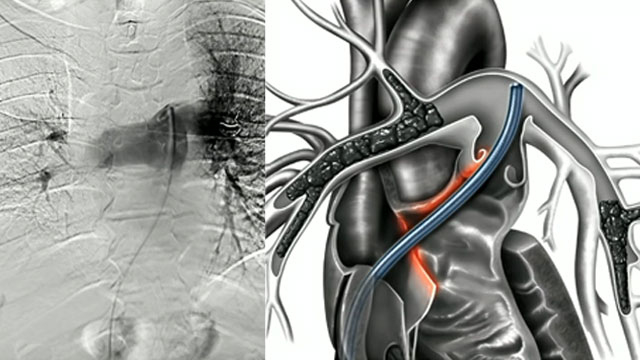
Assessment of vasomotor coronary disorders in the cathlab
20 May 2026 – From EuroPCR 2026
This session focuses on the invasive assessment of vasomotor coronary disorders within the catheterization laboratory. It reviews clinical profiles, endothelial function evaluation using acetylcholine and advanced hemodynamic methods, coronary volume analysis, and refined classification of coronary spasm, enhancing diagnostic accuracy in patients with suspected ischemia and...
Antithrombotic therapy after TAVI: optimal agents, regimens, and patient selection
20 May 2026 – From EuroPCR 2026
This session critically evaluates antithrombotic therapy following TAVI, addressing optimal agents and regimens tailored to patients with and without atrial fibrillation. It also reviews clinical presentations and management of valve thrombosis post-TAVI, using guideline-based approaches and real-world cases to individualize patient care.
Management of calcified lesions in challenging scenarios
20 May 2026 – From EuroPCR 2026
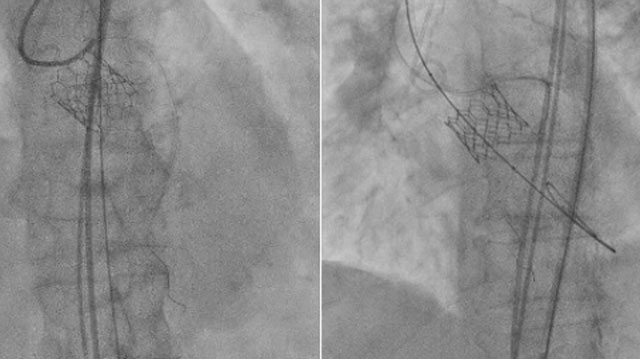
This session presents complex cases involving calcified coronary lesions in challenging clinical scenarios including STEMI, bifurcation lesions, tortuosity, and concurrent TAVI procedures. It demonstrates integrative strategies such as rota-lithotripsy and addresses decision-making processes in managing calcification beyond the coronaries to optimize patient outcomes.
Unusual complexities, uncommon complications and innovative solutions
20 May 2026 – From EuroPCR 2026
This session showcases innovative solutions to unusual complexities and rare complications in interventional cardiology. Through detailed case presentations, it examines ambiguous CTO management, giant coronary aneurysm complications post-PCI, and unforeseen issues arising from coronary atherectomy for calcified nodules.
TAVI: new approach
20 May 2026 – From EuroPCR 2026
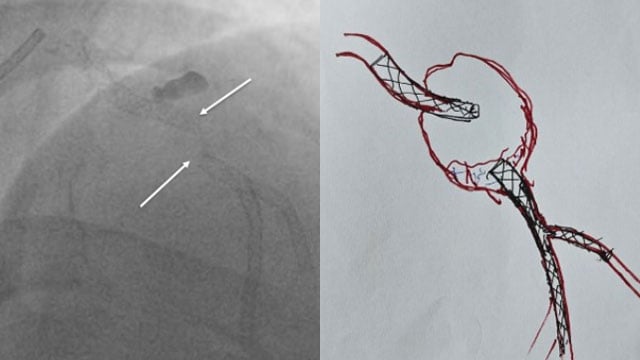
This session introduces new frontiers in transcatheter aortic valve implantation (TAVI), including artificial intelligence-enabled systems and minimalist, radiation-free approaches guided by echocardiography. It covers complex procedural techniques such as axillary access under TEE guidance, precision snaring, and managing challenging anatomies, emphasizing advancements in safety and efficacy...
Optimal timing of aspirin discontinuation: when early is too early?
20 May 2026 – From EuroPCR 2026
This session critically evaluates the optimal timing for aspirin discontinuation after PCI, discussing outcomes of aspirin-free strategies initiated within one month versus three months post-procedure. It considers differential effects of DAPT duration based on ACS presentation and bleeding risk, supported by meta-analyses and real-world data to...