


3632 results for «557»
3632 results
The Jon DeHaan Foundation Award competition
18 May 2026 – From EuroPCR 2026
Explore the forefront of interventional cardiology innovation with the Jon DeHaan Foundation Award competition, featuring pioneering solutions for valvular heart disease and mechanical support. This session highlights novel devices such as TriFlo for tricuspid regurgitation, the extravascular ventricular assist device (eVAD System), and the first-in-human experience...

Innovating heart failure care: from real-time monitoring to mechanical support
18 May 2026 – From EuroPCR 2026
Innovations in heart failure care are transforming patient management, from real-time, non-invasive congestion monitoring to advanced mechanical support systems. This session presents the Anusar congestion assessment tool, early clinical data on the NuPulse intravascular ventricular assist system for ambulatory support, and explores AI-driven voice biomarker technology...

AI fundamentals for busy cardiologists: opportunities, limitations and safe use
19 May 2026 – From EuroPCR 2026
Designed for busy cardiologists, this session elucidates the fundamentals of artificial intelligence relevant to cardiology practice. It covers the main AI tool families, including large language models and computer vision, and emphasizes effective and safe prompting techniques for clinical and academic use. Attendees will also learn...
Once you find microvascular disease, what do you actually do?
18 May 2026 – From EuroPCR 2026
Addressing coronary microvascular disease requires a comprehensive understanding of current medical therapies and emerging interventions. This session reviews state-of-the-art pharmacological treatments, elucidates the mechanisms and clinical data surrounding the coronary sinus reducer (CSR), and offers critical discussion on its therapeutic role in microvascular dysfunction.
Structural and valvular innovations
19 May 2026 – From EuroPCR 2026
This session highlights the latest innovations in structural and valvular cardiology, featuring novel technologies such as a new self-expandable transcatheter aortic valve for aortic stenosis treatment and a temporary atrioventricular sequential pacing system. It also discusses non-clinical testing methodologies supporting U.S. market approvals, non-invasive ultrasound therapy...
Closing lectures
18 May 2026 – From EuroPCR 2026
This session presents comprehensive closing lectures focusing on the evolving understanding of coronary microvascular dysfunction, examining the balance between vulnerability and physiology, and outlining future priorities for next-generation cathlab practices. It concludes with a session evaluation and synthesis of key learnings to inform clinical practice.
Re-intervention challenges after first aortic valve replacement
19 May 2026 – From EuroPCR 2026
Addressing the challenges of re-intervention after initial aortic valve replacement, this session highlights advanced valve-in-valve TAVI strategies, including leaflet modification techniques, management of extreme coronary obstruction risks, and complex anatomical considerations such as post-Bentall root anatomy.
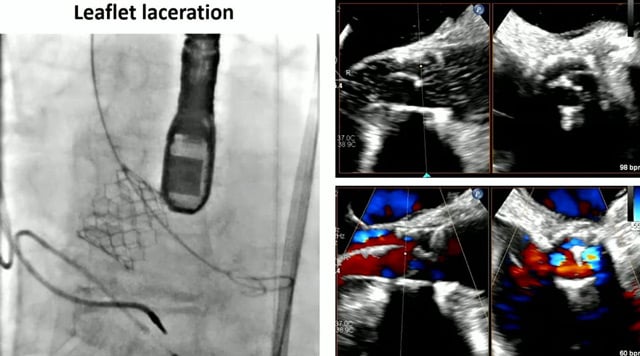
TAVI complications and management strategies
19 May 2026 – From EuroPCR 2026
Gain comprehensive knowledge on anticipating, identifying, and managing complications during transcatheter aortic valve implantation (TAVI). Through complex international case studies—including transaxillary Navitor implantation and bicuspid aortic valve challenges—this session highlights key strategies to improve procedural safety and outcomes.
Bioresorbable devices in clinical practice
19 May 2026 – From EuroPCR 2026
This session examines the evolving role of bioresorbable devices in coronary intervention, showcasing hybrid PCI strategies, novel applications in myocardial bridging, and innovative solutions for complex coronary lesions, including the use of bioadaptors and dual-device techniques.
All we need to know about vulnerable plaque
19 May 2026 – From EuroPCR 2026
Understand the critical importance of vulnerable plaque identification and management. This session covers optimal strategies for detecting vulnerable plaques, their prognostic implications, and evidence-based treatment approaches illustrated through detailed case presentations.
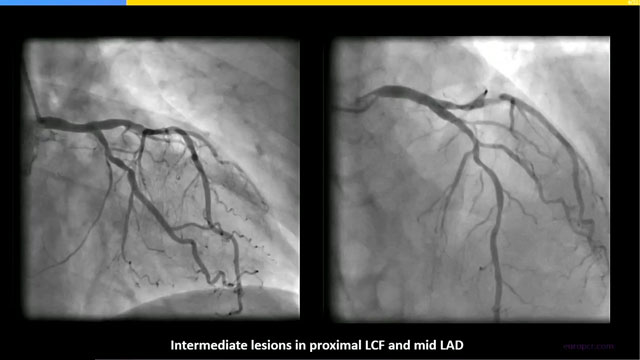
Next generation TAVI procedural planning
19 May 2026 – From EuroPCR 2026
Explore the forefront of TAVI procedural planning, featuring innovations such as valve-in-valve techniques for sutureless valves, integration of artificial intelligence in heart team decisions, and advanced imaging-guided access methods. The session also examines clinical outcomes related to bicuspid anatomy and prosthesis-patient mismatch, providing a comprehensive view...
Complication one: PCI complications occuring during urgent PCI for NSTEMI
20 May 2026 – From EuroPCR 2026
Examine real-world PCI complications encountered during urgent interventions for NSTEMI patients. This session presents a series of complex cases illustrating management strategies for adverse events such as coronary perforations, device issues, and imaging challenges to inform safer procedural practice.
Best complications on calcified lesions
20 May 2026 – From EuroPCR 2026
Highlighting challenging cases in calcified coronary lesions, this session presents a series of complications including stuck wires, the Kokeshi phenomenon, and multiple complications within a single vessel. It provides practical insights into rescue techniques and navigating complex procedural challenges.
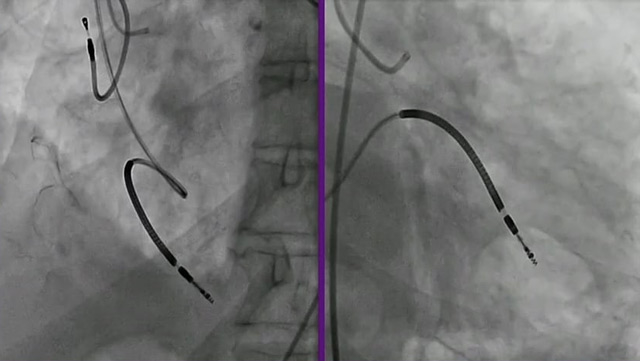
Registries and trials in TMVR
20 May 2026 – From EuroPCR 2026
This session provides an in-depth review of registries and clinical trials focused on transcatheter mitral valve replacement (TMVR). It presents data on annular and ventricular remodeling with the HighLife system, mid- to long-term valve performance, and innovations in transseptal TMVR using novel bioprostheses.
When the angiogram shows no answer for your AMI patient: what's next?
20 May 2026 – From EuroPCR 2026
This session focuses on non-occlusive causes of acute coronary syndromes (ACS) when angiograms do not reveal clear pathology. It emphasizes the diagnostic value of intracoronary imaging for conditions such as MINOCA and spontaneous coronary artery dissection (SCAD), and discusses optimal treatment strategies and prognostic considerations.
Stentless PCI, DCB and BVS in complex scenarios
20 May 2026 – From EuroPCR 2026
This session explores the use of stentless percutaneous coronary interventions (PCI) employing drug-coated balloons (DCB) and bioresorbable scaffolds (BVS) in complex coronary scenarios. Through detailed case discussions, it addresses decision-making processes, technical considerations, and practical tips for successfully completing PCI without permanent stenting.
DCB - Going beyond in-stent restenosis
20 May 2026 – From EuroPCR 2026
This session examines the expanding role of drug-coated balloons (DCB) beyond in-stent restenosis, including treatment of acute coronary syndromes, calcified lesions, and bifurcations. It reviews current evidence supporting DCB-based revascularization and outlines essential procedural steps to optimize outcomes.
New tools for risk stratification in STEMI
20 May 2026 – From EuroPCR 2026
This session highlights novel tools and scores for risk stratification in ST-elevation myocardial infarction (STEMI) patients. It covers prognostic indices such as the index of microcirculatory resistance, the PREDICT-STEMI score, thrombus characteristics, sex differences in outcomes, renal impairment impacts, and benefits of complete revascularization strategies.
Complications in coronary interventions
20 May 2026 – From EuroPCR 2026
This session reviews uncommon and challenging complications encountered during coronary interventions. Cases include brachial arteriovenous fistula following radial access, retained guidewires, coronary sinus perforation during device implantation, and complex atherectomy procedures, emphasizing preparedness and management strategies.
Reliability and application of angio-based physiology in daily work
20 May 2026 – From EuroPCR 2026
This session evaluates the reliability and clinical application of angiography-based physiological assessments in daily practice. Topics include comparisons of angiography-derived microvascular resistance and flow metrics with invasive methods, reproducibility of quantitative flow ratio (QFR), and its correlation with symptom burden and other imaging modalities.