


3631 results for «2155»
3631 results
Registries and trials in TMVR
20 May 2026 – From EuroPCR 2026
This session provides an in-depth review of registries and clinical trials focused on transcatheter mitral valve replacement (TMVR). It presents data on annular and ventricular remodeling with the HighLife system, mid- to long-term valve performance, and innovations in transseptal TMVR using novel bioprostheses.

When the angiogram shows no answer for your AMI patient: what's next?
20 May 2026 – From EuroPCR 2026
This session focuses on non-occlusive causes of acute coronary syndromes (ACS) when angiograms do not reveal clear pathology. It emphasizes the diagnostic value of intracoronary imaging for conditions such as MINOCA and spontaneous coronary artery dissection (SCAD), and discusses optimal treatment strategies and prognostic considerations.

Imaging and physiology integration to guided PCI
20 May 2026 – From EuroPCR 2026
Discover the integration of imaging and physiological assessment in guiding percutaneous coronary intervention (PCI). This session highlights the use of multimodality diagnostics, including invasive and non-invasive techniques, to improve planning, strategy, and management of complex coronary lesions.
Stentless PCI, DCB and BVS in complex scenarios
20 May 2026 – From EuroPCR 2026
This session explores the use of stentless percutaneous coronary interventions (PCI) employing drug-coated balloons (DCB) and bioresorbable scaffolds (BVS) in complex coronary scenarios. Through detailed case discussions, it addresses decision-making processes, technical considerations, and practical tips for successfully completing PCI without permanent stenting.
Complication one: PCI complications occuring during urgent PCI for NSTEMI
20 May 2026 – From EuroPCR 2026
Examine real-world PCI complications encountered during urgent interventions for NSTEMI patients. This session presents a series of complex cases illustrating management strategies for adverse events such as coronary perforations, device issues, and imaging challenges to inform safer procedural practice.
Complex patients with NSTEMI
20 May 2026 – From EuroPCR 2026
This session addresses the complexity of managing NSTEMI patients with challenging clinical presentations, including concurrent vessel and valve disease, thrombus burden, and atypical angiographic findings. It offers practical strategies for diagnosis and intervention to optimize patient outcomes.
DCB - Going beyond in-stent restenosis
20 May 2026 – From EuroPCR 2026
This session examines the expanding role of drug-coated balloons (DCB) beyond in-stent restenosis, including treatment of acute coronary syndromes, calcified lesions, and bifurcations. It reviews current evidence supporting DCB-based revascularization and outlines essential procedural steps to optimize outcomes.
Atypical STEMI presentations
20 May 2026 – From EuroPCR 2026
Investigate atypical presentations of STEMI and the unique challenges they pose in clinical management. This session covers case studies including high bleeding risk patients, mechanical complications post-surgery, spontaneous coronary artery dissection, and recurrent events, emphasizing tailored therapeutic approaches.
New tools for risk stratification in STEMI
20 May 2026 – From EuroPCR 2026
This session highlights novel tools and scores for risk stratification in ST-elevation myocardial infarction (STEMI) patients. It covers prognostic indices such as the index of microcirculatory resistance, the PREDICT-STEMI score, thrombus characteristics, sex differences in outcomes, renal impairment impacts, and benefits of complete revascularization strategies.
Complications in coronary interventions
20 May 2026 – From EuroPCR 2026
This session reviews uncommon and challenging complications encountered during coronary interventions. Cases include brachial arteriovenous fistula following radial access, retained guidewires, coronary sinus perforation during device implantation, and complex atherectomy procedures, emphasizing preparedness and management strategies.
Reliability and application of angio-based physiology in daily work
20 May 2026 – From EuroPCR 2026
This session evaluates the reliability and clinical application of angiography-based physiological assessments in daily practice. Topics include comparisons of angiography-derived microvascular resistance and flow metrics with invasive methods, reproducibility of quantitative flow ratio (QFR), and its correlation with symptom burden and other imaging modalities.
Challenges during PCI on bifurcation
20 May 2026 – From EuroPCR 2026
This session addresses the complexities of percutaneous coronary intervention (PCI) in bifurcation lesions. It discusses decision-making strategies, techniques to avoid implanting permanent devices, the use of IVUS-guided laser atherectomy for restenosis, and approaches to challenging double bifurcation lesions including drug-coated balloon therapy.
Optimal use of dedicated device for calcified lesions
20 May 2026 – From EuroPCR 2026
This session delves into the optimal utilization of dedicated devices for managing complex coronary calcification. Explore decision-making strategies involving orbital atherectomy and cutting balloon techniques, as well as advanced approaches like contact intravascular lithotripsy for stented calcified nodules. Additional focus is given to ablative and modifying...
High-risk PCI: how to optimise the result
19 May 2026 – From EuroPCR 2026
Focused on high-risk PCI, this session presents strategies to optimize procedural outcomes in complex cases. Discussions include contemporary approaches to challenging coronary anatomy, the role of balloon aortic valvuloplasty as a bridge to Impella-supported interventions, advanced mechanical support and thrombectomy in cardiogenic shock related to left...
Choosing the right tool to treat calcified bifurcation
19 May 2026 – From EuroPCR 2026
This session provides expert guidance on managing calcified bifurcation lesions. It highlights identification of high-risk scenarios, the role of coronary CT angiography and intravascular imaging in tool selection, and specialized techniques for treating calcified nodules in the left main coronary artery.
Outcomes in tricuspid valve intervention
19 May 2026 – From EuroPCR 2026
This session reviews contemporary clinical outcomes of tricuspid valve interventions. Topics include interim results from the Cardiovalve replacement system trial, the impact of atrial fibrillation on tricuspid TEER, residual regurgitation implications, afterload mismatch post-intervention, and long-term bioprosthetic valve durability.
Addressing complications in calcified lesions
19 May 2026 – From EuroPCR 2026
This session delves into the complexities and management strategies for complications arising in calcified coronary lesions. Topics include advanced techniques such as puncturing the seal, handling lethal complications on calcified vessels, managing rare rotational atherectomy wire fractures, addressing massive stent deformation due to jailed rotawires, innovative...
Repair or replace the tricuspid valve: how to decide?
19 May 2026 – From EuroPCR 2026
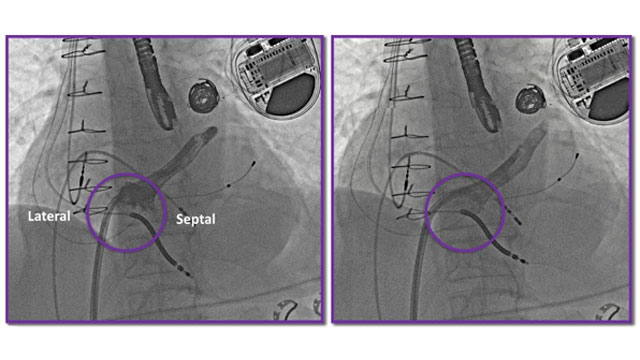
This session focuses on decision-making in tricuspid valve interventions, balancing the choice between repair and replacement. It covers clinical and anatomical criteria guiding treatment selection, pacing lead management from an electrophysiological and surgical perspective, and the application of multimodality imaging—including TTE, TOE, and CT—to inform real-world...
Interventional therapy for hypertension
19 May 2026 – From EuroPCR 2026
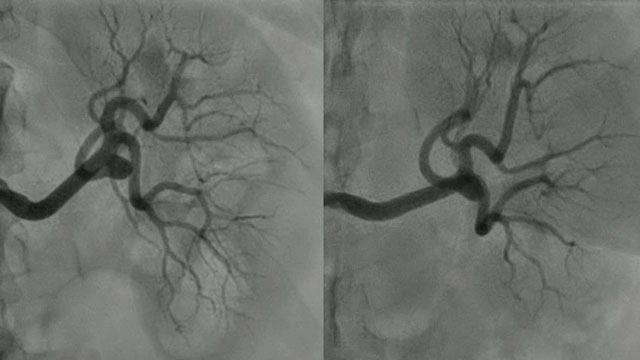
This session addresses interventional therapies for hypertension, emphasizing patient selection for renal denervation and integration of this technique within comprehensive hypertension management. It also reviews available renal denervation technologies, optimal procedural approaches, and considerations for interventional treatment of renal artery stenosis.
RESIL-Card in action: early European experience and lessons from the first users
19 May 2026 – From EuroPCR 2026
This session presents the early European experience with the RESIL-Card tool, designed to optimize interventional cardiology care pathways during crises. It includes practical insights from early adopters, updates on dissemination efforts across Europe, strategies for engaging patients and organizations, and discussions on national and EU political...