75 results
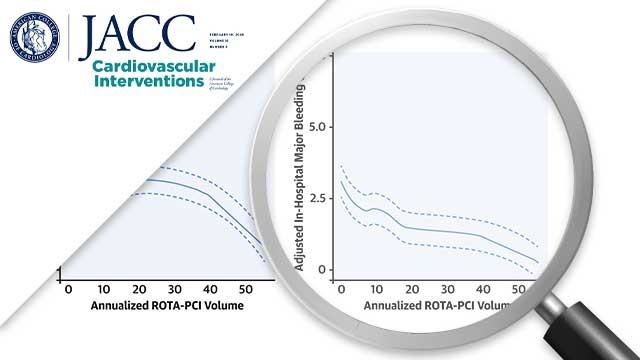
Operator volumes and in-hospital outcomes: an analysis of 7,740 rotational atherectomy procedures from the BCIS national database
05 Jul 2021
Find out more about the results of this analysis which suggest that operator experience may be an important effect modifier in ROTA-PCI.

Reviewer
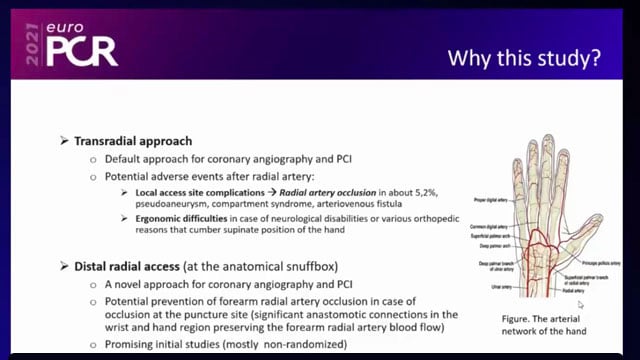
EuroPCR 2021 Hotlines / Late-Breaking Trials: Alster-FLX, ANGIE, COLOR, CREDENCE BRS, and P3
27 May 2021 – From EuroPCR 2021
Find out more about various studies & registries:
- Left atrial appendage occlusion with the WATCHMAN FLX: The Alster-FLX Registry
- Anatomical snuffbox for coronary angiography and interventions
- Randomized comparison between Radial and Femoral Large-bore access Complex PCI
- Experience with BRS for treatment of de novo native peripheral artery lesions
- Clinical validation of...
PCR's Got Talent - Coronary and Other Cardiovascular Interventions
18 May 2021 – From EuroPCR 2021
Thanks to the abstracts gathered in this session, analyze the impact of repeat revascularization on 10-year mortality, study the randomized comparison between radial and femoral large-bore access in complex PCI, appraise the value of absolute flow measurement in patients with CAD, and much more!
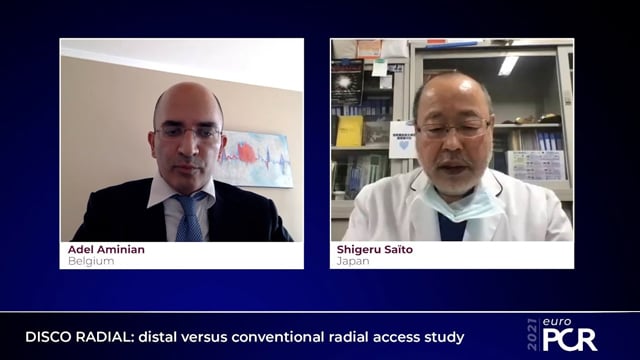
DISCO Radial: distal versus conventional radial access study
18 May 2021 – From EuroPCR 2021
Watch this session presented by Adel Aminian and Shigeru Saïto in order to consider distal radial as a potential new access in treating CAD, to learn about existing and upcoming evidence on distal radial, and to understand why the results of DISCO Radial will give you an impartial view...
Re-evolution in PCI: distal radial approach
18 May 2021 – From EuroPCR 2021
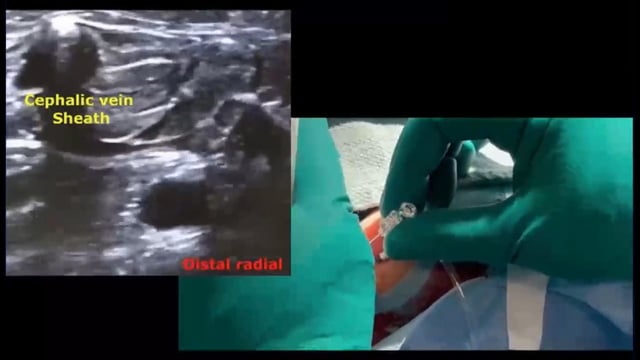
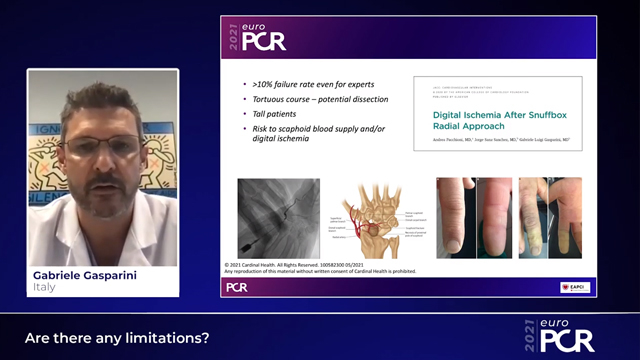
Watch this session presented by Gabriele Luigi Gasparini in order to learn about the advantages of using the distal radial approach for PCI, to discover the main considerations when using the distal radial, and to learn the key tips and tricks about the technique and the devices that...
Distal radial approach to reaccess and recanalize the occluded radial artery
30 Apr 2021
A 56-year-old man was re-admitted with chest pain. He had been hospitalized 2 weeks before because of MI, was suffering from metastatic carcinoma with recurrent PTE, and was on long-term subcutaneous heparin...
EAPCI-PCR Fellows Course 2021 - Coronary track: Radial approach/Coronary angiogram
14 Apr 2021 – From EuroPCR 2021
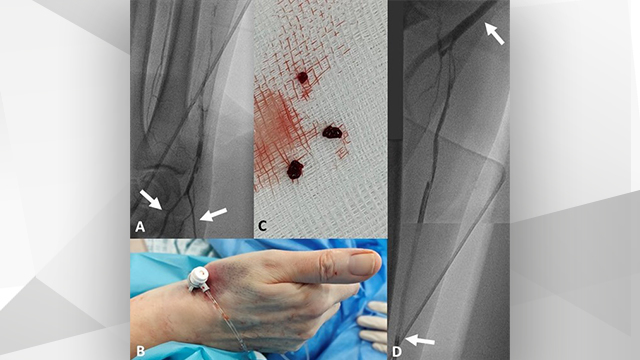
The EAPCI-PCR Fellows Course is a project supported by the New Initiatives For Young Interventionalists Committee (NIFYI) and PCR NextGen, and is intended for practitioners at the beginning of their careers. Education and networking are at the core of the building of future careers powered by...
Complications during radial access
14 Apr 2021 – From EuroPCR 2021
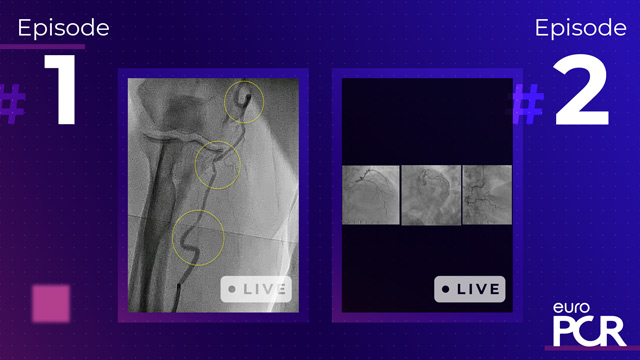
Watch this session to find out more about a life-threatening complication of radial access, together with a rare complication highlighting the need to respect the radial artery.
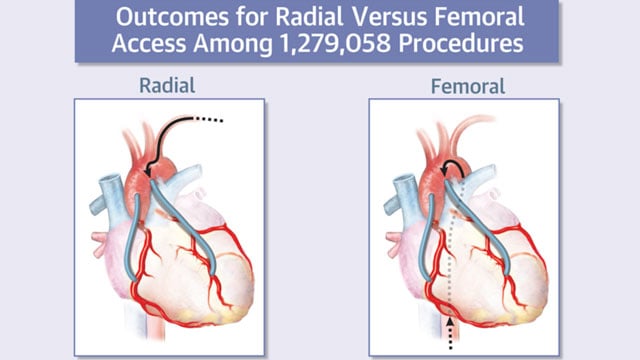
Characteristics and outcomes of patients with history of CABG undergoing cardiac catheterization via the radial versus femoral approach
07 Apr 2021
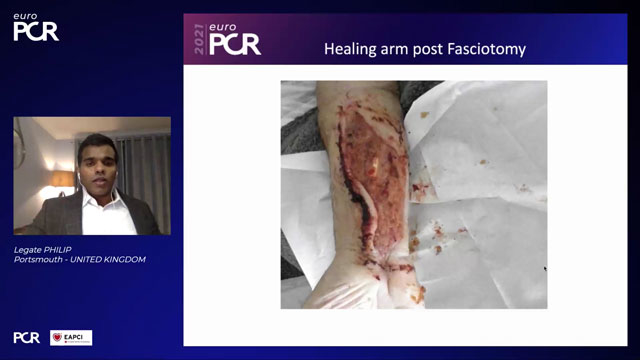
The aims of this study were to examine clinical and procedural outcomes in post-CABG patients who underwent diagnostic catheterization and/or PCI via the radial or femoral approach.

Reviewer
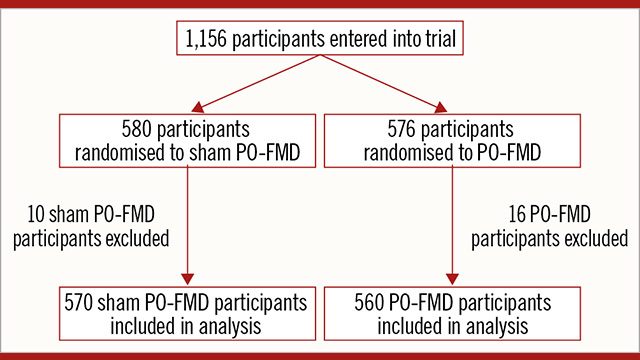
Radial artery dilatation to improve access and lower complications during coronary angiography: the RADIAL trial
06 Apr 2021
The RADIAL study sought to explore the impact of prolonged occlusion flow-mediated dilatation (PO-FMD) in improving radial artery cannulation success.

Reviewer
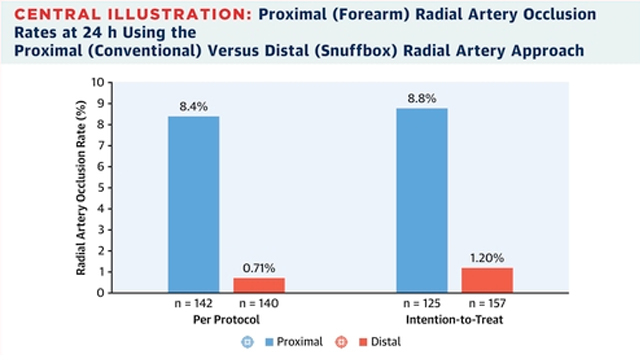
Distal radial artery approach to prevent radial artery occlusion trial
16 Apr 2021
The aim of this study was to compare the rate of proximal RAO with Doppler ultrasound (DUS) between distal and conventional radial access 24 h after a transradial coronary procedure.

Reviewer
How to solve refractory catheter kink in humeral artery during right radial coronary angiogram?
02 Apr 2021
Consult this Twitter case on the management of a persistent kinking of diagnostic catheter (JR4) after failure of usual techniques.

Author
Radial sheath fracture removed surgically after severe radial spasm
19 Mar 2021
Radial artery spasm is inevitable when dealing with small caliber one, especially in calcified radial artery. We describe a case in which radial sheath broke due to severe radial spasm and successfully removed by vascular surgical extraction.

Author
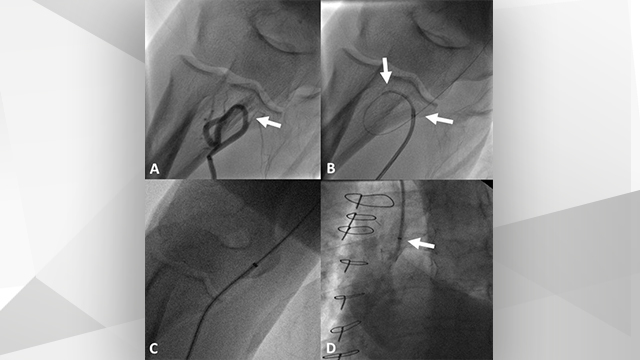
Overcoming the 360 degree radial artery loop
17 Mar 2021
A 77-year-old man was admitted for an elective diagnostic coronary angiogram. Following insertion of a 6Fr sheath into the distal right radial artery, a radial angiogram showed complete 360 degree radial artery loop...
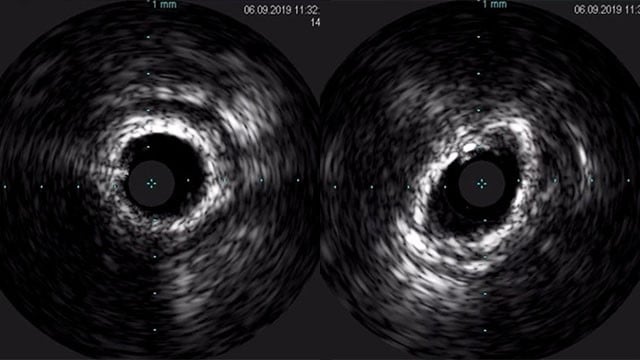
Undilatable calcific lesion even after rotational atherectomy
19 Dec 2019
View this very uncommon case in which balloons do not expand even after a rather aggressive rotational atherectomy: a 43-year-old male with hypertension, smoking and dyslipidemia presents with total occlusion of proximal left anterior descending artery with fresh thrombus...

Author

Author
Radial approach: the essentials
15 Mar 2019
PCR edu online
Radial access is generally very simple, but sometimes it can be more challenging. Watch these videos to become more confident and improve your performance in this technique. The course follows a logical sequence, from patient selection, to puncture and navigation, to ostia vessel cannulation. Consult...

Chapter 3 - Cannulation: guiding catheter choice (module 3.3)
22 Nov 2018
What kind and size of guiding catheter should you use for radial? I. Al Rashdan and H. Routledge share their insights and experience on selecting the appropriate guiding catheters for interventional procedures and optimising the support.

Chapter 3 - Cannulation: catheter choice for graft cannulation (module 3.2)
22 Nov 2018
Is radial suitable for patients with bypass grafts?
Chapter 3 - Cannulation: catheter choice for diagnostic angiogram (module 3.1)
22 Nov 2018
Is radial suitable for routine coronary diagnostic angiogram? In this module, Ibrahim Al Rashdan and Helen Routledge discuss using radial in these cases, including choosing the right catheter to minimise risk of failure.
Radial Approach - Chapter 3: Cannulation
21 Nov 2018
Find out which catheters are the best for right radial approach, understand what is the ideal radial approach to cannulate Saphenous vein grafts and find out when more than 6F is needed?