Supported by

Bifurcation lesions

Find all the latest content on bifurcation lesions published on this website.

The percutaneous treatment of coronary bifurcation lesions is very dynamic with an ongoing evolution in clinical approaches and techniques and the management of more complex cases continuing to evolve. Keep up-to-date about all these changes along with the latest research and devices as well as advances in imaging, the use of adjunctive pharmacotherapy, vascular access or understanding bleeding risks. Use the filters below to access PCRonline resources.

Keep on Learning! Benefit from PCR’s wide choice of education continuum on bifurcation lesions: Courses, educative tools and much else besides.

Filtered By
Bifurcation lesion

210 results

The Controlled Antegrade and Antegrade Tracking (CAAT) technique for left main trunk bifurcation divided by a flap-like structure

29 Jan 2021

The authors present a case of PCI for left main trunk bifurcation divided by a flap-like structure in a 67-year-old man suffering from effort angina, in which they successfully used a novel tracking technique by modifying the reverse controlled antegrade and retrograde tracking (CART), which they called...

The modified CART technique in bifurcation lesion

Three-dimensional optical coherence tomography-guided double kissing crush stenting

14 Dec 2020

The authors present a case of percutaneous coronary intervention for bifurcation lesion in a 73-year-old man suffering from effort angina, in which they successfully performed double kissing crush stenting using optical coherence tomography.

Image in cardiology: OCT-guided crush stenting

How to treat ostial lesions with Szabo’s technique?

28 May 2020

Szabo’s technique, also known as “tail-wire” technique, is one of the few specific ostial intervention techniques that can be helpful to achieve precise coverage of the ostium without excessive protrusion into the aorta or the respective main vessel... Discover the tips and solutions proposed by Felix...

Felix Damas De Los Santos

Author

Felix Damas De Los Santos
Julio I. Farjat Pasos

Author

Julio I. Farjat Pasos
Marco A. Peña Cabral

Author

Marco A. Peña Cabral
Eduardo A. Arias Sánchez

Author

Eduardo Arias
My toolkit: How to treat ostial lesions with Szabo’s technique?

How to bend a coronary wire for difficult side branch access?

23 Apr 2020

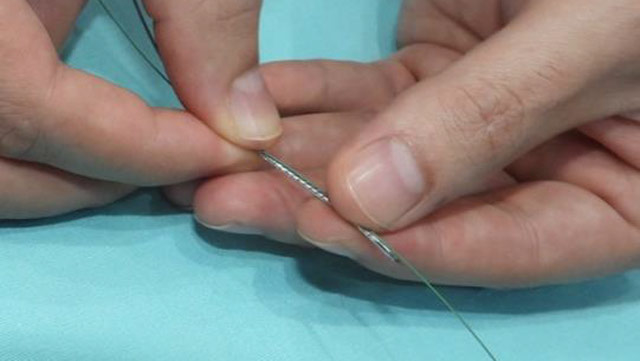
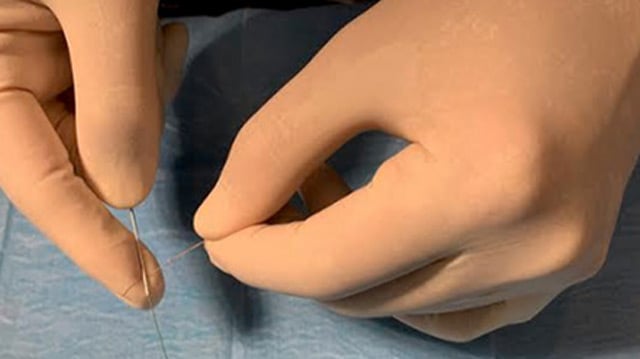
Bending a wire for side branch access requires taking into account the geometry of the main vessel, the angulation of the side branch, the space for rotation of the wire, and the distribution of plaque, the presence of a stent etc. Discover the tips and solutions...

Mohammad A. Al Ahmad

Author

Mohammad A. Al Ahmad
Dr. Christoph K. Naber

Author

Christoph Naber

Author

Bettina Gerlach
How to bend a coronary wire for difficult side branch access?

Why and how to perform Proximal Optimisation Technique (POT)

17 Apr 2020

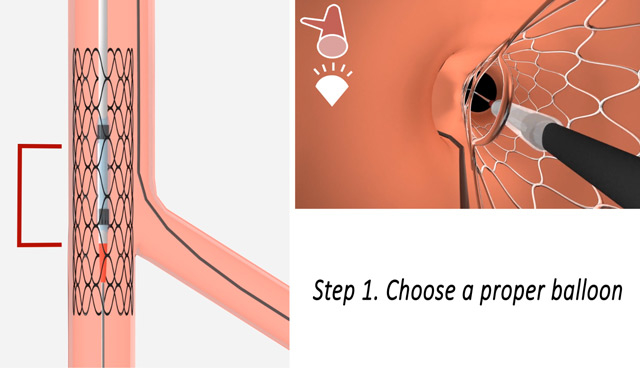
Proximal stent optimization to pMV reference diameter needs to be performed with an adequately sized (1:1) and meticulously positioned balloon since either too proximal or too distal position of POT balloon leads to suboptimal results. Discover the tips and solutions proposed by Zlatko Mehmedbegovic et al.

Author

Zlatko Mehmedbegovic

Author

Dario Jelic

Author

Goran Stankovic
My toolkit: Why and how to perform Proximal Optimisation Technique (POT)

Bifurcation Exploration website: Bifurcation visualisations from a whole new perspective

27 Mar 2020

The Bifurcation Exploration website details five step-by-step bifurcation techniques with endoscopic imaging that show you what’s happening inside the vessel at each stage.
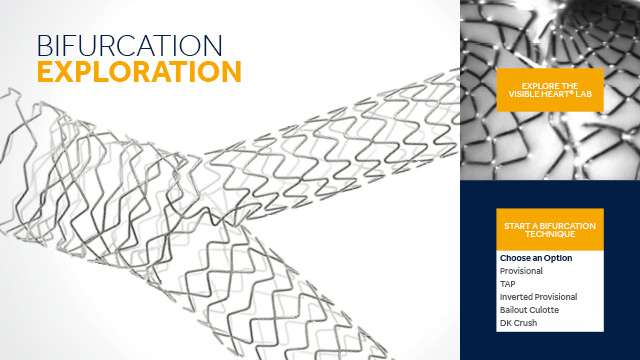
Bifurcation Exploration website: Bifurcation visualisations from a whole new perspective

LAD/D1 bifurcation disease

06 Jul 2019 – From AICT-AsiaPCR 2019

Consult this session to discover the key clinical data and angiographic reference of a patient presenting with LAD/D1 bifurcation disease.
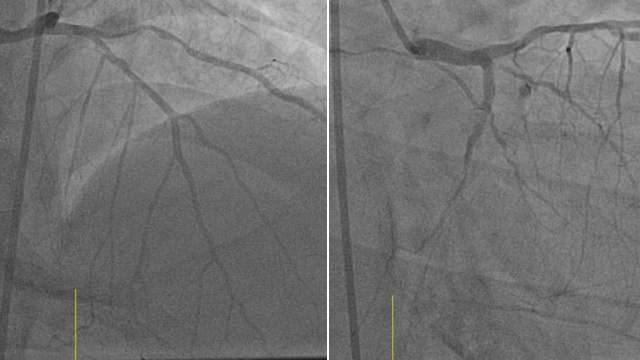
LAD/D1 bifurcation disease

Complex distal left main bifurcation lesion

04 Jul 2019 – From AICT-AsiaPCR 2019

A 75-year-old male with multiple risk factors and a history of NSTEMI is admitted for staged PCI to his left main bifurcation. His vessels are diffusely calcified…
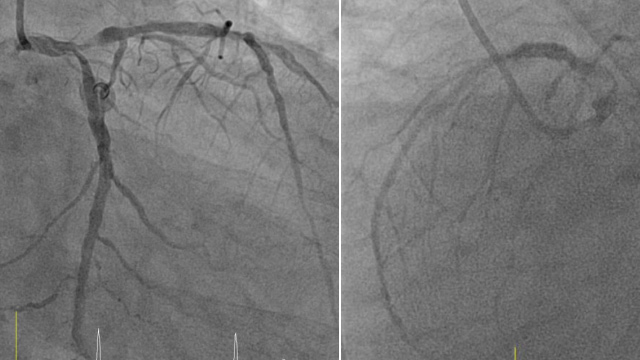
Complex distal left main bifurcation lesion

Case study: reversing heparin Type V perforation

23 Nov 2018

Consult this case study on reversing heparin in a Type V coronary perforation complication, a female 76-year old patient.
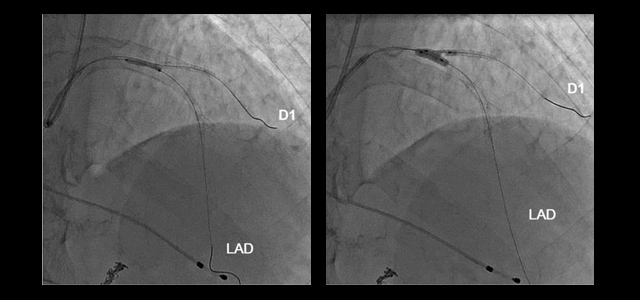
Case study: Thrombin Type IV injection perforation

Coronary Stenosis Textbook

16 Feb 2018

Discover the 2nd edition of the Coronary Stenosis Textbook – a fully illustrated online edition which contains a new chapter on percutaneous interventions in bifurcation stenosis: pathological substrate and procedural guidance by G. Stankovic, et al.

2nd edition of the Coronary Stenosis Textbook