1482 results
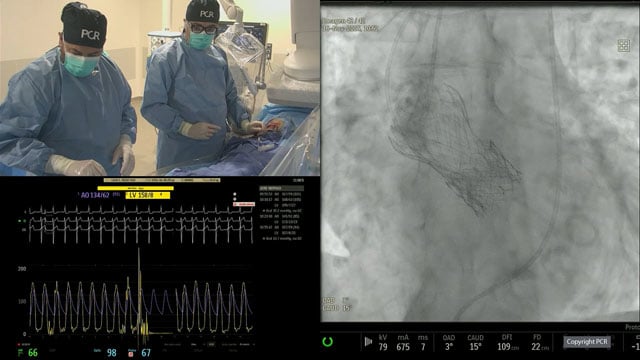
TAVI complications
17 Nov 2025 – From PCR London Valves 2025
This session delves into the management of complications arising during TAVI procedures, presenting real-world cases such as major vascular events including abdominal aortic dissection and catastrophic iliac artery perforation. It also covers technical solutions for valve embolisation and valve deformation due to calcific aorta, providing valuable...
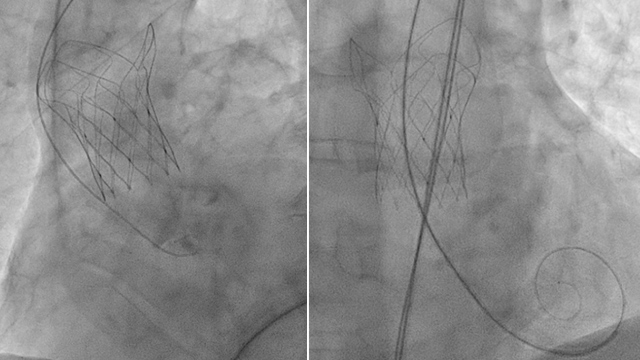
TAVI in aortic regurgitation - Part 2
17 Nov 2025 – From PCR London Valves 2025
This session focuses on transcatheter aortic valve implantation in the setting of aortic regurgitation, a challenging clinical entity. It features novel techniques such as pump-assisted deployment and the use of deflectable self-expanding systems, as well as management of patients with prior valve-sparing aortic root surgery and...
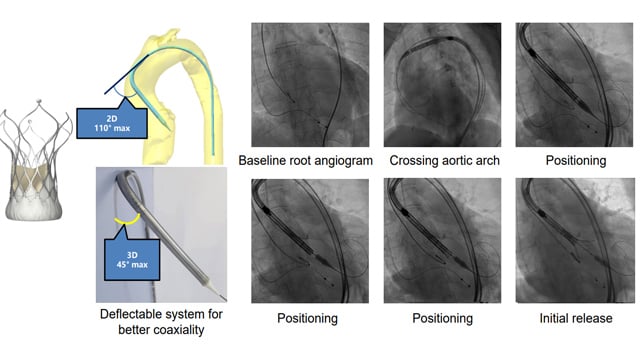
Transcatheter mitral valve-in-valve: transcatheter rescue, balloon migration & more
17 Nov 2025 – From PCR London Valves 2025
This session addresses transcatheter mitral valve-in-valve and valve-in-ring interventions in complex clinical contexts. It includes cases of rescue procedures in valvular dysfunction, ECMO-assisted mitral valve-in-ring implantation in severe left ventricular dysfunction, and innovative approaches to mitral ring anatomy challenges, offering practical insights and procedural tips for...
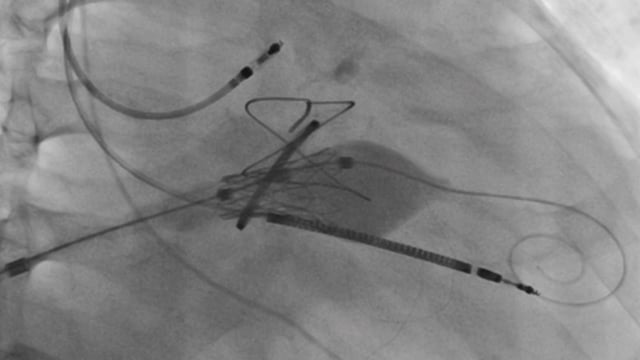
Complex combined interventions - Part 3
17 Nov 2025 – From PCR London Valves 2025
This session highlights complex combined transcatheter interventions, demonstrating simultaneous management of multiple valvular and aortic pathologies. Cases include percutaneous treatment of degenerated bioprosthetic valves, TAVI in rheumatic small annuli with multivalvular disease, and endovascular repair of ascending aortic pseudoaneurysm, illustrating comprehensive strategies for multifaceted cardiovascular disease.
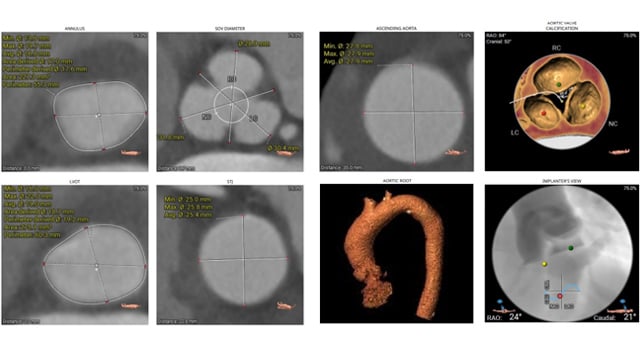
Leaflet modification techniques: latest acronyms, concepts and best practice
17 Nov 2025 – From PCR London Valves 2025
Gain comprehensive insights into leaflet modification techniques with a focus on the latest acronyms, concepts, and best practices. This session covers step-by-step approaches to transcatheter electrosurgical leaflet modification, including BASILICA, SHORTCUT, and UNICORN, alongside troubleshooting strategies and the innovative SURPLUS surgical technique.
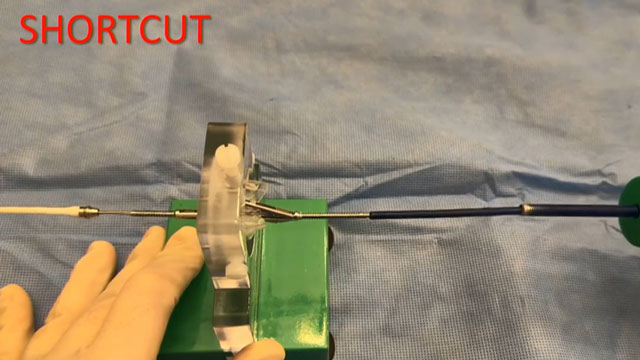
Featured research - TAVI: MELA, ViMech & more
17 Nov 2025 – From PCR London Valves 2025
This session presents cutting-edge research on Transcatheter Aortic Valve Implantation (TAVI), focusing on comparative outcomes between Myval and Evolut valves in large aortic annuli, the role of balloon post-dilation in self- and balloon-expandable valves, and novel valve-in-mechanical valve replacement approaches. Long-term follow-up data contrasting surgical aortic...
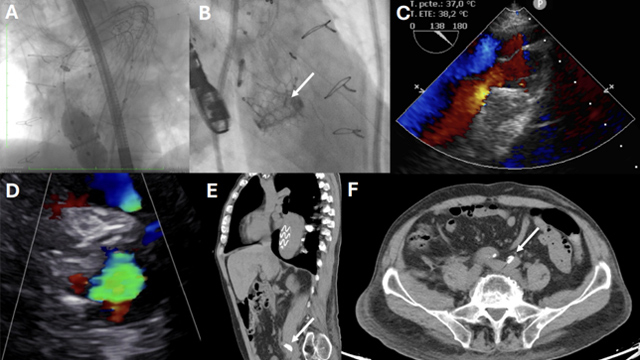
How to manage patients with aortic stenosis and coronary artery disease?
04 Mar 2026 – From PCR London Valves 2025
Tiffany Patterson and Davide Capodanno address the increasingly common scenario of managing coronary artery disease (CAD) in patients undergoing TAVI. With up to half of TAVI candidates presenting with CAD, they highlight new evidence from NOTION-3 showing that revascularization reduces major adverse cardiac events. The takeaway:...
Why is TAVI a different procedure in patient with pure aortic regurgitation?
15 Nov 2025 – From PCR London Valves 2025
In this video, Juan Granada, Michael Borger and Joao Cavalcante highlight that aortic insufficiency differs from aortic stenosis and is often underestimated. Early, comprehensive evaluation and imaging are crucial. Surgery is standard for severe cases, while TAVI with dedicated devices is an option for high-risk patients.
This...
The D-PACE scoring system Prediction of high-grade conduction disturbances after TAVI
16 Nov 2025 – From PCR London Valves 2025
Michael Joner and Francesco Saia discuss the newly developed D-PACE Score, a tool designed to predict delayed AV block occurring more than 24 hours after TAVI—an unmet clinical need given that current risk models focus mainly on early events. The next steps aim to refine the...
PARTNER 3 — 7-year follow-up: what it means for low-risk patients
16 Nov 2025 – From PCR London Valves 2025
Philippe Généreux and Philippe Pibarot discuss the long-term findings from PARTNER 3 and their practical implications for patient care.
They review the 7-year comparison of transfemoral TAVR versus surgical aortic-valve replacement in symptomatic patients with severe aortic stenosis who are at low surgical risk, and why the...
Is iatrogenic atrial septum defect closure a necessary procedure?
19 Nov 2025 – From PCR London Valves 2025
Philipp Lurz and Saibal Kar discuss iatrogenic atrial septal defects from transseptal procedures. Small ones usually close on their own, while large defects causing significant shunting need closure to prevent right heart overload. Some moderate defects may be beneficial by decompressing the left atrium, so closure...

How do we meet the needs of women with heart valve disease?
27 Mar 2026 – From PCR London Valves 2025
In this interview, Ellen Ross and Marta Sitges discuss a recent initiative from Global Heart Hub - a patient association - which examined the realities faced by women living with heart valve disease. They outline the gaps identified, the call to action that followed, and how...

How to manage current challenges of small aortic annulus?
17 Nov 2025 – From PCR London Valves 2025
Joanna Wykrzykowska and Hélène Eltchaninoff discuss challenges in treating patients with small aortic annuli, which are common, especially in women, and present risks such as higher gradients, coronary occlusion, pacemaker need, and paravalvular leak. Valve selection and positioning are critical, balancing hemodynamics and complication avoidance.
This interview...
Aortic valve: PCR London Valves 2025 highlights
17 Nov 2025 – From PCR London Valves 2025
At PCR London Valves 2025, Chris Cook speaks with Course Directors Bernard Prendergast and Simon Redwood about the main highlights from the aortic track. They underline the growing focus on lifetime management, including valve choice, future coronary access, durability, and new long-term data supporting TAVI in...

From clinical benefits to cost effectiveness: impact of early intervention in asymptomatic severe AS
16 Nov 2025 – From PCR London Valves 2025
Francesco Saia discusses the clinical benefits of early intervention in asymptomatic severe aortic stenosis with Philippe Généreux and Tiffany Patterson. EARLY TAVR trial and supporting studies showed a reduction in death, stroke, and heart failure compared with surveillance. Economic modelling shows early intervention is cost-effective and...
Align for the future with next gen Myval transcatheter heart valve series
16 Nov 2025 – From PCR London Valves 2025
Discover how the latest Myval transcatheter heart valve (THV) innovations are shaping TAVI outcomes. This PCR London Valves 2025 session highlights the clinical evidence behind the next-gen Myval THV series, best practices for implantation, and upcoming innovations set to improve patient care. Learn step-by-step techniques for deploying Myval...
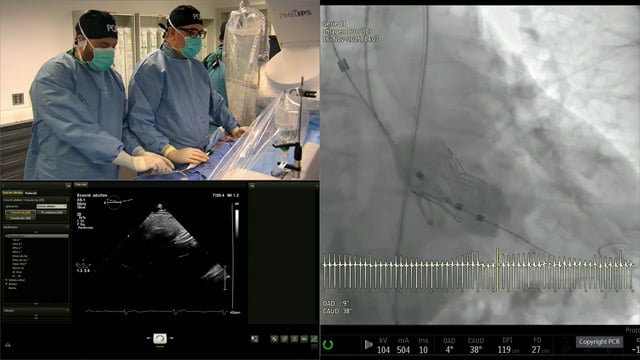
Day case TAVI - The future standard of care for most TAVI patients
16 Nov 2025 – From PCR London Valves 2025
Examining the UK experience, this session discusses the emerging standard of day case TAVI and its potential application across Europe. It evaluates patient-centered risks and benefits, operational requirements, and the evolving role of clinical valve coordinators to facilitate safe and efficient day case pathways for TAVI...
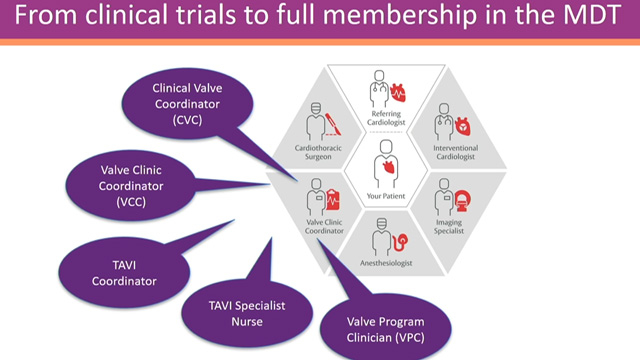
Getting the full potential of the supra-annular valve in a changing landscape
16 Nov 2025 – From PCR London Valves 2025
This session explores the evolving landscape of transcatheter aortic valve implantation (TAVI) with a focus on supra-annular valve technology. It covers techniques for achieving commissural alignment, considerations for small aortic annuli, and advantages in treating bicuspid aortic valve disease, supported by clinical data and illustrative cases.
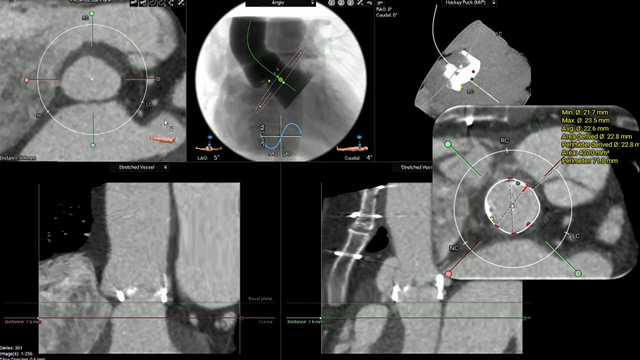
How to optimise TAVI outcomes in extreme patient anatomies?
16 Nov 2025 – From PCR London Valves 2025
Explore strategies to optimise TAVI outcomes in patients with extreme anatomies in this PCR London Valves 2025 session.
Through case-based discussions, the session addresses challenges in small annular anatomy, approaches for large annuli, and strategies to ensure optimal lifetime management for younger TAVI patients. Learn practical tips...
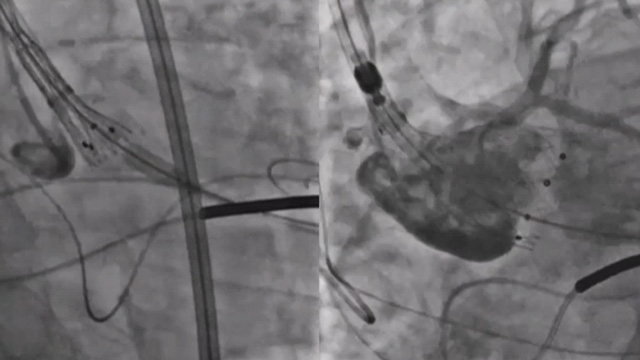
Redo TAVI with pre and post dilatation - LIVE Case
16 Nov 2025 – From PCR London Valves 2025
Watch this live case followed by a live in a box case, regarding a 93-year-old woman with hypertension, chronic bronchitis, and a history of TAVI with a Sapien 3 23 mm (2016) who presented with symptomatic severe aortic stenosis and mildly reduced LV function (50%). An...