309 results
Other coronary interventions: SSO2, angioPy & more
16 May 2024 – From EuroPCR 2024
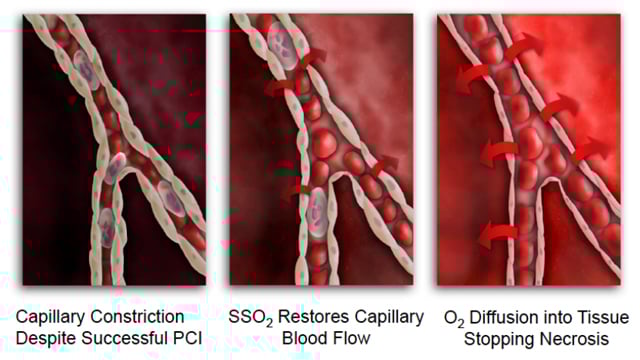
This session showcases a diverse array of innovative coronary interventions and technologies, including the use of super-saturated oxygen therapy in STEMI, the validation of intracoronary flow velocity measurement, the application of laser and optics-based coronary intravascular lithotripsy, and the development of contrast-free and X-ray-free PCI techniques....
ANOCA/INOCA: when angiography is not enough to reach a diagnosis
16 May 2024 – From EuroPCR 2024
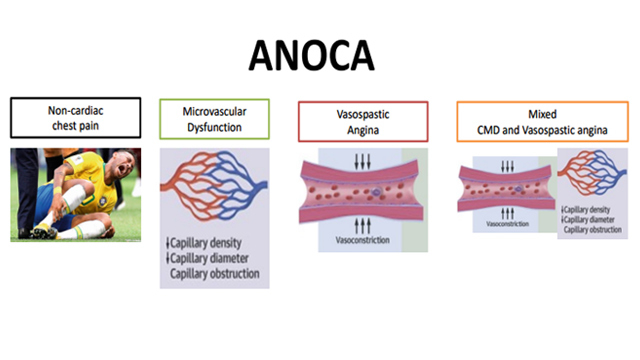
This session provides practical knowledge on the diagnosis and management of patients with ANOCA/INOCA (Angina with Non-Obstructive Coronary Arteries/Ischemia with Non-Obstructive Coronary Arteries). It covers the evaluation of microvascular and vasomotor disorders in patients with non-obstructive coronary arteries, and the causes and management of patients with...
An image is worth a 1,000 words
15 May 2024 – From EuroPCR 2024
When coronary physiology is crucial
15 May 2024 – From EuroPCR 2024
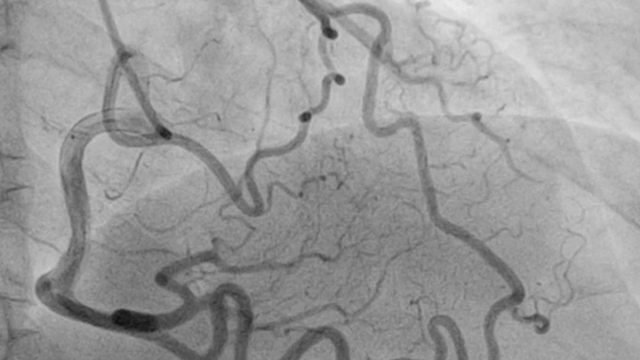
This session comprises selected EuroPCR 2024 Clinical Case submissions where coronary physiology played a crucial role in the management of complex coronary cases. It will cover topics such as the appropriate use of physiology-guided PCI, the role of ultra-low-contrast PCI, and the management of unstable angina.
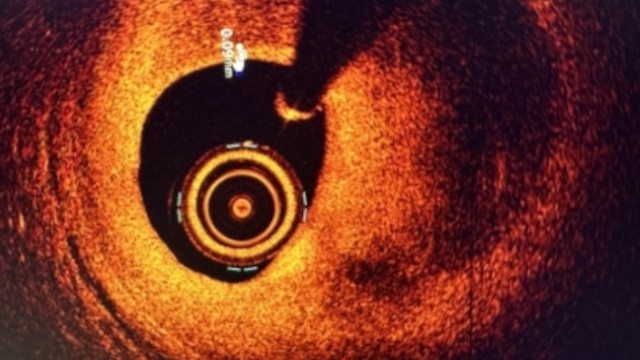
PCI in challenging coronary anatomies
15 May 2024 – From EuroPCR 2024
This session explores various complex PCI cases, providing insights and solutions for navigating challenging coronary anatomies. The discussions cover techniques for crossing difficult paths, the role of PCI as a backup for CABG, and the use of specialized tools like balloons and rotablation when standard approaches...
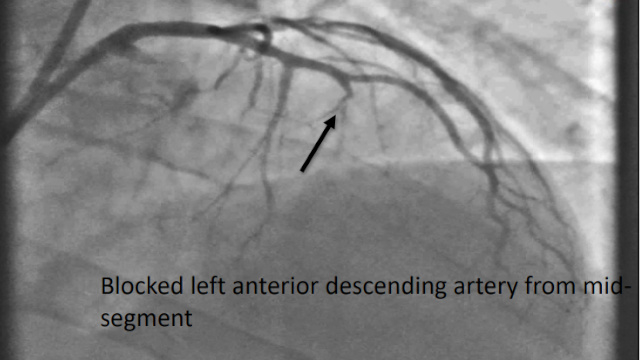
New frontiers in coronary physiology and imaging
15 May 2024 – From EuroPCR 2024
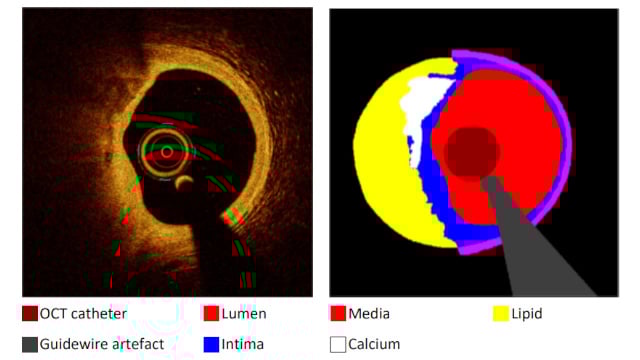
Randomised trials: substudies and extended follow-up - A quick update
15 May 2024 – From EuroPCR 2024
This session provides a quick update on various randomised trials, including substudies and extended follow-up data. It covers insights on bifurcation stenting, the symptom-stratified analysis of ORBITA-2, the impact of completeness of revascularisation on clinical outcomes from REVIVED-BCIS2, cost-effectiveness of CABG vs. PCI from FAME 3,...
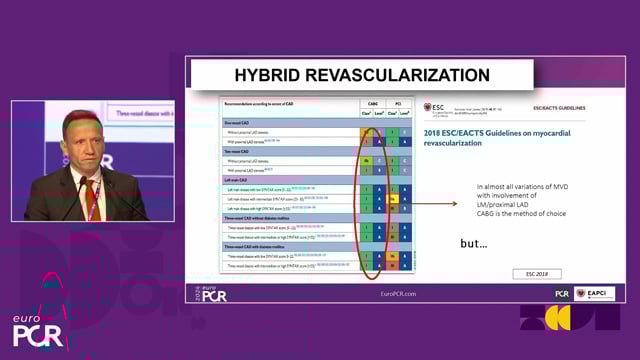
Management of patient with coronary artery disease and left ventricle dysfunction
15 May 2024 – From EuroPCR 2024
This session focuses on the management of patients with stable coronary artery disease and left ventricular dysfunction. Experts will discuss the role of mechanical circulatory support devices in these patients, as well as the diagnosis and treatment of microvascular angina, which can be a challenging complication...
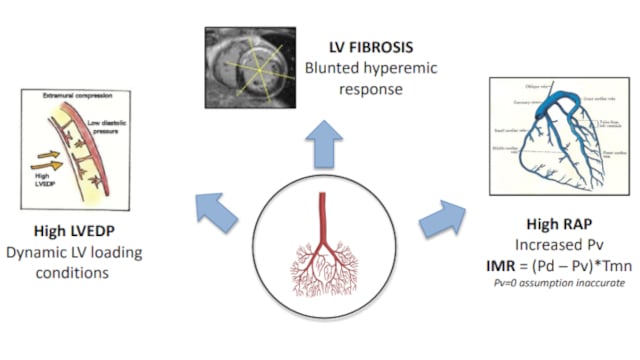
Supraflex Cruz - Improving patient outcomes: from simple to complex patients
14 May 2024 – From EuroPCR 2024
Discover the remarkable performance of Supraflex Cruz in real-world clinical settings, showcasing exceptionally low event rates and demonstrating its safety and efficacy across a spectrum of high-risk patients, including the elderly and those with high bleeding risks, and delve into the ongoing TALENT and TUDEXO II...
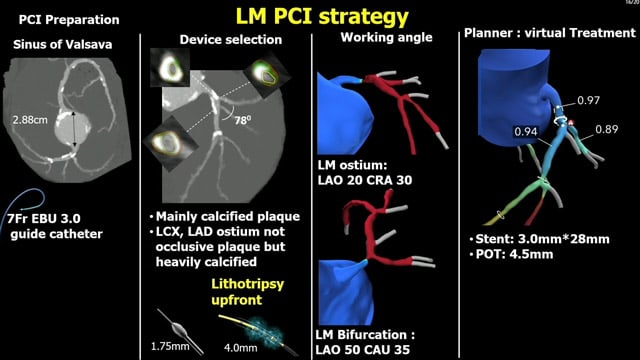
Hotline: advances in coronary physiology
14 May 2024 – From EuroPCR 2024
This hotline session explores the latest advancements in coronary physiology and their implications for percutaneous coronary intervention (PCI). Topics covered include the influence of pathophysiological patterns of coronary artery disease on the safety and efficacy of PCI, the prognostic value of myocardial ischemic burden in STEMI...