38 results
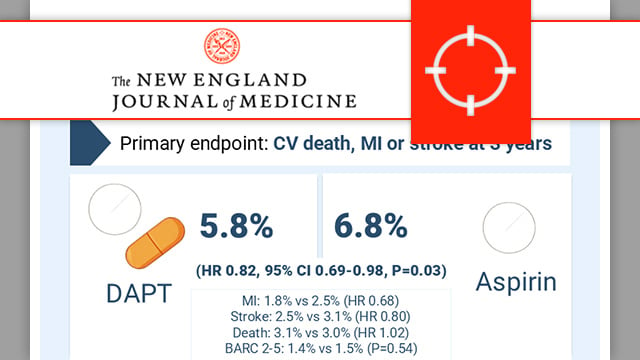
DAPT-MVD: extended dual antiplatelet therapy for multivessel coronary artery disease
21 Jul 2026
In patients with multivessel disease who were event-free 12 months after drug-eluting stent implantation, a further 12 months of clopidogrel plus aspirin reduced ischaemic events compared with aspirin monotherapy, with no detectable excess of adjudicated bleeding.

Reviewer
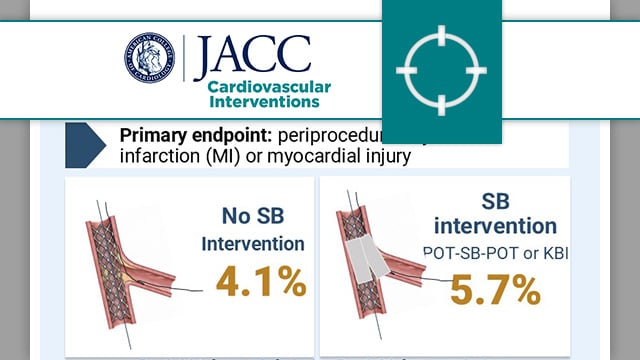
Side branch additional treatment for coronary bifurcation lesion revascularisation: insights from the KISS randomised trial
01 Jun 2026
In patients with non-left main coronary bifurcation lesions treated with provisional stenting and POT, the KISS randomised trial compares a strategy of no side branch intervention versus systematic side branch treatment.

Reviewer
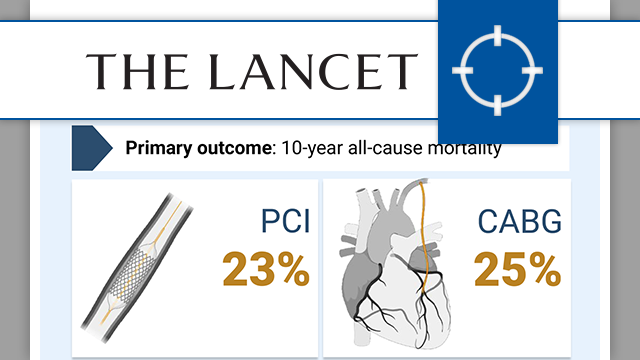
NOBLE trial: 10-year outcomes of PCI vs CABG in left main disease
13 Apr 2026
Long-term evidence comparing PCI and CABG for unprotected left main coronary disease has been limited and sometimes conflicting. The 10-year results from the NOBLE trial now provide important clarity on all-cause mortality outcomes with both revascularisation strategies.

Reviewer
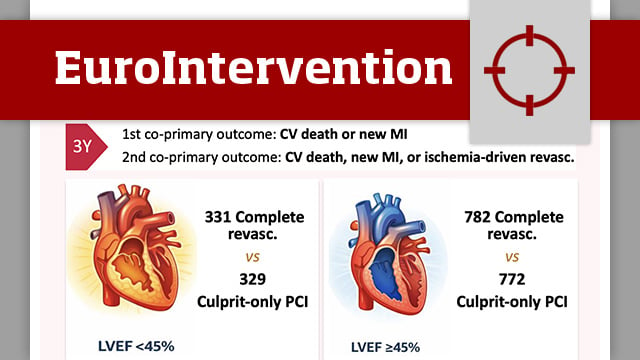
Impact of complete revascularisation in relation to left ventricular function in patients with ST-segment elevation myocardial infarction and multivessel disease: a post hoc analysis of the COMPLETE randomised trial
05 Feb 2026
This study represents a prespecified subgroup analysis of the COMPLETE randomised trial, a large, international, randomised controlled study comparing a strategy of complete revascularisation with culprit-only percutaneous coronary intervention (PCI) in patients presenting with ST-segment elevation myocardial infarction (STEMI) and multivessel coronary artery disease (MVD).
The present...

Reviewer

Reviewer
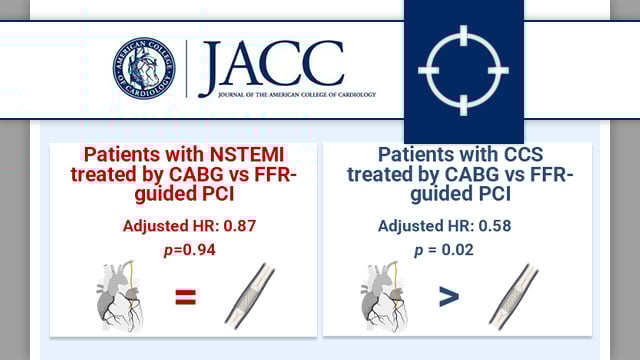
Outcomes after CABG compared with FFR-guided PCI in patients presenting with acute coronary syndrome
10 Jun 2025
This prespecified analysis of the Fractional Flow Reserve versus Angiography for Multivessel Evaluation (FAME 3) trial examined the impact on cardiovascular outcomes of treatment by CABG versus FFR-guided PCI in patients with three vessel disease (3-VD), stratified by acute (NSTEMI) or chronic coronary syndrome (CCS) presentation.
Reviewer

Reviewer
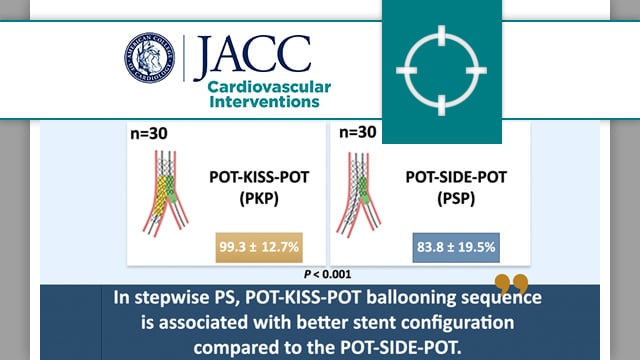
Comparison of stent geometry achieved by different side-branch ballooning techniques for bifurcation provisional stenting: the CRABBIS Trial
31 Mar 2025
Which ballooning technique is best after main vessel stenting in bifurcation PCI? This two-part study compares two key approaches: PKP (POT, kissing balloon inflation, final POT) and PSP (POT, isolated side branch dilation, final POT) to determine the optimal strategy.
Reviewer
Reviewer
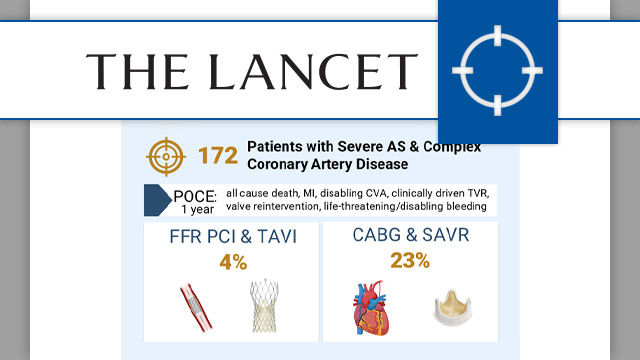
TAVI and FFR-guided PCI vs. SAVR and CABG in AS with complex or multivessel CAD: the TCW Trial
16 Dec 2024
The TCW trial found that FFR-guided PCI with TAVI offers favorable one-year outcomes, including lower rates of all-cause mortality, MI, disabling stroke, revascularisation, valve reintervention, and severe bleeding, compared to CABG with SAVR.
Reviewer
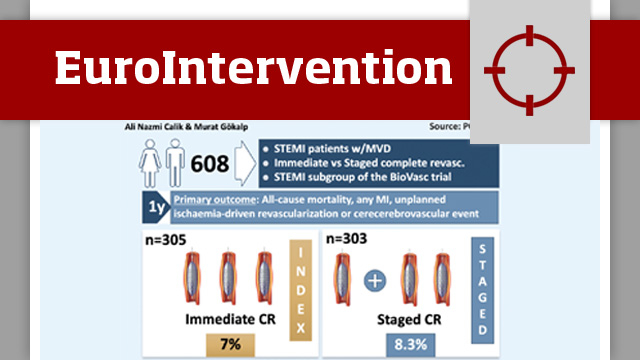
Immediate versus staged complete revascularisation in patients presenting with STEMI and multivessel disease
21 Oct 2024
The current subanalysis of the BioVasc trial offers valuable insights into the long-term effects of ICR versus SCR strategies in STEMI patients with MVD. The findings support current guidelines on the necessity of revascularizing non-culprit lesions.
Reviewer
Reviewer
Optimal minimal stent area and impact of stent underexpansion in left main up-front 2-stent strategy
10 Jul 2024
The present study aimed to revise the IVUS-derived segmental MSA criteria for optimal stent expansion in patients undergoing an up-front 2-stent strategy using the crush technique for LM bifurcation lesions to predict the 5-year clinical outcomes.

Reviewer

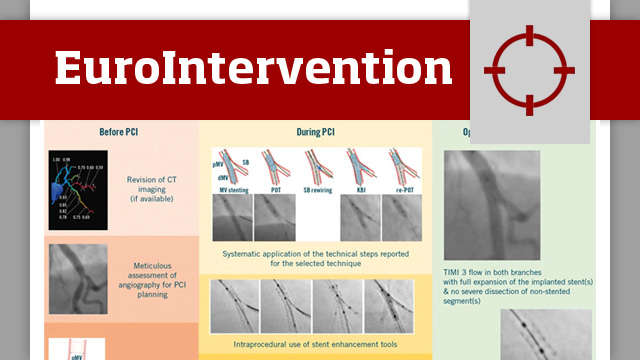
Percutaneous coronary intervention for bifurcation coronary lesions using optimised angiographic guidance: the 18th Consensus Document from the European Bifurcation Club
24 Jun 2024
In coronary bifurcation lesions (CBL) PCI, intracoronary imaging (ICI) is preferred for its superior outcomes over angiography alone, but its adoption is limited by education and technology access barriers, resulting in most CBL PCIs still using angiographic guidance only.
Reviewer

Reviewer